
CSMP IAS : India's Premier Coaching Institute for IAS / PCS
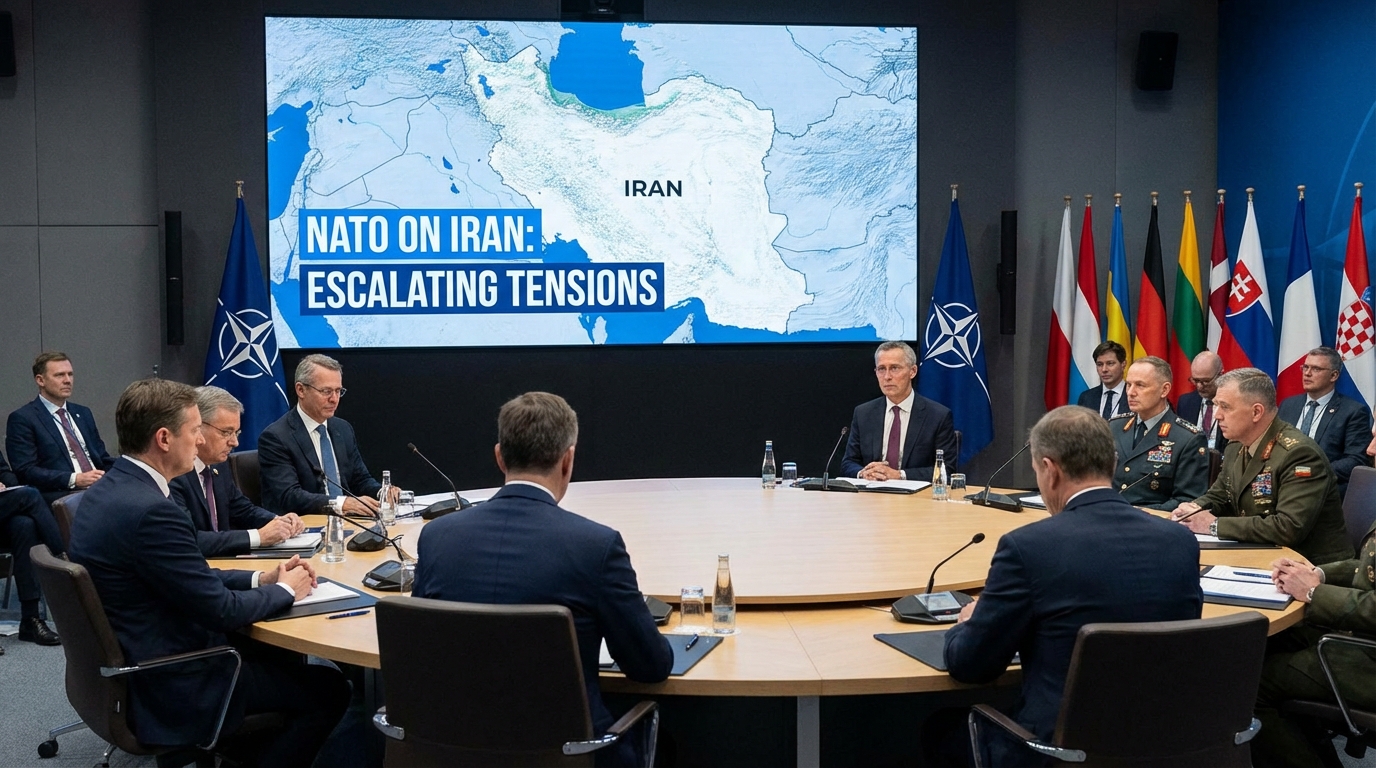
NATO Crisis Over Iran War
The 2026 Iran conflict has exposed deep divisions between the United States and European countries. Many NATO members refused to support the U.S.-led military action, raising serious questions about alliance unity. The situation highlights the changing nature of global power and the rise of independent decision-making. It also brings focus on NATO’s limitations in handling modern geopolitical crises.
Table of Contents
Why in The News?
- The ongoing conflict involving the United States, Israel, and Iran in 2026 has created major global concern.
- Donald Trump asked allies to join military action and deploy naval forces to secure the Strait of Hormuz.
- Many European countries refused to participate in the war.
- This refusal has created tensions within long-standing alliances, especially NATO.
- The situation has raised serious questions about NATO’s unity, relevance, and effectiveness in managing global crises.
What are the Key Highlights?
- Germany’s Chancellor Friedrich Merz rejected U.S. calls for military support.
- He stated that there is no clear strategy or plan for success.
- He emphasized that European countries were not consulted before the war began.
- He also announced that Germany will not send forces to secure the Strait of Hormuz.
- Germany’s Defence Minister Boris Pistorius clearly said:
- This conflict is not Europe’s responsibility.
- France’s President Emmanuel Macron stated:
- France is not a party to the war.
- France prefers diplomatic solutions over military involvement.
- United Kingdom’s Prime Minister Keir Starmer avoided joining the war despite pressure.
- He faced criticism from Trump.
- However, public opinion in the UK supported his decision.
- Spain’s Prime Minister Pedro Sanchez strongly opposed the war.
- He described it as reckless and illegal.
- Spain refused to allow its bases to be used for military action.
- Public opinion across Europe is against the war:
- Majority of citizens in Germany, Spain, and the UK oppose involvement.
- Democratic pressure is shaping foreign policy decisions.
- The Strait of Hormuz remains a critical concern:
- Nearly 20% of the world’s oil passes through this route.
- Any disruption affects global energy prices and economic stability.
- Europe is taking independent initiatives:
- The UK is working on plans to reopen the strait.
- France is building a coalition with European, Asian, and Gulf countries.
- Talks include countries like India and regional stakeholders.
- The U.S. has also taken independent actions:
- It has adjusted oil sanctions on Russia to manage global oil prices.
- This decision surprised European allies.
What are the Key Highlights?
Emergence of Strategic Autonomy in Europe
- European countries are increasingly making independent decisions.
- They are not automatically supporting U.S. military actions.
- This reflects a long-term shift in global power relations.
- Strategic autonomy means:
- Europe wants to protect its own interests.
- It wants to avoid unnecessary conflicts.
Transformation of Transatlantic Relations
- Relations between the U.S. and Europe are undergoing change.
- Differences over war strategies are becoming visible.
- Trade disputes and disagreements over Ukraine have already created tensions.
- Trust deficit is increasing:
- Europe feels excluded from decision-making.
- The U.S. feels unsupported by allies.
Internal Stress within NATO
- The crisis has exposed deep divisions within NATO.
- NATO is based on collective defense and unity.
- However, member countries are not united on this issue.
- Key concerns for NATO:
- Lack of consensus on military intervention.
- Growing mistrust among members.
- Weak coordination in global crises.
- This situation highlights a functional failure of NATO in this context:
- NATO could not create a common position among its members.
- It failed to act as a platform for coordinated response.
- It could not prevent unilateral actions by the U.S.
Crisis of Relevance of NATO
- NATO was originally created to defend Europe from external threats.
- However, this conflict is outside its traditional area.
- Current issues:
- NATO is unclear about its role in Middle East conflicts.
- It lacks a unified strategy for non-European crises.
- This raises questions:
- Is NATO still relevant in modern global conflicts?
- Can it adapt to new geopolitical realities?
Impact on Global Energy Security
- The Strait of Hormuz is one of the most important oil routes.
- Any disruption can lead to oil shortages.
- Prices may rise sharply.
- Effects on countries like India:
- Increased fuel costs.
- Pressure on inflation and economic growth.
Strengthening of Multipolar World Order
- The world is moving towards multiple centers of power.
- Europe, India, and others are acting independently.
- This reduces dominance of any single country.
- Decision-making becomes more complex but balanced.
Importance of Maritime Security
- Safe sea routes are essential for global trade.
- Disruption affects shipping, insurance, and supply chains.
- Countries are focusing on:
- Naval cooperation.
- Protection of commercial vessels.
Role of Domestic Politics
- Democratic governments must respond to public opinion.
- Citizens in Europe are largely against war.
- Political impact:
- Leaders avoid unpopular military actions.
- Policy decisions become more cautious.
Decline of Blind Alliance Politics
- Earlier, allies often supported each other automatically.
- Now, countries are more cautious:
- They demand clear objectives.
- They prioritize national interest over alliance pressure.
What are the Challenges?
Lack of Clear War Objectives
- The goals of the conflict are not clearly defined.
- Different actors may have different aims.
- This creates confusion and mistrust.
Risk of Regional Escalation
- The conflict could spread across the Middle East.
- Neighboring countries may get involved.
- This can lead to a wider war.
Deepening NATO Divisions
- Differences among NATO members are increasing.
- Some support the U.S., while others oppose involvement.
- Risks include:
- Weakening of collective defense principles.
- Reduced unity in future crises.
- Loss of credibility as a strong alliance.
Institutional Limitations of NATO
- NATO operates on consensus.
- This slows down decision-making.
- Limitations include:
- Inability to respond quickly to fast-changing crises.
- Dependence on U.S. leadership.
- Lack of autonomy among European members.
Economic Instability
- Oil price fluctuations can harm global economies.
- Inflation may increase.
- Trade deficits may widen.
Unpredictability in Leadership
- Sudden policy changes create uncertainty.
- Allies find it difficult to trust decisions.
- This leads to:
- Poor coordination.
- Increased geopolitical risk.
Weakening of International Law
- Unilateral military actions may bypass global norms.
- This weakens respect for international law.
- Long-term effect:
- More conflicts without global approval.
Domestic Political Constraints
- Leaders face pressure from voters.
- Public opposition limits military decisions.
- Political divisions can slow decision-making.
Security of Global Trade Routes
- Attacks or blockades in key waterways can disrupt trade.
- Shipping costs increase.
- Insurance risks rise.
Way Forward
Reform and Strengthen NATO
- NATO must undergo reforms.
- It should redefine its role in global conflicts.
- It must improve coordination among members.
- Suggested reforms:
- Faster decision-making mechanisms.
- Clear policies for non-European conflicts.
- Reduced over-dependence on the U.S.
Promote Diplomatic Engagement
- Dialogue should be the first approach.
- Countries must engage with Iran peacefully.
- Mediation efforts:
- Neutral countries can help reduce tensions.
Enhance Role of Global Institutions
- The United Nations should play a central role.
- It can ensure legality and fairness.
- It can provide a platform for negotiation.
Ensure Energy Security
- Countries should diversify energy sources.
- Reduce dependence on sensitive regions.
- Strategic measures:
- Maintain oil reserves.
- Invest in renewable energy.
Develop Cooperative Maritime Security
- Countries should jointly protect sea routes.
- Naval cooperation is essential.
- Non-military aspects:
- Coordination with shipping and insurance sectors.
Build Trust Among Allies
- Transparency in decisions is important.
- Allies must be consulted before major actions.
- Trust-building steps:
- Regular dialogue.
- Shared intelligence.
Balance National Interest and Global Responsibility
- Countries must protect their own interests.
- At the same time, they should support global peace.
Address Public Concerns
- Governments should communicate clearly with citizens.
- Explain the reasons behind decisions.
- Public trust is essential for policy success.
Conclusion
The present crisis shows that traditional alliances alone are not enough to manage modern conflicts. Institutions like NATO must evolve to remain effective, while countries must focus on cooperation, dialogue, and balanced decision-making to ensure long-term global stability.
Recent Articles:
- Lok Sabha Approves 2026-27 Agriculture Budget
- India’s West Asia Policy Reset
- Supreme Court Allows Passive Euthanasia in Harish Rana Case
Also Read
- AHAAR–L Framework: Comprehensive Counter-Terror Strategy for India
- India – France Special Global Strategic Partnership
NATO: North Atlantic Treaty Organization