
CSMP IAS : India's Premier Coaching Institute for IAS / PCS
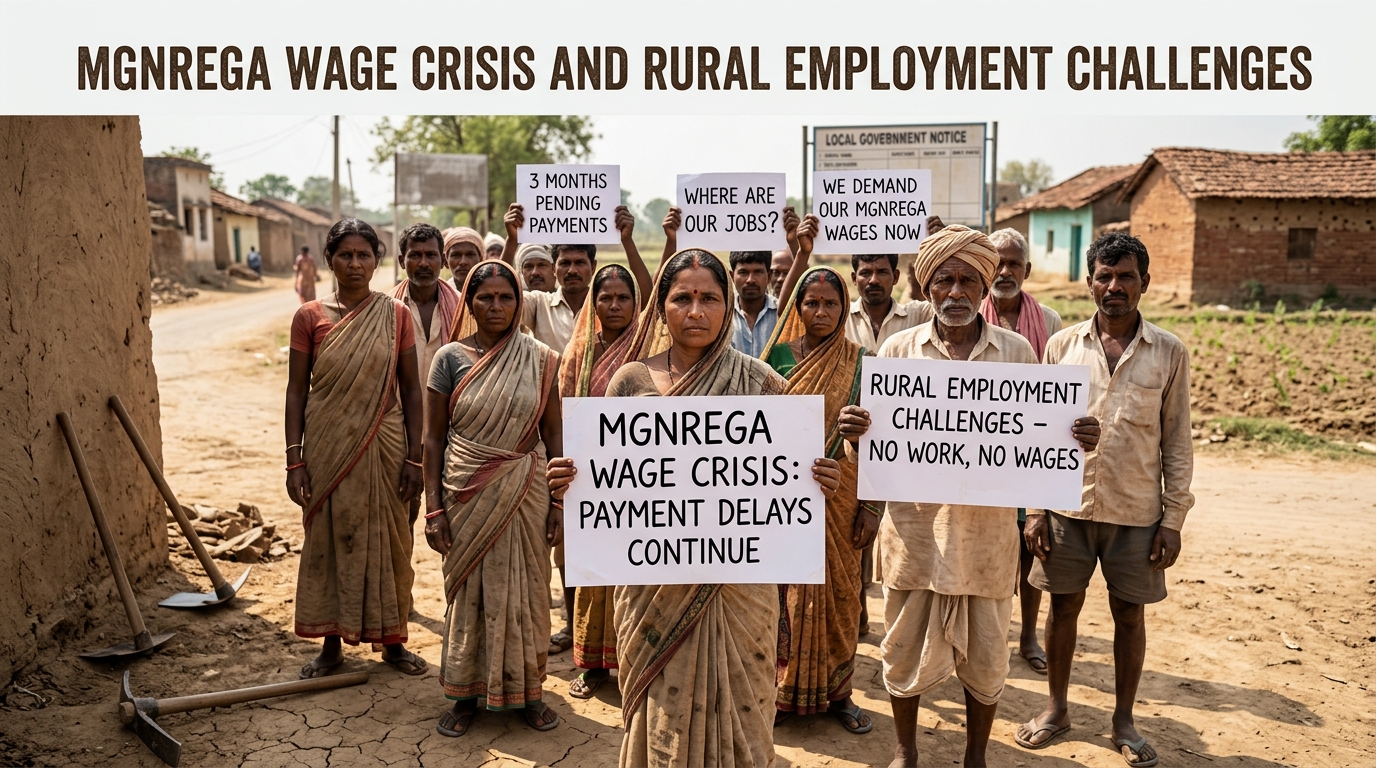
MGNREGA Wage Crisis and Rural Employment Challenges
Table of Contents
The MGNREGA wage crisis has become a major concern as low wages, payment delays, and policy gaps reduce the effectiveness of rural employment schemes. Understanding the MGNREGA wage crisis is important for analyzing rural livelihoods and governance issues,
Why in the News?
- There is an ongoing debate about the effectiveness of Mahatma Gandhi National Rural Employment Guarantee Act and the proposed Viksit Bharat – Guarantee for Rozgar and Ajeevika Mission Act.
- These laws aim to provide guaranteed employment to rural households.
- The debate has focused on design and outcomes, but an important issue of wage rates has been ignored.
- Wage rate means the amount paid to workers per day of work.
- Wage rates directly affect worker participation, programme success, and overall cost.
What are the Key Highlights?
Importance of Wage Rate
- Wage rate is the most important factor in any employment guarantee programme.
- A higher wage rate attracts more workers and increases participation.
- A low wage rate discourages workers and reduces interest.
- In the early years of MGNREGA, wages were attractive.
- This created enthusiasm and high participation among rural workers.
Legal Framework of Wage Determination
- Under Section 6 of MGNREGA, wage rates are decided.
Section 6(1): Central Government Control
- The central government has the power to fix wages.
- Different wages can be set for different States.
Section 6(2): Minimum Wage Principle
- If the central government does not fix wages, State minimum wages apply.
- Minimum wage means the lowest legal wage set by the government for workers.
- In early years (2006–2009), this rule applied.
- Many States had higher minimum wages than market wages.
- This made MGNREGA very popular among workers.
Shift in 2009 and Its Impact
- In 2009, the central government started fixing wages under Section 6(1).
- Initially, wages were increased to ₹100 per day in most States.
- Over time, wages were only increased based on inflation.
- Inflation means the rise in prices of goods and services.
- Real wages were effectively frozen.
- Real wage means wage adjusted for inflation.
Real-Wage Freeze and Its Effects
- MGNREGA wages started falling behind minimum wages in many States.
- This weakens the purpose of ensuring fair wages.
- MGNREGA wages also became lower than market wages.
- Market wage means the wage paid in private sector jobs.
- Payment delays became a serious issue.
- Workers often receive wages after long delays.
- Technical issues also affect payments.
- Systems like the Aadhaar-based Payment System sometimes fail.
- These problems create a discouragement effect.
- Workers lose interest and prefer private work.
Impact on Employment and Corruption
- Lower interest among workers reduces participation.
- This weakens the programme’s effectiveness.
- Reduced participation leads to less monitoring.
- This increases chances of corruption and leakages.
- Some studies suggest that actual employment is lower than official data.
- This indicates possible data gaps or misuse of funds.
Issues in the New VB-G RAM G Act
- The new law continues central control over wages.
- This is given under Section 10 of the Act.
- Unlike MGNREGA, wage costs are shared between Centre and States.
- The ratio is 60:40.
- Despite this, States are not given power to fix wages.
- This reduces flexibility and local responsiveness.
- The law removes the clause that allowed wages below minimum wages.
- This creates legal confusion about paying less than minimum wages.

What are the Significance?
Impact on Workers’ Income
- Wage rates directly affect the income of rural workers.
- Higher wages improve living standards and reduce poverty.
- Low wages reduce the attractiveness of public employment schemes.
Role in Rural Economy
- Employment schemes support rural demand.
- Workers spend wages on goods and services.
- This boosts local markets and economic activity.
Legal and Ethical Importance
- Paying less than minimum wage raises legal concerns.
- It may violate labour laws and worker rights.
- Ensuring fair wages maintains trust in government schemes.
Programme Effectiveness
- Proper wage rates ensure high participation.
- This leads to better implementation of public works.
- Low wages and delays reduce programme efficiency.
Challenges
Real-Wage Freeze
- Wages are not increasing beyond inflation.
- This reduces real income growth for workers.
Gap with Minimum and Market Wages
- MGNREGA wages are lower than both minimum and market wages.
- This discourages workers from participating.
Delayed Payments
- Workers face delays in receiving wages.
- This creates financial hardship.
- Technical issues worsen the problem.
- Payment systems sometimes fail or reject transactions.
Centralized Wage Control
- The central government decides wages for all States.
- This ignores regional differences in cost of living.
Rising Corruption and Leakages
- Reduced worker participation weakens monitoring.
- This increases chances of misuse of funds.
Way Forward
Link Wages with Minimum Wages
- Wage rates should be equal to or higher than minimum wages.
- This ensures fairness and legality.
Ensure Timely Payments
- Payment systems should be improved.
- Delays must be eliminated to maintain trust.
Decentralize Wage Decisions
- States should have more power in fixing wages.
- This allows adjustment based on local conditions.
Improve Transparency and Monitoring
- Strong monitoring systems should be developed.
- This will reduce corruption and leakages.
Reform Policy Framework
- New policies should focus on worker welfare.
- Wage determination should be clear and fair.
Conclusion
A fair wage system is essential for the success of any employment guarantee programme and for protecting the dignity of labour. A balanced approach that respects legal standards, ensures timely payments, and adapts to local conditions can strengthen rural employment and create long-term economic stability.
Relevant Articles:
Glacier Disaster Risk and Flash Flood Threat in Himalayas
Pulses Policy Reform for Stronger Farmer Income
Water-Centered Climate Adaptation: A Strong Step from COP 30
Read Also:
Global Oil Crisis and Energy Security Challenges for India
SC Status and Religion Debate in India: Supreme Court Clarifies Reservation Rules
India Heart Attack Care Crisis: Delays in Treatment Increasing Preventable Deaths
rural empoyment scheme mgnregs reached its limits and …
