
CSMP IAS : India's Premier Coaching Institute for IAS / PCS
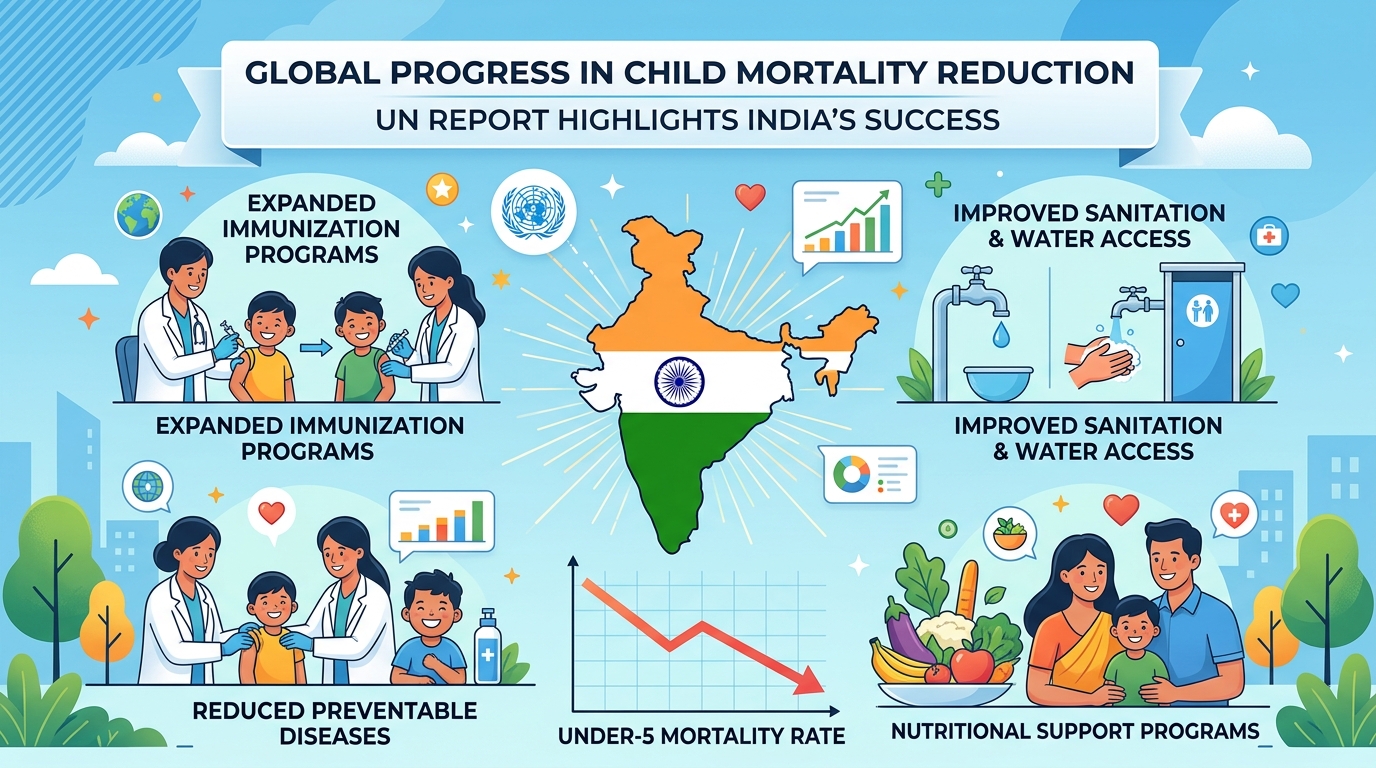
Global Progress in Child Mortality Reduction: UN Report Highlights India’s Success
Table of Contents
The latest United Nations report on Child Mortality Reduction shows significant global progress while highlighting India’s success in reducing under-five and neonatal deaths through strong public health measures and low-cost interventions.
Why in the News?
- On March 18, 2026, the United Nations released a report titled Levels and Trends in Child Mortality.
- This report gives data about how many children die and what are the reasons behind these deaths.
- The report highlighted a serious issue.
- Around 4.9 million children died before the age of five in 2024.
- Out of these, about 2.3 million were newborn babies.
- A very important point is that most of these deaths can be prevented.
- Simple and low-cost healthcare services can save many lives.
- India has shown good progress in reducing child deaths.
- It is now considered an example for other countries in public health.
What are the Key Highlights?
Global Trends in Child Mortality
- Child deaths have reduced significantly over time.
- Under-five deaths have fallen by more than 50% since the year 2000.
- However, progress has slowed in recent years.
- Since 2015, the rate of improvement has reduced by more than 60%.
- Some regions are more affected than others.
- Sub-Saharan Africa accounts for 58% of all under-five deaths.
- This shows inequality in healthcare across the world.
- Poorer regions face more challenges in saving children’s lives.
India’s Progress in Reducing Child Mortality
- India has made strong progress in improving child health.
- Neonatal Mortality Rate (NMR) has reduced significantly.
- NMR means the number of deaths of newborns within the first 28 days per 1,000 live births.
- It declined from 57 in 1990 to 17 in 2024.
- The Under-five Mortality Rate (U5MR) has also reduced.
- U5MR means the number of children dying before age five per 1,000 live births.
- It fell from 127 in 1990 to 27 in 2024.
- This improvement happened due to several steps.
- The government introduced targeted health programs for mothers and children.
- Institutional deliveries increased, meaning more births happen in hospitals.
- Immunisation coverage expanded, protecting children from diseases.
Causes of Child Deaths
- Newborn deaths form a large share of child mortality.
- Nearly half of all under-five deaths happen in the first month.
- Major causes of newborn deaths include:
- Preterm birth complications, which occur when babies are born too early.
- Complications during labour and delivery, such as lack of oxygen.
- Infections like neonatal sepsis and congenital anomalies.
- After the first month, infectious diseases become major causes.
- Malaria is the biggest killer among young children.
- Other diseases include diarrhoea and pneumonia.
- These diseases are mostly preventable and treatable.
- Clean water, vaccines, and medicines can reduce deaths.
Mortality in Children, Adolescents, and Youth
- Child mortality is not limited to young children.
- Around 2.1 million deaths occurred among people aged 5 to 24 years.
- Causes of death change with age.
- Among girls aged 15-19, self-harm is the leading cause.
- Among boys, road accidents are the main cause.
- This shows new challenges in adolescence.
- Mental health and safety issues are becoming important.
Severe Acute Malnutrition (SAM)
- Severe Acute Malnutrition (SAM) is a serious condition.
- It occurs when a child does not get enough nutrition.
- For the first time, direct deaths from SAM were estimated.
- Over 100,000 children died directly due to SAM in 2024.
- Malnutrition also increases the risk of other diseases.
- Weak children are more likely to die from infections.
- Some countries are more affected.
- Pakistan, Somalia, and Sudan have the highest deaths from SAM.

What is the Significance?
Public Health Importance
- The report shows that most child deaths are preventable.
- Simple measures like vaccination and proper care can save lives.
- Low-cost healthcare is very effective.
- Skilled birth care and nutrition support reduce mortality.
Economic Impact
- Reducing child mortality helps the economy.
- Healthy children grow into productive adults.
- It reduces future healthcare costs.
- Governments spend less on treating diseases later.
India as an Example
- India’s success shows the importance of strong policies.
- Continuous efforts over time bring results.
- Other countries can learn from India.
- Countries in South Asia can follow similar strategies.
Focus on Neonatal Care
- Newborns are the most vulnerable group.
- Special care is needed in the first month of life.
- Better maternal healthcare is essential.
- Healthy mothers lead to healthy babies.
Global Development Financing
- Funding for child health programs is very important.
- These programs save lives at a low cost.
- However, funding is under pressure globally.
- Governments need to prioritise these programs.
What are the Challenges?
High Mortality in Newborns
- Many children die in the first month of life.
- This period is very critical.
- Preterm birth and delivery complications are major causes.
- These require better hospital care.
Infectious Diseases
- Diseases like malaria, pneumonia, and diarrhoea still cause many deaths.
- These are common in poor regions.
- Progress in reducing these diseases has slowed.
- Especially malaria control has become difficult after 2015.
Malnutrition
- Malnutrition is often hidden and underreported.
- Many cases are not properly recorded.
- It increases the risk of death from other diseases.
- Weak children cannot fight infections effectively.
Adolescent and Youth Mortality
- New risks are emerging among older children.
- Self-harm and accidents are increasing.
- These require different types of interventions.
- Mental health support and safety measures are needed.
What is the Way Forward?
Strengthen Neonatal and Maternal Healthcare
- More focus should be given to mothers and newborns.
- Skilled doctors and nurses should assist during childbirth.
- Postnatal care should be improved.
- Early detection of problems can save lives.
Combat Infectious Diseases
- Vaccination programs should be expanded.
- Every child should receive basic vaccines.
- Treatment facilities should be improved.
- Access to medicines should be increased.
Address Malnutrition
- Programs should identify malnutrition early.
- Early treatment can prevent deaths.
- Mothers should receive proper nutrition.
- This reduces the risk of low birth weight babies.
Focus on Adolescents
- Special programs should target adolescents.
- Mental health awareness should be increased.
- Road safety rules should be enforced.
- This can reduce accidents among youth.
Secure Sustainable Funding
- Governments must invest more in child health.
- International organisations should also support funding.
- Evidence-based policies should guide spending.
- This ensures maximum impact with limited resources.
Conclusion
Improving child survival requires a continuous and coordinated effort across all stages of life, from birth to adolescence. A strong focus on healthcare systems, nutrition, education, and social awareness can create a healthier future generation. Countries that invest wisely in children today will build stronger and more stable societies tomorrow.
Relevant Articles:
CERN Discovery Breakthrough: Xi-cc-plus Particle Expands Understanding of Matter
Carbon Credit Programme Confusion: India’s CCUS Policy Focus Raises Questions
Supreme Court Boosts Maternity Leave Rights and Pushes Paternity Leave Reform in India
Read More:
BRICS STI Cooperation Boost: India Leads BRICS Science Technology Innovation Growth
India West Asia Policy Shift: Strategic Autonomy and Rising Global Role
Jungle Cat Conservation Crisis in India
India sustains progress in reducing child deaths amid …
