
CSMP IAS : India's Premier Coaching Institute for IAS / PCS
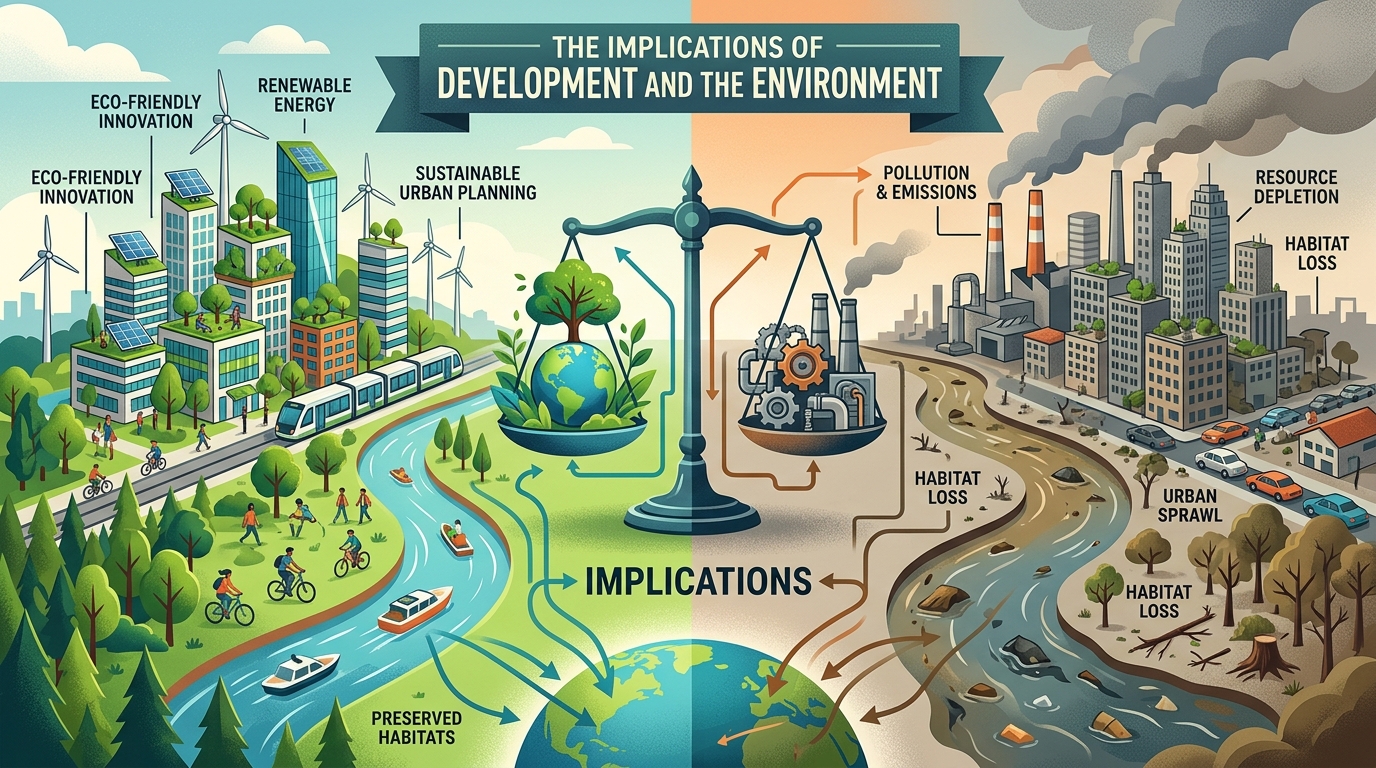
The Implications of Development and the Environment
Implications of Development and the Environment is a crucial topic in today’s world, highlighting the delicate balance between economic growth and environmental protection. While development improves living standards through industrialization and infrastructure, it also creates challenges like pollution, climate change, and resource depletion. Understanding this balance is essential for UPSC, UPPCS, and UPPSC aspirants.
How to Approach the Essay: The Implications of Development and the Environment
- First, understand the meaning of the topic.
Development means economic growth, industrialization, infrastructure, and improvement in quality of life.
Environment means natural resources like air, water, forests, land, and biodiversity.
Implications means the effects, both positive and negative. - Second, break the topic into parts.
You should analyze the relationship between development and environment, including both benefits and harms. - Third, follow a clear structure.
Start with an introduction, explain the need for development, then discuss environmental impacts, followed by solutions and conclusion. - Fourth, include multiple dimensions.
Cover economic, social, environmental, technological, and policy-related aspects. - Fifth, use examples.
Include real-life examples like pollution, climate change, renewable energy, and conservation efforts. - Finally, maintain balance.
Show that development is necessary but should be sustainable.

Essay: The Implications of Development and the Environment
“We do not inherit the Earth from our ancestors; we borrow it from our children.”
This quote reminds us of our responsibility towards the environment while pursuing development. In the modern world, every country wants growth and progress. Development brings better roads, industries, jobs, and improved living standards. However, this development often affects the environment. The relationship between development and environment is complex. It has both positive and negative implications.
Development is necessary for improving human life. It includes building infrastructure like roads, schools, hospitals, and industries. For example, industrial growth creates jobs and increases income. Development also improves healthcare and education. As a result, people live longer and better lives. Without development, it is difficult for a country to progress and reduce poverty.
However, development often comes at a cost to the environment. Industrial activities release harmful gases into the air, causing air pollution. Factories and vehicles emit carbon dioxide, which leads to climate change. For example, cities with heavy industries often suffer from poor air quality. This affects human health and leads to diseases.
Another major impact of development is deforestation. Forests are cut down to build roads, houses, and industries. This destroys habitats of animals and reduces biodiversity. For example, many species are becoming endangered due to loss of forests. Forests also help in absorbing carbon dioxide, so their destruction increases global warming.
Water pollution is another serious issue. Industrial waste and sewage are often released into rivers and lakes. This makes water unsafe for drinking and harms aquatic life. For example, many rivers in India face pollution due to industrial discharge. Clean water is essential for life, and its pollution creates serious health problems.
Development also leads to overuse of natural resources. Resources like coal, oil, and minerals are used rapidly. These are limited resources and may get exhausted in the future. Overuse of resources creates imbalance in nature and threatens sustainability.
One of the biggest global concerns today is climate change. It is mainly caused by excessive emissions of greenhouse gases due to industrial development. Climate change leads to rising temperatures, melting glaciers, and extreme weather events like floods and droughts. These changes affect agriculture, water supply, and human life.
Despite these negative effects, development can also support the environment if done wisely. For example, sustainable development focuses on meeting present needs without harming future generations. It promotes the use of renewable energy like solar and wind power. These sources do not pollute the environment and are unlimited.
Technology also plays an important role. Modern technologies can reduce pollution and improve efficiency. For example, electric vehicles reduce air pollution compared to petrol vehicles. Waste management systems can recycle materials and reduce garbage. Green buildings use less energy and water, helping in conservation.
Government policies are important for balancing development and environment. Laws and regulations can control pollution and protect natural resources. For example, environmental protection laws restrict harmful industrial activities. Governments also promote afforestation and conservation programs.
Public awareness is also necessary. People should understand the importance of protecting the environment. Simple actions like saving water, reducing plastic use, and planting trees can make a difference. Education plays a key role in creating awareness.
Another important concept is inclusive development. Development should benefit all people without harming nature. Poor communities are often the most affected by environmental damage. For example, farmers suffer due to climate change and water scarcity. Therefore, development should be fair and sustainable.
There are also conflicts between development and environment. For example, building a dam can provide electricity and water but may displace people and destroy ecosystems. Such situations require careful planning and decision-making.
The way forward is to adopt a balanced approach. Countries should focus on green development. This means promoting economic growth while protecting the environment. Renewable energy, sustainable agriculture, and eco-friendly industries are key solutions.
International cooperation is also important. Environmental problems like climate change are global issues. Countries need to work together to reduce emissions and protect the planet. Agreements like the Paris Climate Agreement aim to address these challenges.
“The Earth is what we all have in common.”
In conclusion, the relationship between development and environment is both necessary and challenging. Development improves human life, but it should not harm nature. A balanced approach is needed to ensure that progress does not destroy the environment. By adopting sustainable practices, using clean technologies, and increasing awareness, we can achieve growth while protecting our planet for future generations.
UPPCS 2025 Essay:
Indian Women in the 21st Century: From Dreams to Reality
Global Consciousness of the New India
The Future of Literature in the Age of Artificial Intelligence
Balance between development and environment protection …
