
CSMP IAS : India's Premier Coaching Institute for IAS / PCS
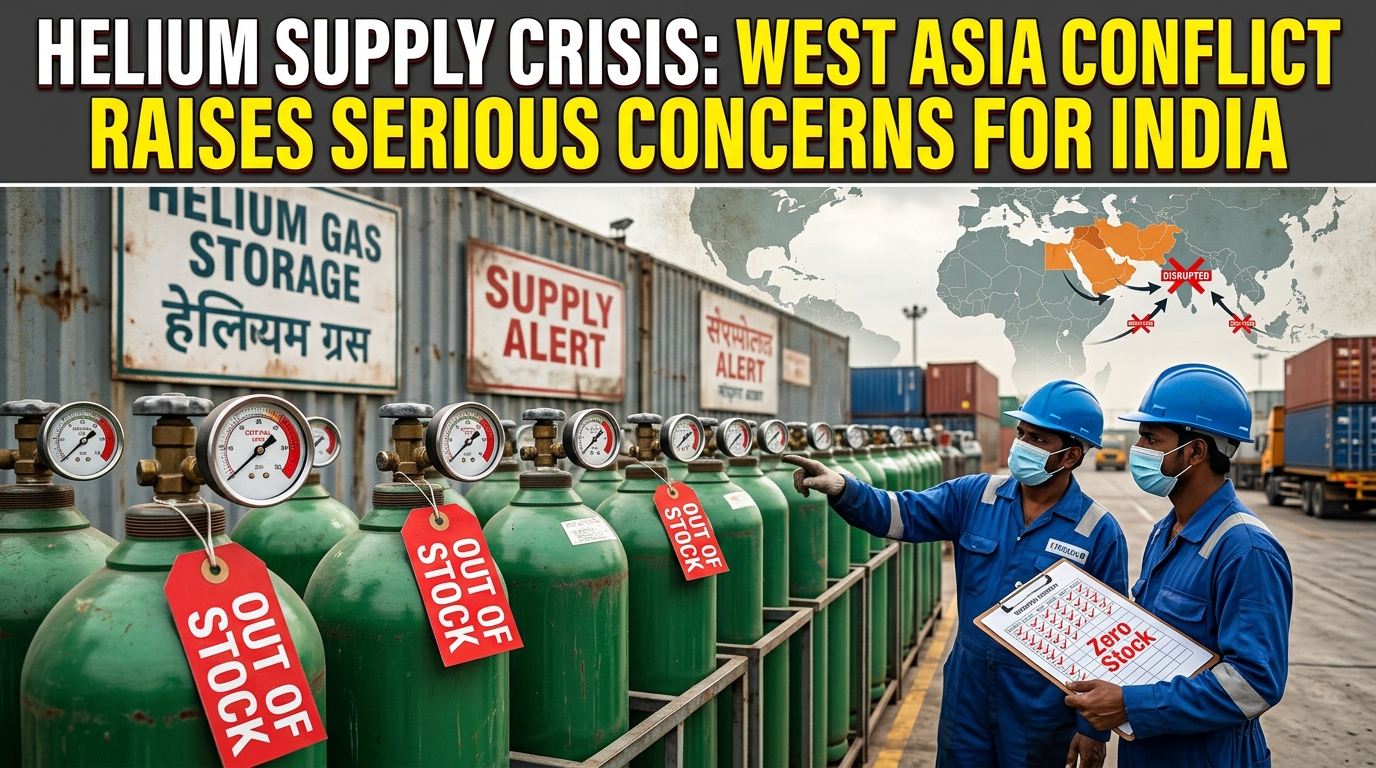
Helium Supply Crisis: West Asia Conflict Raises Serious Concerns for India
Table of Contents
The Helium Supply Crisis has become a serious issue due to tensions in West Asia. India depends completely on imported helium, and disruptions are affecting sectors like healthcare, electronics, and semiconductor manufacturing. This topic is important for exams like UPSC, UPPCS, and UPPSC because it connects science, economy, and international relations.
Why in the News?
- The helium supply has been disrupted due to geopolitical tensions in West Asia.
- Missile strikes and force majeure conditions affected production in Qatar’s Ras Laffan complex.
- India is fully dependent on helium imports.
- More than 50% of India’s helium comes from Qatar.
- Helium prices have increased sharply.
- Prices have risen by around 35% to 50% in recent weeks.
What are the Key Highlights?
What is Helium?
- Helium is a colourless, odourless, non-toxic, and inert gas.
- It does not react easily with other substances.
- It is very stable and safe to use in sensitive technologies.
- Helium is a non-renewable resource.
- It is mainly extracted from natural gas fields.
Uses of Helium
- Helium is used to cool superconducting magnets.
- These magnets are used in MRI machines in hospitals.
- It is used in semiconductor manufacturing.
- Chips require precise temperature control.
- It is used in scientific instruments.
- Devices like spectrometers depend on helium.
- It is used in fibre optics and display manufacturing.
India’s Helium Situation
- India is completely dependent on imports for helium.
- There is no domestic production currently.
- India’s helium demand in 2025 is about 3.4 million cubic meters.
- Some helium exists in India but is not commercially viable.
- The concentration is below 0.2%, which is too low.
- It may take 5 to 10 years to develop usable reserves.
Supply Chain Issues
- Qatar contributes about 34% of global helium exports.
- Disruption in Qatar has affected global supply chains.
- India keeps only 7 to 10 days of helium stock.
- This makes the system very vulnerable.
Impact of Helium Supply Crisis on Healthcare
- MRI machines depend on liquid helium for cooling.
- If helium levels fall below critical levels:
- Superconductivity is lost.
- Helium quickly evaporates, which is called quenching.
- This can damage expensive MRI machines.
- Hospitals may face serious problems.
- There may be delays in diagnosis.
- Emergency cases may be given priority over routine scans.
Price Increase
- Helium prices have increased significantly.
- The main impact is on rising costs.
- Industries are facing higher expenses instead of complete shutdown.

What are the Significance?
Strategic Importance of Helium
- Helium is a critical and strategic resource.
- It is important for healthcare, defence, and advanced technology sectors.
Helium Impact on Healthcare System
- A shortage of helium can affect medical diagnosis.
- MRI scans are essential for detecting serious diseases.
Impact on Semiconductor Industry
- Helium is important for chip manufacturing.
- India’s semiconductor growth depends on stable helium supply.
Economic Impact
- Rising helium prices increase production costs.
- This affects industries like electronics and healthcare.
Geopolitical Dependence
- India depends on a few countries for helium.
- This increases vulnerability during global conflicts.
What are the Challenges?
Complete Import Dependence
- India depends entirely on foreign countries for helium.
- This creates supply insecurity.
Limited Domestic Reserves
- Helium reserves in India are not economically viable.
- Extraction is difficult and costly.
Supply Concentration Risk
- A large share of helium comes from a few countries like Qatar.
- This increases risk during geopolitical tensions.
Short Inventory Duration
- India maintains only 7 to 10 days of helium stock.
- This gives very little time to respond to disruptions.
Rising Costs
- Increasing prices put pressure on industries.
- Healthcare and electronics sectors are most affected.
Way Forward
Diversification of Supply Sources
- India should import helium from multiple countries.
- Countries like the USA, Russia, South Africa, and Tanzania can be explored.
Strategic Reserves Creation
- India should create helium reserves.
- This will help during emergencies.
Domestic Exploration and Research
- Investment should be made in helium extraction technology.
- Even low concentration reserves may become useful in the future.
Recycling and Efficient Usage
- Helium recycling should be encouraged.
- Hospitals and industries can reuse helium.
Policy Support
- Government should treat helium as a strategic resource.
- Policies should ensure secure and stable supply chains.
Conclusion
The helium supply issue highlights the importance of preparing for global disruptions in essential resources. India needs long-term planning, better storage, and diversified imports to ensure that important sectors continue to function smoothly even during international crises.
Relevant Articles:
Artemis II Mission: NASA’s Bold Step in Deep Space Exploration and Moon Race
Article 161: Madras High Court Strengthens Governor’s Accountability in Remission Powers
Read More:
The Dream of New India: Schemes and Rural Development
How Much Human-Induced, How Much Natural
‘India is 100% import‑dependent for Helium, making many …
