CSMP IAS : India's Premier Coaching Institute for IAS / PCS
Great Nicobar Project Controversy: Rising Tribal Concerns
Table of Contents
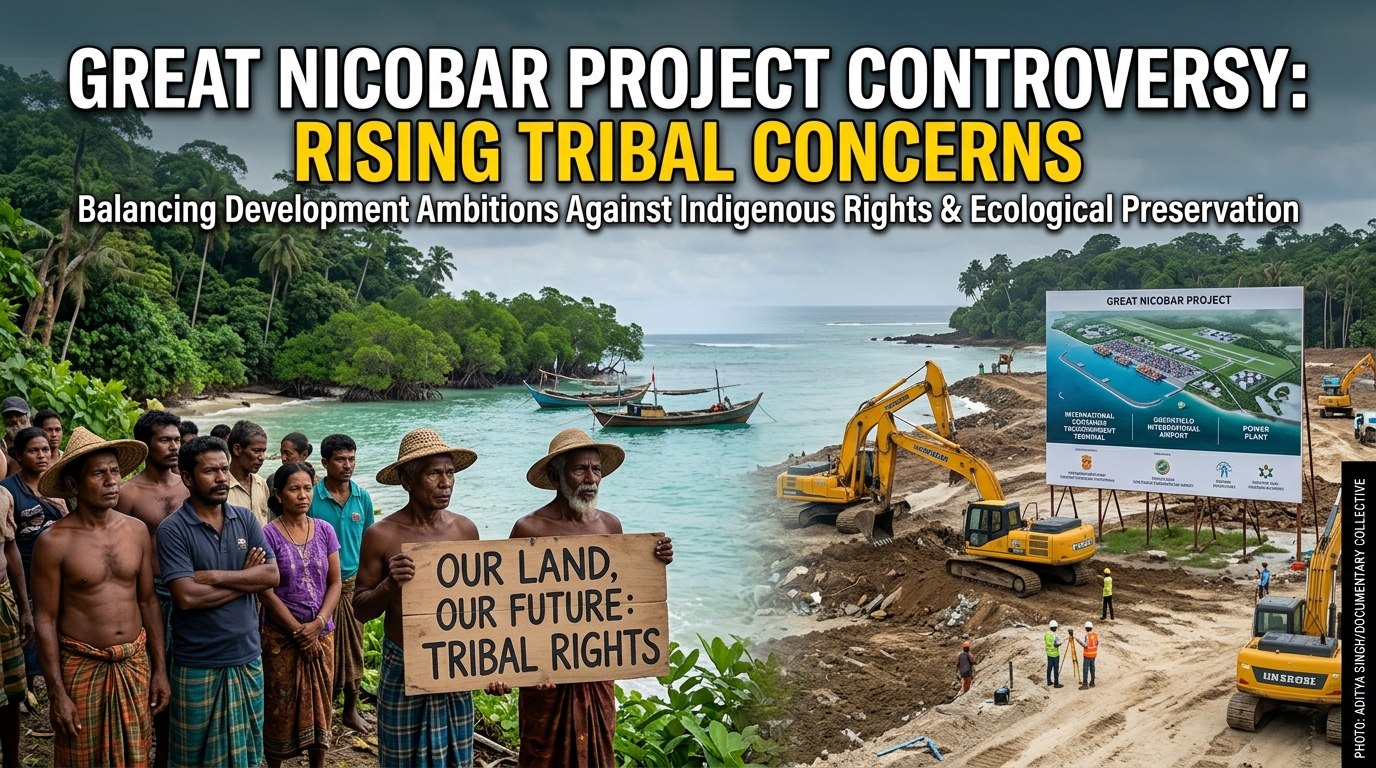
The Great Nicobar Project Controversy has brought attention to growing concerns among tribal communities regarding relocation, consent, and environmental impact. While the project promises economic and strategic benefits, questions about tribal rights and sustainable development remain critical, making it an important topic for UPSC, UPPCS, and UPPSC aspirants.
Why in the News?
- A major development project is being planned on Great Nicobar Island, which has raised concerns among local tribal communities.
- The Union Government is working on a large infrastructure project worth about ₹92,000 crore in this region.
- A draft plan called the “Comprehensive Tribal Welfare Plan” has been introduced to relocate tribal communities affected by the project.
- Local tribal groups, especially the Nicobarese and Shompen communities, have raised objections and confusion regarding this plan.
- The issue has also reached the judiciary, as petitions have been filed in the Calcutta High Court challenging the project’s approval process.
What are the Key Highlights?
The Great Nicobar Infrastructure Project
- The government is planning a mega infrastructure project on Great Nicobar Island.
- The project includes development of ports, airports, roads, and urban infrastructure.
- The aim is to boost economic growth, improve connectivity, and enhance strategic presence in the region.
Draft Comprehensive Tribal Welfare Plan
- The administration of Andaman and Nicobar Islands has prepared a draft plan.
- The plan proposes relocation of tribal communities affected by:
- Tsunami-affected areas.
- Areas impacted by the infrastructure project.
- The plan includes:
- Housing facilities.
- Land development.
- Basic infrastructure like roads, water, and electricity.
- The budget for this plan is around ₹42.52 crore for a period of 24 months.
Concerns of Tribal Communities
- Members of the Tribal Council of Great and Little Nicobar have raised concerns.
- They have stated that:
- The relocation details are unclear.
- It is not specified who will be relocated.
- The exact location of relocation is not mentioned.
- Tribal leaders have expressed confusion and dissatisfaction with the process.
Issue of Consent
- The tribal communities had earlier withdrawn their consent in 2022.
- They claim that:
- Their forest rights were not properly settled.
- Proper consultation was not carried out.
- The government has told the court that it needs time to prove that consent was taken.
Legal Challenge
- Petitions have been filed in the High Court against the project.
- The main arguments include:
- Violation of tribal consent procedures.
- Violation of forest rights of Nicobarese and Shompen communities.
- The court is currently hearing the matter.
Demand for Clarity and Translation
- Tribal Council members have requested:
- A Hindi translation of the draft plan.
- More time (at least one month) to review the document.
- They have pointed out that understanding the plan is necessary before giving consent.

What is the Significance?
Strategic Importance of Great Nicobar Island
- Great Nicobar Island is located near important international sea routes.
- It has strategic importance for India’s defense and maritime security.
- It is close to the Malacca Strait, which is a major global trade route.
- Development of infrastructure can strengthen India’s presence in the Indo-Pacific region.
Economic Development and Connectivity
- The project can improve connectivity of remote island regions.
- It can create:
- Jobs for local people.
- Opportunities in tourism, trade, and services.
- Better infrastructure can reduce isolation of the islands.
Welfare of Tribal Communities
- The draft plan aims to improve living conditions of tribal communities.
- It promises:
- Better housing.
- Improved infrastructure.
- Access to services like health and education.
- If implemented properly, it can uplift socio-economic conditions.
Environmental Importance
- Great Nicobar Island is rich in biodiversity.
- It has:
- Dense forests.
- Unique wildlife.
- Any development project must balance growth with environmental protection.
Legal and Constitutional Importance
- The issue highlights the importance of:
- Tribal rights.
- Forest rights laws.
- Consent of indigenous communities.
- It reflects the role of the judiciary in protecting rights.
What are the Challenges?
Lack of Clarity in the Relocation Plan
- The draft plan does not clearly mention:
- Where people will be relocated.
- Who exactly will be relocated.
- This creates confusion and fear among tribal communities.
Issues of Consent
- Tribal communities have alleged that:
- Proper consent was not taken.
- Their views were ignored.
- Consent is essential under laws protecting tribal rights.
Threat to Tribal Culture and Identity
- Relocation may disrupt:
- Traditional lifestyle.
- Cultural practices.
- Tribal communities have a deep connection with their land.
Environmental Concerns
- Large-scale infrastructure projects may harm:
- Forests.
- Wildlife habitats.
- The island ecosystem is fragile and sensitive.
Legal Uncertainty
- The matter is pending in court.
- Delays and legal battles can slow down development.
- There is uncertainty regarding final approval.
Communication Gap
- The draft plan was not easily understandable to local communities.
- Lack of translation and proper explanation created mistrust.
Way Forward
Ensuring Informed Consent
- The government must ensure that:
- Tribal communities are fully informed.
- Consent is taken in a transparent manner.
- Consultation should be meaningful and not just formal.
Providing Clear and Detailed Plans
- Authorities should clearly specify:
- Relocation areas.
- Benefits and facilities.
- Detailed information can reduce confusion and fear.
Protecting Tribal Rights
- Laws related to forest rights and tribal welfare must be strictly followed.
- Special attention should be given to vulnerable groups like the Shompen tribe.
Balancing Development and Environment
- Development should be sustainable.
- Environmental impact assessments must be thorough.
- Measures should be taken to protect biodiversity.
Improving Communication and Participation
- Documents should be provided in local languages like Hindi.
- Communities should be given enough time to understand and respond.
- Participation of local councils should be strengthened.
Judicial Oversight
- Courts should ensure that:
- Legal procedures are followed.
- Rights of communities are protected.
- Judicial review can maintain balance between development and rights.
Conclusion
The Great Nicobar project represents a major opportunity for economic and strategic growth, but it also raises serious concerns about tribal rights, environmental protection, and governance. A balanced approach that respects local communities, ensures transparency, and follows constitutional principles is essential for achieving sustainable and inclusive development.
Relevant Articles:
SAGAR Mission Boosts Maritime Security in Indian Ocean Region
Helium Supply Crisis: West Asia Conflict Raises Serious Concerns for India
Read Also:
Artemis II Mission: NASA’s Bold Step in Deep Space Exploration and Moon Race
Article 161: Madras High Court Strengthens Governor’s Accountability in Remission Powers
PARLIAMENT QUESTION: Great Nicobar Island Project
