
CSMP IAS : India's Premier Coaching Institute for IAS / PCS
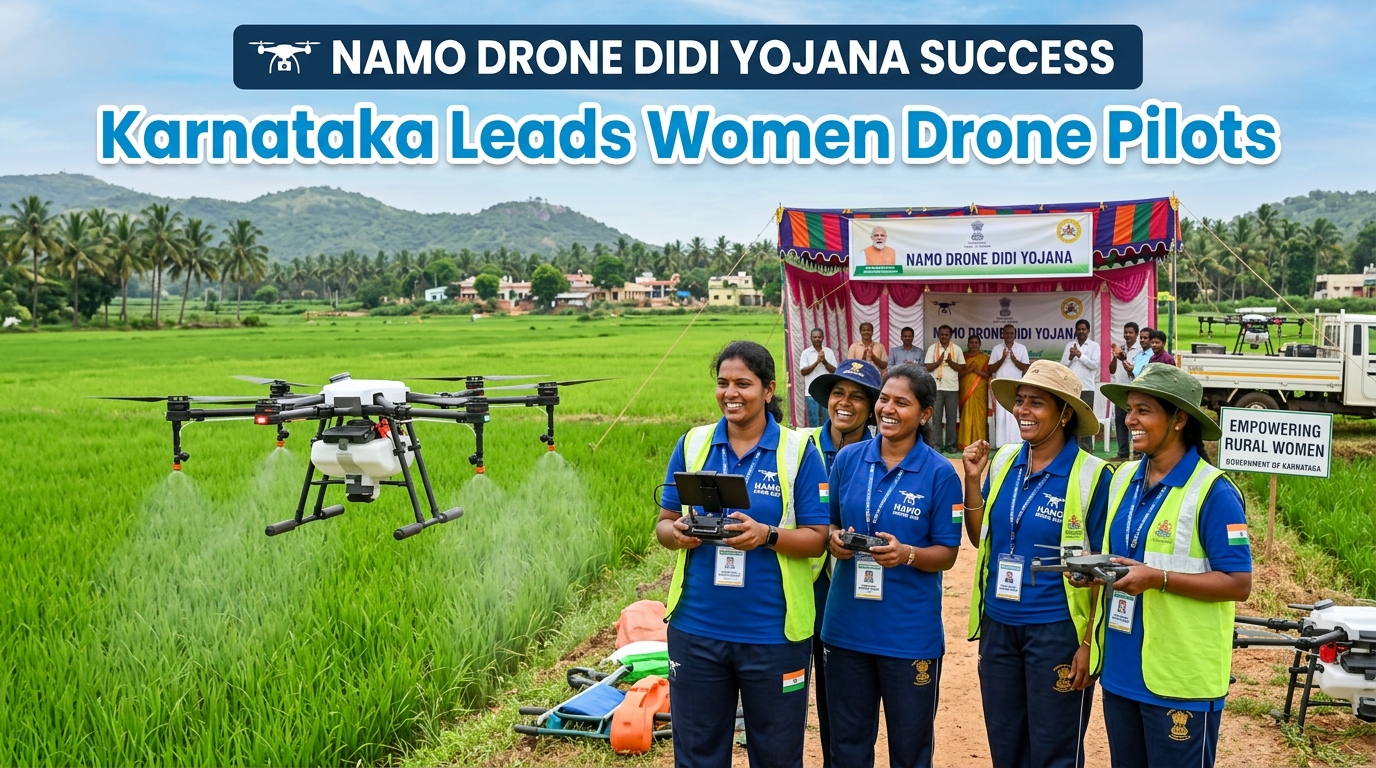
NaMo Drone Didi Yojana Success: Karnataka Leads Women Drone Pilots
Table of Contents
The NaMo Drone Didi Yojana Success is visible as Karnataka leads in training women drone pilots under this central scheme. The initiative is empowering rural women, improving agricultural productivity, and promoting technology adoption.
Why in the News?
- Karnataka has emerged as the top state in training women Self-Help Group members as drone pilots under the NaMo Drone Didi Yojana.
- This achievement shows that Karnataka is leading in adopting new technology for rural development.
- The information was shared in Parliament by Murlidhar Mohol, Minister of State for Civil Aviation.
- This indicates that the government is closely monitoring and promoting the success of the scheme.
- This development highlights the growing role of women in technology-driven agriculture.
- It shows a shift from traditional roles to modern, skill-based occupations.
What are the Key Highlights?
Leading State in Drone Pilot Training
- Karnataka has trained 145 women from Self-Help Groups as drone pilots.
- This is the highest number in the country, making it a model state.
- Other leading states include:
- Uttar Pradesh with 128 trainees, showing strong participation in northern India.
- Andhra Pradesh with 108 trainees, reflecting southern region involvement.
- This shows that multiple states are actively adopting drone technology in agriculture.
District-Level Performance in Karnataka
- Certain districts have shown better performance due to better awareness and implementation.
- Koppal district has trained 13 women, making it the top-performing district.
- Kalaburagi district has trained 12 women, showing consistent participation.
- Mandya district has trained 11 women, reflecting agricultural importance.
- These districts may have better institutional support and training facilities.
About NaMo Drone Didi Yojana
- The scheme is a Central Government initiative aimed at empowering rural women through technology.
- It focuses on improving livelihoods and agricultural productivity.
- The scheme plans to provide 15,000 drones to women SHGs across India.
- This will create a large network of trained drone operators.
- The total budget allocated is ₹1,261 crore.
- This shows strong financial commitment by the government.
- The scheme period is from 2023-24 to 2025-26.
- It is a time-bound mission with clear targets.
National-Level Data
- A total of 1,094 women SHG members have been trained across India.
- This shows the early success of the scheme.
- These women are now capable of operating drones for agricultural purposes.
- They can provide services like spraying fertilizers and pesticides.
Real-Life Example
- A woman named Asha Rani from Shivamogga district in Karnataka has been trained.
- She represents the real impact of the scheme at the grassroots level.
- She uses drones to spray medicines on maize and paddy crops.
- This reduces manual labor and increases efficiency.
- She earns income through this work, sometimes up to ₹1 lakh per month.
- This highlights the income-generating potential of the scheme.

What is the Significance?
Women Empowerment through Technology
- The scheme provides modern technical skills to rural women.
- Women learn how to operate drones and manage agricultural services.
- Women are moving beyond traditional roles like making pickles and handicrafts.
- This breaks social stereotypes about women’s work.
- It increases confidence, independence, and decision-making ability.
- Women become active contributors to the economy.
Improvement in Agricultural Productivity
- Drones help in precise spraying of pesticides and fertilizers.
- This ensures uniform distribution across fields.
- This leads to better crop yield and quality.
- Farmers get higher output from the same land.
- It reduces wastage of chemicals and water.
- This is both cost-effective and environmentally friendly.
- It saves time and labor for farmers.
- Large fields can be covered quickly.
Income Generation for Rural Women
- Women drone pilots can earn a stable income through service provision.
- They can charge farmers for spraying services.
- Seasonal agricultural work provides regular earning opportunities.
- Income is especially high during sowing and harvesting seasons.
- This improves the financial condition of families.
- It also reduces dependence on others.
Promotion of Digital and Technological Inclusion
- The scheme promotes digital literacy among rural women.
- Women learn to handle modern devices and software.
- It bridges the urban-rural technology gap.
- Rural areas gain access to advanced tools.
- It supports the Digital India mission.
- It encourages use of technology at the grassroots level.
Strengthening Self-Help Groups (SHGs)
- SHGs become more productive and economically active.
- They shift from small-scale activities to high-value services.
- Group members develop teamwork and leadership skills.
- This strengthens social cohesion.
- SHGs gain financial independence.
- They become self-sustaining units.
Boost to India’s Aviation and Drone Sector
- The initiative supports the growth of India’s drone ecosystem.
- It creates demand for drone manufacturing and services.
- It generates skilled manpower for future industries.
- Drone technology has applications beyond agriculture.
- It aligns with the government’s focus on innovation and startups.
What are the Challenges?
Lack of Awareness in Rural Areas
- Many women are unaware of the scheme and its benefits.
- Information does not reach remote villages effectively.
- Limited awareness reduces participation.
- Potential beneficiaries remain excluded.
Technical Training Difficulties
- Operating drones requires technical knowledge and practice.
- It may be challenging for first-time learners.
- Some women may face difficulty in understanding complex systems.
- Continuous support is needed.
Maintenance and Repair Issues
- Drones require regular servicing and maintenance.
- Technical faults can disrupt work.
- Lack of local repair centers creates dependency on distant facilities.
- This increases cost and downtime.
Seasonal Nature of Work
- Agricultural activities are seasonal in nature.
- Drone usage is high only during certain periods.
- Income may not be consistent throughout the year.
- This affects financial stability.
Financial Barriers
- Initial costs of training and equipment can be high.
- Not all SHGs can afford additional expenses.
- Access to credit may be limited.
- Financial institutions may hesitate to lend.
Connectivity and Infrastructure Issues
- Rural areas often lack proper internet and electricity.
- This affects drone operations and training.
- Poor infrastructure limits the full potential of technology use.
Way Forward
Increasing Awareness and Outreach
- The government should launch awareness campaigns in rural areas.
- Information should be spread through local media and community meetings.
- Training programs should be promoted widely.
- More women should be encouraged to participate.
Strengthening Training Programs
- Training should be simplified and practical.
- Hands-on experience should be prioritized.
- Continuous learning opportunities should be provided.
- Refresher courses can improve skills.
Providing Maintenance Support
- Local drone repair and service centers should be established.
- This will reduce downtime and costs.
- Technical helplines should be created.
- Women can get immediate assistance when needed.
Ensuring Year-Round Employment
- Alternative uses of drones should be explored.
- Drones can be used for mapping, surveillance, and delivery.
- The government can create additional opportunities in other sectors.
- This will ensure stable income throughout the year.
Financial Assistance and Subsidies
- More subsidies and low-interest loans should be provided.
- This will reduce financial burden on SHGs.
- Easy access to credit should be ensured.
- Banks should support women entrepreneurs.
Improving Rural Infrastructure
- Better internet connectivity should be developed.
- Digital services depend on strong networks.
- Reliable electricity supply should be ensured.
- It is essential for operating drones and charging equipment.
Conclusion
The NaMo Drone Didi Yojana represents a significant step towards integrating women into modern technological sectors while transforming agriculture, and its long-term success depends on inclusive implementation, continuous support, and strong infrastructure development to ensure sustainable growth and empowerment.
Relevant Articles:
Great Nicobar Project Controversy: Rising Tribal Concerns
SAGAR Mission Boosts Maritime Security in Indian Ocean Region
Read More:
Helium Supply Crisis: West Asia Conflict Raises Serious Concerns for India
Artemis II Mission: NASA’s Bold Step in Deep Space Exploration and Moon Race
The ‘Namo Drone Didi’ scheme will provide new …
