CSMP IAS : India's Premier Coaching Institute for IAS / PCS
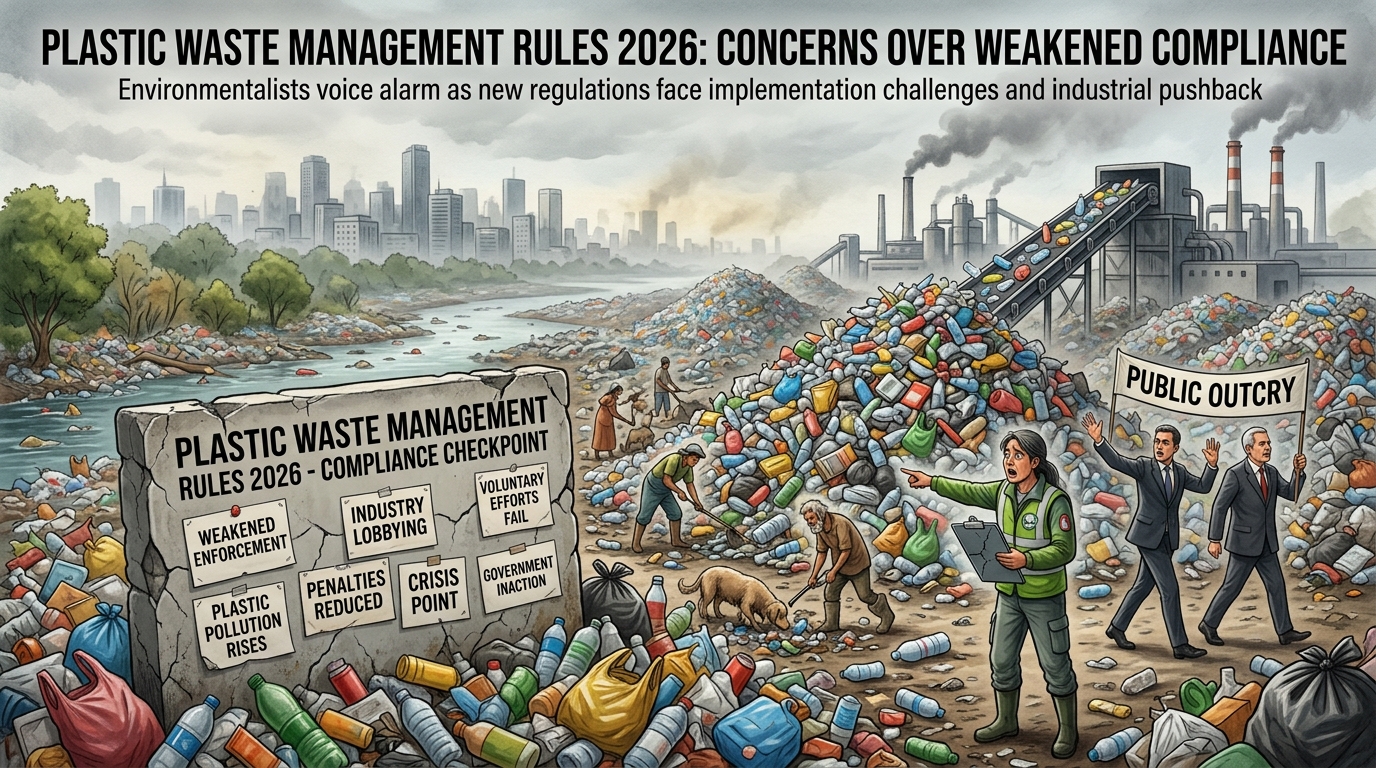
Plastic Waste Management Rules 2026 Raise Concerns Over Weakened Compliance
Table of Contents
The Plastic Waste Management Rules 2026 have introduced new flexibility for companies, allowing them to delay recycling targets and use tradable certificates. While the policy aims to ease compliance and promote a circular economy, it has raised concerns about weakened accountability and environmental protection. This development is important for UPSC aspirants as it highlights governance challenges, environmental policy issues, and the balance between economic growth and sustainability.
Why in the News?
- India has amended its Plastic Waste Management Rules to introduce new flexibility for companies in meeting recycling targets.
- This amendment allows companies to shift their compliance deadlines instead of strictly following yearly targets.
- This change has created debate between industrial convenience and environmental responsibility.
- The notification was issued by the Ministry of Environment on March 31.
- It reflects the government’s attempt to improve implementation of plastic waste rules.
- Experts are analysing whether the amendment strengthens or weakens environmental protection.
- The issue is important because plastic pollution is increasing rapidly in India.
- Plastic waste is accumulating in landfills, rivers, and oceans.
- Microplastics are also entering air, water, and food systems, affecting human health.
- The amendment also highlights the challenge of balancing economic growth with environmental sustainability.
- Industries need flexibility, but environmental protection requires strict enforcement.
What are the Key Highlights?
Carry Forward of Recycling Targets
- The amendment allows companies to carry forward their unmet recycling targets for up to three years.
- If a company fails to meet its target in 2025–26, it can complete it gradually over the next three years.
- Companies must meet at least one-third of the pending target each year.
- This ensures that companies do not completely avoid their responsibilities.
- Earlier, companies were required to meet targets every year.
- This ensured strict compliance but created pressure on industries.
- The new system provides flexibility but may reduce urgency.
- Companies might delay action instead of taking immediate steps.
Introduction of Tradable Certificates
- The amendment introduces a system of tradable recycling certificates.
- Companies that exceed their recycling targets can earn certificates.
- Other companies can purchase these certificates to meet their obligations.
- This creates a market-based mechanism for compliance.
- This system reduces compliance costs.
- It allows companies to choose the most efficient way to meet targets.
- However, it may weaken accountability.
- Companies may avoid recycling their own plastic waste.
Exemptions for Certain Sectors
- Some sectors, especially food and beverage packaging, are exempted from certain recycling requirements.
- This is due to safety regulations that restrict the use of recycled plastic.
- This reduces the overall scope of the rules.
- A significant portion of plastic waste may remain outside regulatory control.
Continuation of Extended Producer Responsibility (EPR)
- The amendment continues the Extended Producer Responsibility (EPR) framework introduced in 2022.
- EPR makes producers responsible for managing plastic waste generated from their products.
- It ensures that companies take responsibility for the entire lifecycle of plastic.
- This includes collection, recycling, and disposal.
Category-wise Recycling Targets
- Plastic packaging is divided into three categories based on type and recyclability.
Category I: Rigid Plastics
- This category includes PET bottles and HDPE containers.
- These plastics are easier to collect and recycle.
- The target is 30% recycled content in 2025–26.
- It will increase to 60% by 2028–29.
Category II: Flexible Plastics
- This category includes plastic carry bags and snack packets.
- These are more difficult to recycle compared to rigid plastics.
- The target is 10% recycled content initially.
- It will increase to 20% over time.
Category III: Multi-layered Plastics
- This category includes items like Tetra Pak cartons and foil wrappers.
- These are the most difficult to recycle due to multiple layers.
- The target is 5% recycled content initially.
- It will increase to 10% in later years.
Reuse Targets
- The rules also promote reuse of plastic packaging.
- Small containers must be reused at least 10%.
- This encourages repeated use and reduces waste.
- Large water containers must be reused up to 70%.
- This significantly reduces plastic consumption.
- Large non-water containers must be reused at least 10%.
Current Status of Plastic Waste Management
- India generates around 4.13 million tonnes of plastic waste annually.
- This shows the scale of the challenge.
- Since the EPR framework was introduced, about 20.7 million tonnes of plastic have been recycled.
- This indicates progress but not complete success.
- There is no clear public data confirming full compliance.
- Most information is based on self-reporting by companies.
Issue of Fake Certificates
- The Central Pollution Control Board identified more than 6,00,000 fake recycling certificates.
- These were found during audits in several states.
- This highlights serious weaknesses in monitoring systems.
- It raises questions about the reliability of compliance data.

What is the Significance?
Flexibility for Industry
- The amendment reduces strict compliance pressure on companies.
- It allows them to manage targets over time.
- This is beneficial for small and medium enterprises.
- It reduces financial burden and operational challenges.
Development of Recycling Market
- Tradable certificates create a market for recycling credits.
- Companies that perform better can earn revenue.
- This encourages investment in recycling infrastructure.
- It supports growth of the waste management sector.
Promotion of Circular Economy
- The rules promote recycling and reuse of materials.
- This reduces waste and conserves resources.
- It supports a circular economy where materials are continuously reused.
Environmental Protection
- Recycling reduces plastic pollution in land and water bodies.
- It protects ecosystems and biodiversity.
- It also reduces health risks from microplastics.
Policy Stability
- The continuation of EPR ensures long-term policy consistency.
- This helps industries plan their strategies.
What are the Challenges?
Weakening of Accountability
- Carry forward provisions may reduce strict enforcement.
- Companies may delay compliance.
Misuse of Tradable Certificates
- Companies may rely on buying certificates instead of recycling.
- This weakens the purpose of the policy.
Limited Coverage
- Exemptions reduce the scope of regulations.
- Important sectors remain outside the system.
Lack of Transparency
- Data is not fully reliable due to self-reporting.
- Independent verification is limited.
Fake Certificates Issue
- Fake certificates show gaps in monitoring.
- This reduces trust in the system.
Technical Challenges
- Some plastics are difficult to recycle.
- Technology and infrastructure are limited.
Rising Plastic Waste
- Plastic waste generation continues to increase.
- Recycling efforts are not enough to manage it.
Way Forward
Strengthening Monitoring
- Digital tracking systems should be improved.
- Real-time monitoring can ensure transparency.
- Regular audits should be conducted.
- Strict penalties should be imposed for violations.
Regulating Certificate System
- Limits should be placed on the use of tradable certificates.
- Companies should recycle a minimum portion themselves.
Expanding Coverage
- More sectors should be included under the rules.
- Safe alternatives for food packaging should be developed.
Improving Data Transparency
- Public access to compliance data should be increased.
- Independent agencies should verify information.
Investing in Technology
- Advanced recycling technologies should be promoted.
- Research in biodegradable materials should be supported.
Strengthening Infrastructure
- More recycling plants should be built.
- Waste collection systems should be improved.
Public Awareness
- Awareness campaigns should educate people about plastic waste.
- Citizens should be encouraged to reduce and segregate waste.
Conclusion
The amendment reflects a shift toward flexibility and market-based solutions in plastic waste management, but its success will depend on strong monitoring, responsible implementation, and continuous efforts to balance industrial needs with environmental sustainability.
Relevant Articles:
NaMo Drone Didi Yojana Success: Karnataka Leads Women Drone Pilots
Great Nicobar Project Controversy: Rising Tribal Concerns
Read Also:
SAGAR Mission Boosts Maritime Security in Indian Ocean Region
Helium Supply Crisis: West Asia Conflict Raises Serious Concerns for India
PARLIAMENT QUESTION: Plastic Waste Management
