
CSMP IAS : India's Premier Coaching Institute for IAS / PCS
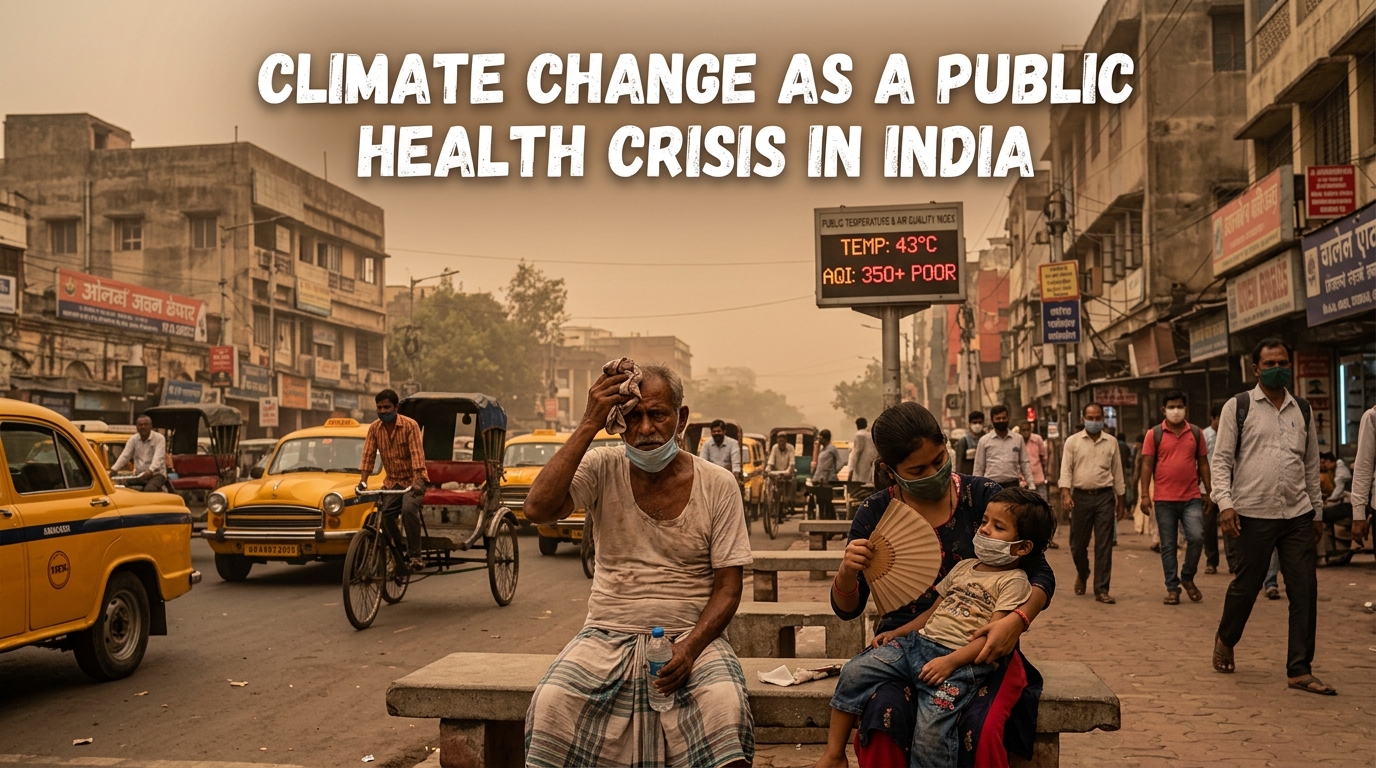
Climate Change as a Public Health Crisis in India
Table of Contents
Climate change is emerging as a major public health crisis in India, as rising temperatures, floods, droughts, and air pollution are increasing diseases such as dengue, malaria, cholera, and respiratory disorders. It is no longer only an environmental issue but a direct threat to human health, food security, and healthcare systems across the country.
Why in the News?
Climate change is no longer only an environmental issue
- Climate change refers to long-term changes in temperature, rainfall, humidity, and weather patterns caused mainly by human activities such as burning fossil fuels and deforestation.
- Earlier discussions focused mainly on sea level rise, floods, and storms, but now scientists and doctors are highlighting its impact on public health.
- In India, increasing heatwaves, flooding, droughts, and air pollution are directly affecting human health at a large scale.
- Climate change is now being seen as a medical emergency because it increases existing diseases and creates new health risks.
India is highly vulnerable to climate-linked health risks
- India has a large population living in dense cities, coastal areas, and climate-sensitive regions.
- Many areas lack strong health infrastructure, clean water supply, and urban drainage systems.
- This makes India especially vulnerable to waterborne diseases, vector-borne diseases, and heat-related illnesses.
What are the Key Highlights?
Climate change and waterborne diseases
Urban flooding increases disease risk
- Waterlogging means accumulation of rainwater in streets and low-lying areas due to poor drainage.
- Cities like Mumbai face repeated urban floods during monsoons.
- Floodwater mixes with sewage and contaminates drinking water.
Major diseases linked to contaminated water
- Cholera is a bacterial disease that spreads through contaminated water and causes severe diarrhoea and dehydration.
- Typhoid is a bacterial infection caused by unsafe water and poor sanitation.
- Hepatitis A is a viral infection affecting the liver and spreads through contaminated food and water.
- Leptospirosis is a bacterial disease spread through water contaminated with animal urine, especially during floods.
Rural drought and unsafe water use
- Drought refers to long periods of water shortage due to low rainfall.
- In drought areas, people often depend on unsafe ponds, wells, or contaminated sources.
- This increases diarrhoeal diseases and dehydration, especially in children and elderly people.
Climate change and expanding disease patterns
Changing climate expands disease spread
- Vector-borne diseases are diseases spread by insects such as mosquitoes.
- Mosquitoes thrive in warm and humid conditions.
- Rising temperatures and irregular rainfall increase mosquito breeding.
Dengue changing patterns in India
- Dengue is a viral disease spread by Aedes mosquitoes.
- In Delhi-NCR, dengue cases used to peak in September.
- Now cases often peak in November due to extended warm and wet conditions.
- This shows how climate change is changing disease timing.
Malaria spreading to new regions
- Malaria is a mosquito-borne parasitic disease.
- It was earlier common in warm regions like the Gangetic plains.
- Now it is being reported in cooler areas like Himachal Pradesh, showing geographic expansion.
Allergies and respiratory issues
- Climate change increases pollen levels and extends pollen seasons.
- This leads to more allergies, asthma, and breathing problems.
- People in new regions face these diseases without natural immunity.
Climate change and air pollution
Heat increases air pollution
- Higher temperatures increase use of air conditioners.
- This increases electricity demand, often produced from fossil fuels.
- Fossil fuel burning releases greenhouse gases and harmful particles.
Role of PM2.5 pollution
- PM2.5 refers to very fine particles smaller than 2.5 micrometres.
- These particles enter deep into the lungs and bloodstream.
- They affect lungs, heart, and kidneys.
Health impacts of air pollution
- Lung diseases such as asthma and chronic obstructive pulmonary disease (COPD) increase.
- Blood vessels get damaged, increasing risk of heart attack and stroke.
- Long-term exposure can reduce kidney function and cause chronic kidney disease.
Heat stress and human health
Rising heatwaves in India
- Heatwaves are long periods of extremely high temperatures.
- States like Odisha, Telangana, and Vidarbha report rising heat-related deaths.
- Outdoor workers are most affected due to direct sun exposure.
Heat stress on the body
- Heat stress occurs when the body cannot cool itself properly.
- It increases strain on the heart and blood circulation.
- It can lead to heat stroke, which is a life-threatening condition.
Night-time heat is also dangerous
- Cities like Delhi and Mumbai are experiencing higher night temperatures.
- Normally, the body cools at night to recover from daytime heat.
- Without cooling, the body remains under continuous stress.
Climate change and food security
Impact on agriculture
- Food security means access to sufficient, safe, and nutritious food.
- Climate change leads to unseasonal rain, floods, and droughts.
- These conditions damage crops and reduce agricultural output.
Nutrition-related impacts
- Crop damage reduces food availability and increases prices.
- This leads to micronutrient deficiencies, especially in children.
- Micronutrients are vitamins and minerals needed for growth and immunity.
Impact on livestock
- Heat stress reduces milk production in cattle.
- This affects nutrition in infants and children who depend on milk.
Long-term health effects
- Poor nutrition weakens immunity.
- This increases vulnerability to infections and slows child development.

What is the Significance?
Climate change is now a public health issue
- Climate change directly affects human health systems, not only the environment.
- It increases the burden on hospitals and healthcare workers.
- It creates new disease patterns that are harder to predict.
Rising burden on healthcare systems
- Hospitals face more cases of infectious diseases during floods and heatwaves.
- Rural and poor regions are most affected due to weak infrastructure.
- Health systems need to adapt to changing disease patterns.
Inequality in health impacts
- Poor communities suffer more due to lack of clean water and housing.
- Outdoor workers face higher heat exposure.
- Children and elderly people are most vulnerable.
Climate change increases disease diversity
- It increases existing diseases like dengue, malaria, and diarrhoea.
- It also expands diseases into new geographic areas.
- It creates new combinations of environmental and health risks.
Challenges
Weak urban infrastructure
Poor drainage systems
- Many Indian cities lack proper drainage systems.
- This leads to frequent flooding and water contamination.
Inadequate sanitation
- Open drains and poor sewage systems increase disease spread.
- Clean drinking water supply is often interrupted during floods.
Weak disease surveillance systems
Delayed detection of outbreaks
- Health systems often detect outbreaks late.
- This delays response to diseases like dengue and cholera.
Lack of real-time monitoring
- Many rural areas lack digital disease tracking systems.
- This makes it difficult to predict disease spread patterns.
Climate-sensitive agriculture
Dependence on monsoon
- Indian agriculture depends heavily on monsoon rainfall.
- Irregular rainfall causes crop failures.
Lack of climate-resilient crops
- Farmers often lack access to drought-resistant and heat-resistant crop varieties.
- This increases vulnerability to climate shocks.
Air pollution and energy dependence
Fossil fuel reliance
- India still depends on coal-based power generation.
- This increases air pollution and greenhouse gas emissions.
Rising cooling demand
- Increased use of air conditioners increases electricity consumption.
- This creates a feedback loop of more emissions and more heat.
Health system limitations
Shortage of medical infrastructure
- Rural areas lack hospitals and trained medical staff.
- Emergency response during heatwaves and floods is weak.
Lack of climate-health integration
- Health policies often do not consider climate change impacts.
- Coordination between the environment and health sectors is limited.
Way Forward
Strengthening health infrastructure
Climate-resilient hospitals
- Hospitals should be designed to function during floods and heatwaves.
- Backup electricity and water systems should be ensured.
Expansion of primary healthcare
- Primary health centres should be strengthened in rural areas.
- Early diagnosis can reduce disease severity.
Improving water and sanitation systems
Urban drainage improvement
- Cities should invest in modern drainage systems.
- Rainwater management should be integrated into urban planning.
Safe drinking water supply
- Water purification systems should be expanded.
- Regular monitoring of water quality is necessary.
Disease surveillance and early warning systems
Real-time monitoring
- Digital systems should track disease outbreaks in real time.
- Early alerts can help prevent epidemics.
Climate-based forecasting
- Weather data should be linked with disease prediction models.
- This can help prepare for dengue and malaria outbreaks.
Climate-resilient agriculture
Drought-resistant crops
- Research should focus on climate-resilient crop varieties.
- Farmers should be trained in sustainable farming methods.
Diversification of crops
- Reducing dependence on a single crop improves resilience.
- Mixed farming systems should be encouraged.
Reducing air pollution
Clean energy transition
- Shift towards renewable energy like solar and wind power.
- Reduce dependence on coal-based electricity.
Sustainable transport
- Promote electric vehicles and public transport.
- Reduce emissions from private vehicles.
Heatwave action plans
Early warning systems
- Weather alerts should be sent to vulnerable populations.
- Labourers should be advised to avoid peak heat hours.
Workplace safety measures
- Employers should provide shaded rest areas and drinking water.
- Outdoor work timings should be adjusted during heatwaves.
Strengthening policy integration
Health and climate coordination
- Health policies should include climate risk assessments.
- Environmental and health ministries should work together.
Community awareness
- Public awareness campaigns should educate people about climate-related diseases.
- Communities should be trained in preventive health practices.
Conclusion
Climate change is emerging as a powerful force that reshapes human health in multiple ways, from spreading infectious diseases to increasing heat stress and weakening nutrition systems. It affects both physical health and the social systems that support wellbeing, including agriculture, water supply, and urban living conditions. The growing evidence shows that climate change is not only an environmental challenge but also a deep and continuing public health concern that requires urgent, coordinated, and long-term action across sectors.
Relevant News:
China Energy Strategy Success: How China Avoided Global Oil Crisis Impact
WTO Crisis: Trade Multilateralism Faces Serious Breakdown
Read Also:
Plastic Waste Management Rules 2026: Weakening EPR Enforcement Raises Environmental Concerns
Nuclear Energy Expansion in India: SHANTI Act 2025 and India’s 100 GW Nuclear Energy Push
Steps taken to mitigate Health Risks associated …
