
CSMP IAS : India's Premier Coaching Institute for IAS / PCS
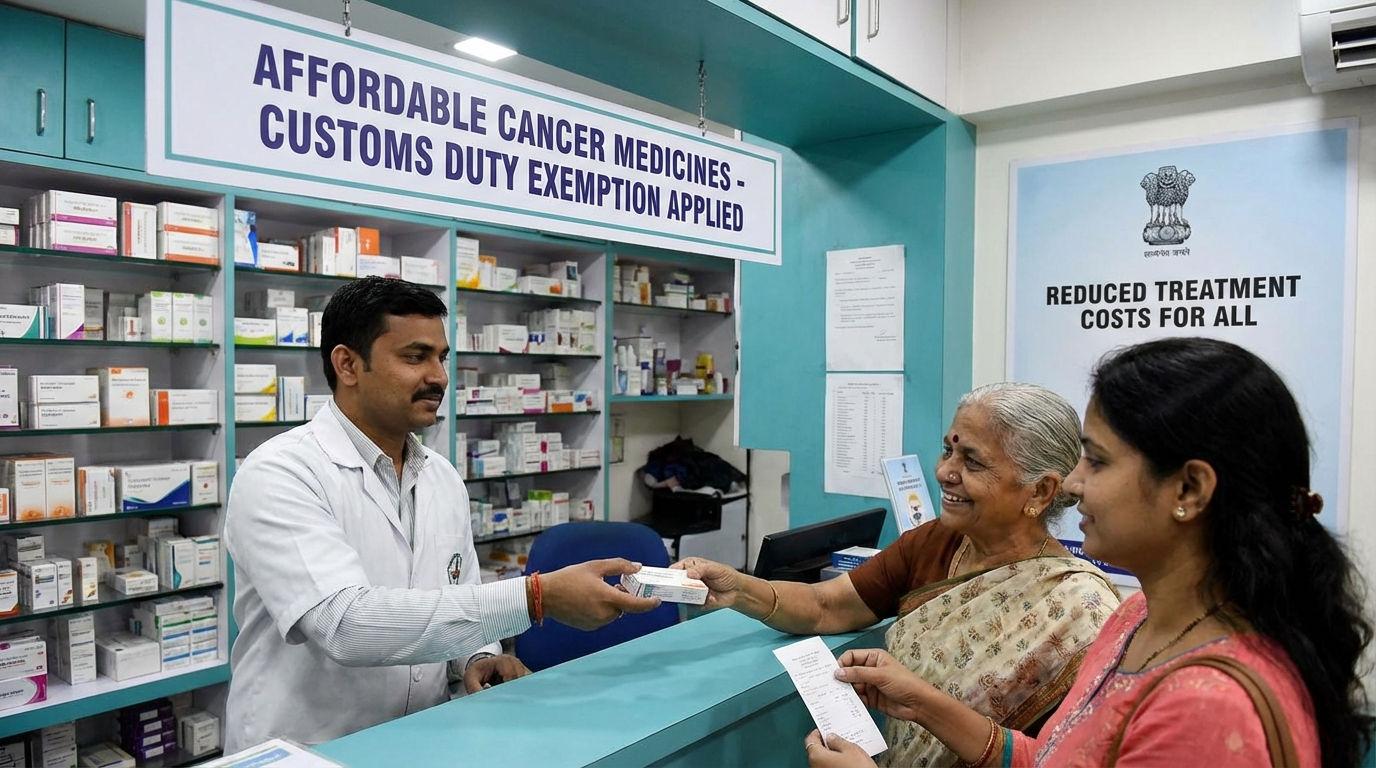
Affordable Cancer Medicines in India: Customs Duty Exemption Reduces Treatment Costs
Table of Contents
The Government of India has announced full exemption of basic customs duty on 17 cancer medicines, aiming to make cancer treatment more affordable. With rising cancer cases and high treatment costs, especially in public hospitals and rural areas, this policy is a significant step toward reducing out-of-pocket expenditure and improving access to life-saving drugs. The measure highlights India’s commitment to strengthening public healthcare and supporting vulnerable patients.
Why in the News?
- The Government of India has announced full exemption of basic customs duty on 17 cancer-related drugs and medicines in the Union Budget of India.
- The decision aims to reduce the cost of cancer treatment, which is one of the most expensive medical treatments in India.
- Cancer treatment costs are three times higher than the average hospitalisation cost for other diseases.
- Data from the National Sample Survey Office (NSS) Health Survey 2017-18 shows that the financial burden on cancer patients is extremely high.
- The move is also important because India has experienced a 26.4% increase in cancer cases between 1990 and 2023, making treatment affordability a major public health concern.
What are the Key Highlights?
Rising Cancer Incidence in India
- India has witnessed a 26.4% increase in cancer cases between 1990 and 2023.
- This is one of the highest increases globally.
- The growing number of cases has increased the financial burden on patients and the health system.
High Cost of Cancer Treatment
- Cancer treatment is much more expensive than other medical treatments.
- According to the NSS 2017-18 health survey:
- Average cost of a typical hospital stay: ₹20,135
- Average cost per cancer hospital visit: ₹61,000
- This means cancer treatment costs around three times more than a normal hospitalisation.
Cost Differences Between Private and Public Hospitals
- The cost of cancer treatment varies depending on the type of hospital.
- Private hospitals
- Average cancer treatment cost: ₹93,305
- Average normal hospitalisation: ₹31,845
- Cancer care cost is about three times higher than normal treatment.
- Public hospitals
- Average cancer treatment cost: ₹22,520
- Average normal hospitalisation: ₹4,452
- Cancer care cost is about five times higher than normal treatment.
- This shows that the relative financial burden is higher in public hospitals, where poorer patients seek treatment.
Rural–Urban Differences in Treatment Costs
- The financial burden varies by location.
- Rural public hospitals
- Cancer treatment cost multiplier: 5.5 times higher than normal hospitalisation
- Urban public hospitals
- Cancer treatment cost multiplier: 4.1 times higher
- This shows that rural patients face greater financial stress.
- In private hospitals, the cost difference between rural and urban areas is much smaller.
Widening Cost Gap Over Time
- Data from the National Sample Survey Office Health Survey 2014 shows the earlier situation.
- Private hospitals (2014)
- Cancer treatment: ₹78,050
- Normal hospitalisation: ₹25,850
- Cost multiplier: 3 times
- Public hospitals (2014)
- Cancer treatment: ₹24,526
- Normal hospitalisation: ₹6,120
- Cost multiplier: 4 times
- By 2017-18, the cost multiplier in public hospitals increased from 4 to 5, showing a widening burden.
Medicines as the Largest Component of Treatment Cost
- Medicines account for the largest share of hospitalisation expenditure.
- In public hospitals:
- Spending on medicines accounts for about 40% to 50% of total treatment costs.
- Doctor and surgeon fees are relatively very low in government hospitals.
- Therefore, medicine costs become the biggest financial burden, especially for poor patients.
Government Decision to Reduce Medicine Costs
- The government has removed basic customs duty on 17 cancer medicines.
- This policy aims to:
- Reduce treatment costs.
- Improve affordability of life-saving drugs.
- Lower out-of-pocket expenditure for patients.
What are the Significances?
Reduction in Treatment Costs
- Removing customs duty will reduce the price of cancer medicines.
- Lower drug prices can significantly reduce the overall treatment cost.
Relief for Poor Patients
- Poor patients depend mainly on public hospitals.
- Since medicines form a large share of their expenses, the duty exemption can reduce their financial burden.
Improvement in Access to Life-Saving Medicines
- Lower prices can increase access to cancer drugs.
- More patients may be able to continue treatment without financial hardship.
Support for Rural Healthcare
- Rural patients face a higher cost multiplier in public hospitals.
- Cheaper medicines can help reduce rural-urban health inequalities.
Strengthening Public Health Policy
- The measure shows that the government is recognising the financial burden of cancer treatment.
- It is an important step toward improving affordability in healthcare.
Challenges
Rising Cancer Cases
- The number of cancer cases in India is rapidly increasing.
- This will continue to put pressure on patients and the health system.
High Out-of-Pocket Expenditure
- Many patients still pay a large part of treatment costs from their own savings.
- Financial protection remains limited.
Limited Public Healthcare Resources
- Public hospitals have limited infrastructure and resources for cancer treatment.
- Increasing patient numbers can overload the system.
Rural Healthcare Inequality
- Rural areas face higher treatment cost burdens.
- Access to specialised cancer care facilities is limited.
Dependence on Expensive Medicines
- Cancer treatment relies heavily on costly medicines and advanced drugs.
- Even small price increases can significantly affect patients.
Way Forward
Expanding Affordable Cancer Medicines
- The government should encourage local production of cancer drugs.
- Generic medicines can reduce treatment costs further.
Strengthening Public Healthcare Infrastructure
- More cancer treatment centres and diagnostic facilities should be established in government hospitals.
Improving Health Insurance Coverage
- Expanding schemes such as **Ayushman Bharat Pradhan Mantri Jan Arogya Yojana can help reduce out-of-pocket expenditure.
Increasing Early Detection and Screening
- Early diagnosis can reduce treatment costs and improve survival rates.
- Awareness campaigns and screening programmes should be expanded.
Special Focus on Rural Areas
- More cancer hospitals and diagnostic facilities should be established in rural regions.
Regulating Medicine Prices
- The government should continue to monitor and regulate prices of essential cancer drugs.
Conclusion
Affordable healthcare remains one of the most important goals of a developing society. Policies that reduce the cost of essential medicines and improve access to treatment can help protect vulnerable populations from severe financial hardship while also strengthening the overall health system.
Relevant Articles:
India–Canada Economic Partnership 2026
Viksit Bharat Rural Employment Mission: Transforming India’s Rural Jobs Landscape
India’s AI Self-Reliance: Sarvam AI Launches Open-Source Large Language Models
Read Also:
Great Nicobar Project: Development, Ecology, and the Question of Justice
Loggerhead Turtle Climate Impact: Alarming Study Reveals Survival Threat
Maximum Retail Price of three Anti-cancer Drugs …