CSMP IAS : India's Premier Coaching Institute for IAS / PCS
India West Asia Policy Shift: Strategic Autonomy and Rising Global Role
Table of Contents
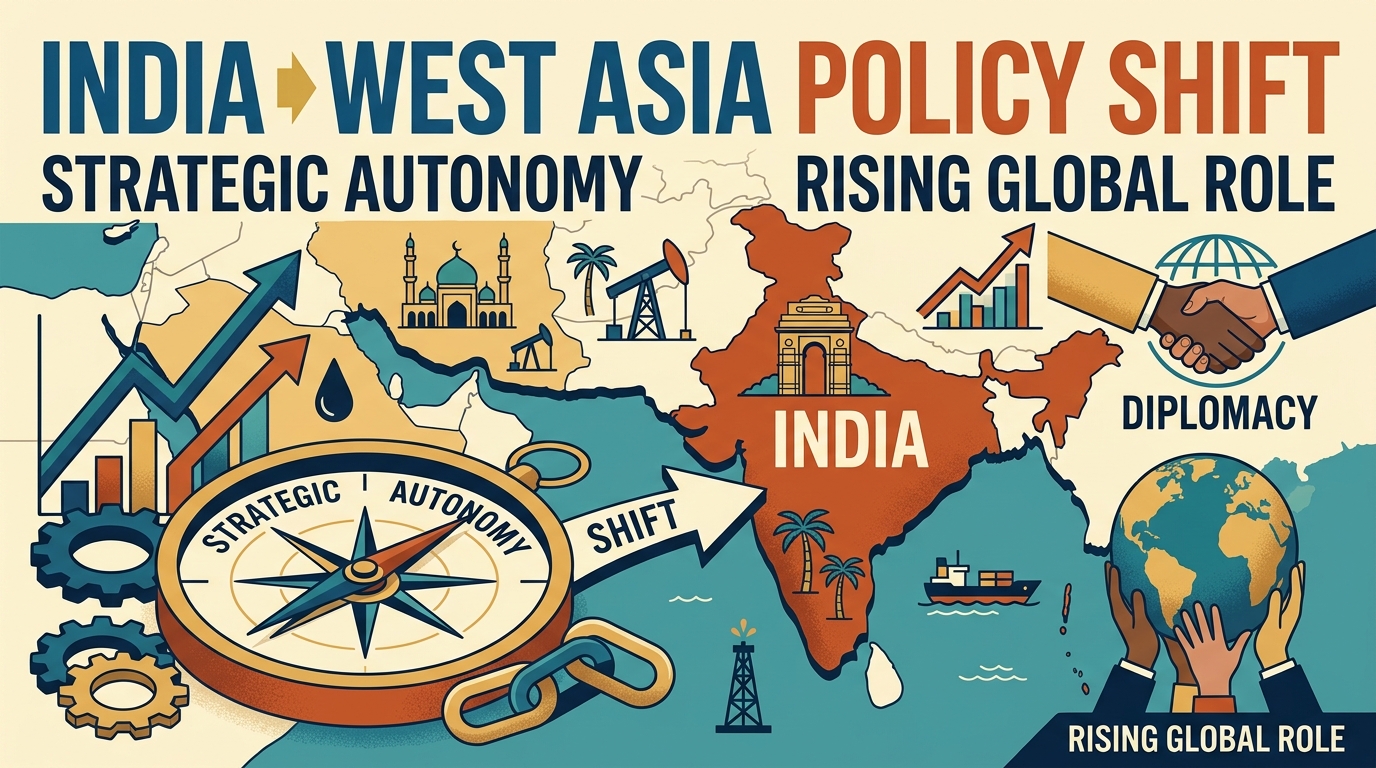
India West Asia Policy Shift reflects India’s growing strategic autonomy and expanding diplomatic engagement in the West Asian region. India is strengthening relations with Gulf countries, Israel, Iran, and Palestine while focusing on energy security, trade growth, and protection of the Indian diaspora. This evolving India West Asia Policy Shift shows India’s transition towards a more confident, balanced, and interest-driven foreign policy in a rapidly changing global order.
Why in the News?
Growing Debate on India’s West Asia Policy
- India’s foreign policy towards West Asia has recently become a topic of domestic debate.
- This debate has increased because India is seen as changing its traditional diplomatic approach.
- The change is more visible during ongoing regional conflicts such as tensions in Gaza and wider Middle East instability.
- West Asia is important for India due to energy imports, trade relations, and the large Indian diaspora living there.
Importance of West Asia for India
- West Asia is a key region for India’s energy security because India imports a large share of crude oil and gas from this region.
- It is also important for India’s trade relations with Gulf countries.
- Around 10 million Indians live and work in Gulf Cooperation Council countries.
- These factors make India’s policy in West Asia highly sensitive and strategically important.
What are the Key Highlights?
Rising Engagement with India West Asia Policy
Deepening Diplomatic Relations
- India has increased its engagement with West Asia over the last decade.
- The focus is on Gulf Cooperation Council countries, Israel, Iran, and Palestine.
- India has tried to balance relations with all major regional actors.
High-Level Visits
- The Prime Minister of India has visited Gulf Cooperation Council countries multiple times.
- India has also strengthened diplomatic outreach through visits to Israel.
- India has engaged with Palestine and Iran through official diplomatic interactions.
Trade Agreements
- India has signed Comprehensive Economic Partnership Agreements with countries like the United Arab Emirates.
- India has also signed similar agreements with Oman.
- These agreements help reduce tariffs and increase trade.
Trade and Diaspora
- Trade between India and Gulf Cooperation Council countries is around 160 billion US dollars.
- Around 10 million Indian workers live in Gulf countries.
- These workers contribute significantly through remittances to India’s economy.
Strategic Importance of the Gulf Cooperation Council
Economic Importance
- The Gulf Cooperation Council includes countries like Saudi Arabia, UAE, Qatar, Kuwait, Oman, and Bahrain.
- These countries are major suppliers of oil and gas to India.
- They are also important investors in global infrastructure and energy markets.
Security Concerns of GCC Countries
- Gulf countries focus mainly on protecting ruling families and ensuring internal stability.
- They also aim to maintain regional peace to avoid disruptions in oil exports.
- In recent years, they have started rethinking their dependence on the United States for security guarantees.
Changing Global Environment
- Conflicts in West Asia have made Gulf countries reconsider their foreign partnerships.
- They are exploring more diversified diplomatic and security relationships.
New Diplomatic Reset by India
Shift Towards Pragmatism
- India has adopted a more practical and interest-based foreign policy approach.
- This means decisions are guided more by national interest rather than ideological positions.
Key Features of the New Approach
- India has provided direct support to Gulf countries during crisis situations.
- India maintains active communication with Israel, Iran, and Gulf Arab states simultaneously.
- India has reduced emphasis on traditional balancing statements that avoid taking clear positions.
Strategic Autonomy
- Strategic autonomy means a country makes foreign policy decisions independently without external pressure.
- India is increasingly showing confidence in making independent decisions in West Asia.
Criticism of India’s Policy
Concerns About Timing and Balance
- Some critics argue that certain diplomatic visits, especially to Israel, were not well-timed.
- There are concerns that India is drifting away from its traditional support for Palestine.
Allegations of Alignment
- Critics believe India is moving closer to Western countries in its West Asia policy.
- Some argue that India is becoming less neutral in regional conflicts.
Risk of Overreach
- There is concern that India may take on responsibilities beyond its capacity.
- This could expose India to unnecessary diplomatic and strategic risks.
Global Context
Limited Global Support in Conflicts
- China and Russia have not strongly supported Iran in regional conflicts.
- Pakistan’s foreign policy stance in West Asia has been inconsistent.
Silence of Arab States
- Many Arab countries remained diplomatically silent during the Gaza conflict.
- This shows changing priorities and cautious diplomacy in the region.
Shifting Alliances
- The global order in West Asia is changing rapidly.
- Countries are focusing more on national interests rather than fixed alliances.
Need for Balance
Importance of Multi-Alignment
- India needs to maintain relations with all major players in West Asia.
- This includes Israel, Iran, and Arab countries.
Importance of Iran
- Iran is important for India due to its geographical location.
- Iran is important for energy supply routes and trade connectivity projects.
Palestine Issue
- India has traditionally supported a peaceful solution to the Israel-Palestine conflict.
- This remains important for India’s global diplomatic image.
Emerging Opportunities
Decline of Traditional Security Model
- The “Oil-for-Security” model led by the United States is weakening.
- Gulf countries are exploring alternative partnerships.
Economic Shifts in GCC
- Gulf countries may diversify investments outside their region.
- They may also look for new talent pools and economic partners.
Opportunity for India
- India can attract investment from Gulf countries.
- India can position itself as a global economic hub for trade and services.

What is the Significance?
Strategic Autonomy
Independent Foreign Policy
- India is increasingly making decisions based on national interest.
- It is not fully aligning with any major global power bloc.
Global Recognition
- India is being seen as a more confident global power.
- This enhances India’s role in international diplomacy.
Energy Security
Dependence on West Asia
- India imports a large share of its oil and gas from West Asia.
- Stable relations ensure uninterrupted energy supply.
Economic Stability
- Energy security directly affects inflation and economic growth in India.
- Stable oil prices are important for India’s development goals.
Diaspora Protection
Large Indian Population
- Around 10 million Indians live in Gulf countries.
- They work in construction, healthcare, services, and other sectors.
Economic Contribution
- Remittances from Gulf workers are a major source of foreign exchange for India.
- These funds support rural households and the Indian economy.
Safety and Welfare
- Strong diplomatic relations help protect Indian workers during crises.
- It ensures better working conditions and legal support.
Economic Opportunities
Trade Expansion
- India’s trade with West Asia is growing steadily.
- CEPA agreements help reduce trade barriers.
Investment Flow
- Gulf countries are major investors in infrastructure and energy projects.
- India can attract more investment in manufacturing and services.
Economic Diversification
- India can benefit from Gulf countries reducing dependence on oil.
- This creates opportunities in renewable energy, technology, and logistics.
Geopolitical Influence
Rising Global Role
- India is being recognized as a responsible global power.
- It is increasingly involved in regional stability discussions.
Diplomatic Influence
- India maintains relations with all major West Asian players.
- This increases India’s influence in global negotiations.
Defence and Security Cooperation
Counter-Terrorism Cooperation
- India cooperates with Gulf countries in intelligence sharing.
- This helps in preventing terror financing and extremism.
Defence Partnerships
- India is increasing defence cooperation with selected West Asian countries.
- This includes training and maritime security cooperation.
Challenges
Risk of Strategic Overreach
Over-Involvement in Conflicts
- India may become too involved in regional disputes.
- This can increase diplomatic pressure on India.
Military and Security Risks
- Greater involvement may expose India to indirect security risks.
- This includes terrorism and regional instability spillovers.
Balancing Multiple Relationships
Complex Diplomacy
- India must balance relations with Israel, Iran, and Arab countries.
- These countries often have conflicting interests.
Diplomatic Sensitivity
- Any imbalance can affect India’s relations with one or more partners.
- This requires careful diplomatic management.
Ignoring Palestine Issue
Global Image Risk
- Reduced emphasis on Palestine may affect India’s global image.
- It may be seen as shifting away from traditional positions.
Impact on Muslim Countries
- It may influence India’s relations with some Islamic countries.
- This can affect diplomatic trust.
Dependence on Unstable Region
Regional Instability
- West Asia is highly conflict-prone.
- Wars and tensions can disrupt oil supply and trade routes.
Economic Risk
- Instability can lead to inflation and supply chain disruptions in India.
Limited Delivery of Promises
Slow Investment Flow
- Some promised investments from Gulf countries are delayed.
- This reduces immediate economic benefits for India.
Gap Between Expectation and Reality
- Expectations of large-scale investment are not always met.
- This creates policy challenges.
Way Forward
Maintain Strategic Balance
Multi-Partner Engagement
- India should continue engagement with all West Asian countries.
- It should avoid extreme positions in conflicts.
Strengthen Energy Diversification
Reduce Dependency
- India should reduce dependence on a single region for energy.
- It should explore Africa, Americas, and renewable energy sources.
Support Palestine Diplomatically
Balanced Approach
- India should continue supporting a peaceful solution.
- It should support the idea of a two-state solution.
Deepen Economic Diplomacy
Investment Promotion
- India should attract Gulf investments in infrastructure and manufacturing.
- It should strengthen trade agreements.
Careful Security Engagement
Limited Involvement
- India should avoid deep military involvement in regional conflicts.
- Engagement should be based only on national interest.
Increase Humanitarian Role
Soft Power Strategy
- India should provide humanitarian aid during crises.
- This improves India’s global image and goodwill.
Build Flexible Foreign Policy
Adaptive Strategy
- India’s policy should adjust according to changing global conditions.
- It should remain flexible and interest-driven.
Conclusion
India’s approach to West Asia is evolving in response to rapid geopolitical changes in the region. The region is no longer shaped by a single dominant power, and multiple actors now influence its stability and economy. In this changing environment, India’s foreign policy is moving towards a more independent, practical, and interest-based framework. The success of this approach will depend on India’s ability to manage competing regional relationships, secure long-term economic and energy interests, and respond carefully to emerging global uncertainties.
Relevant Articles:
Jungle Cat Conservation Crisis in India
MGNREGA Wage Crisis and Rural Employment Challenges
Glacier Disaster Risk and Flash Flood Threat in Himalayas
Also Read:
Pulses Policy Reform for Stronger Farmer Income
Water-Centered Climate Adaptation: A Strong Step from COP 30
Global Oil Crisis and Energy Security Challenges for India
