
CSMP IAS : India's Premier Coaching Institute for IAS / PCS
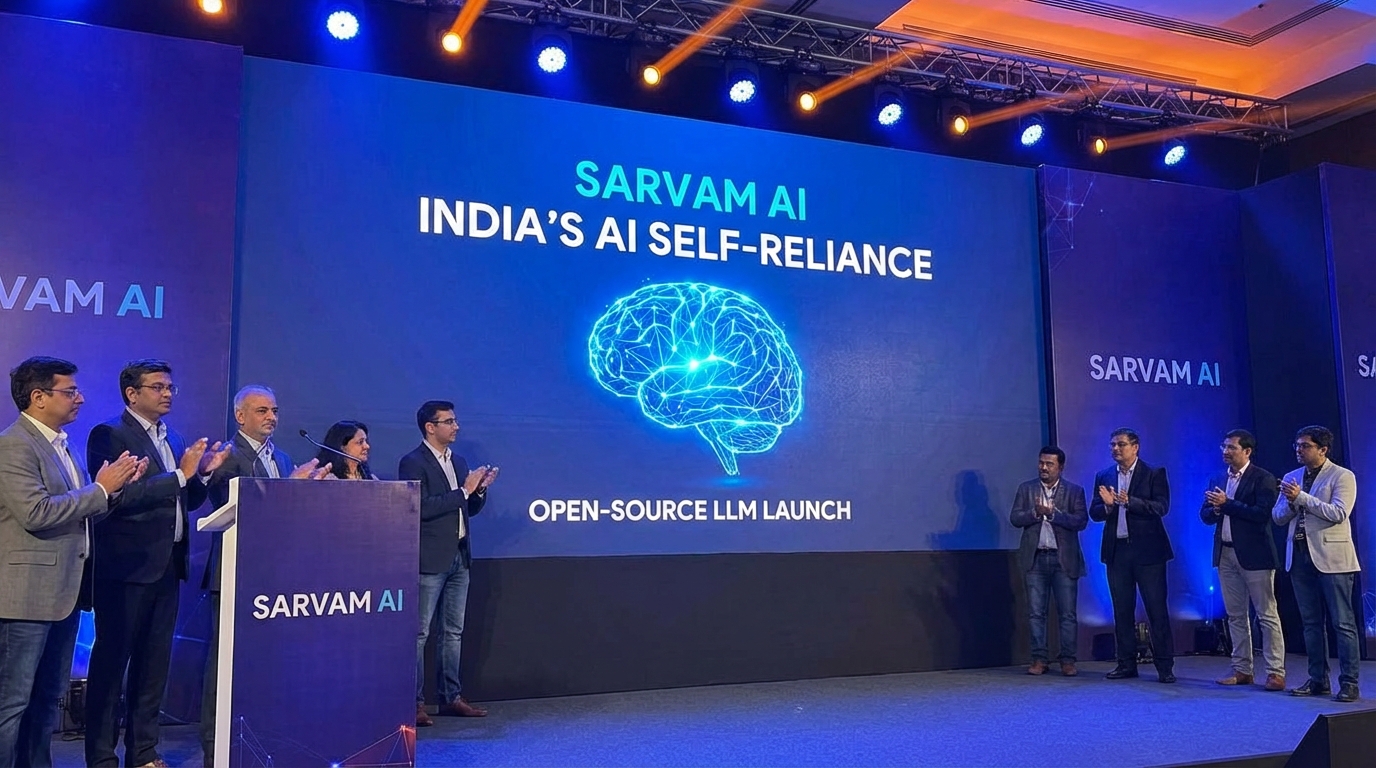
India’s AI Self-Reliance: Sarvam AI Launches Open-Source Large Language Models
Table of Contents
India takes a major leap in AI self-reliance as Bengaluru-based Sarvam AI unveils its open-source Large Language Models (LLMs). The newly launched 35-billion and 105-billion parameter models promise better performance in Indian languages, support research innovation, and strengthen India’s position in the global AI ecosystem. This development aligns with the government’s push for digital sovereignty and AI-driven technological advancement.
Why in the News?
- Bengaluru-based Sarvam AI has unveiled two large language models at the AI Impact Summit 2026 on February 18, 2026.
- This comes a few months after the Union government announced that India would build its own Large Language Model (LLM) like ChatGPT and DeepSeek R1.
- The models are open source.
- The launch is seen as an important step in India’s AI development journey.
What are the Key Highlights?
- Sarvam AI launched:
- A 35-billion parameter model.
- A 105-billion parameter model.
- During a demo, a 30-billion parameter model referred to itself as “Vikram.”
- The name was inspired by Vikram Sarabhai.
- Later, the company clarified that the final name has not yet been decided.
- The company claimed that both models performed better than similar global models in industry benchmarks.
- Training a large language model:
- Requires huge computing power.
- Uses many GPUs working together.
- Costs millions of dollars.
- The Ministry of Electronics and Information Technology earlier focused more on inference than training.
- After the launch of DeepSeek R1, IT Minister Ashwini Vaishnaw said Indian firms could also train LLMs.
- Sarvam AI received:
- More than $50 million from investors such as Peak XV and Khosla Ventures.
- Subsidised GPU access under the IndiaAI Mission.
- The models aim to perform better in Indian languages.
- A live demonstration showed translation from English into Indian languages.
- The models are not yet available for public use.
- The company website says that a chat feature will be available soon.
What is the Significance?
1. Advancing Technological Self-Reliance
- India is developing its own large language models. This reduces dependence on foreign AI systems. It strengthens digital sovereignty.
2. Strengthening Indian Language Support
- Most global AI models do not perform well in Indian languages. These models focus on improving performance in regional languages. This can increase digital access for millions of people.
3. Boosting India’s AI Ecosystem
- Large private investments show confidence in Indian AI startups. Government support through the IndiaAI Mission strengthens the ecosystem. It encourages innovation and research.
4. Enhancing Strategic Capability
- AI is an important strategic technology. Domestic LLM development strengthens national capability. It positions India as a serious global AI player.
5. Promoting Open-Source Innovation
- Open-source models allow developers to build new tools. Researchers can improve and customize the models.
- It supports transparency and collaboration.
Challenges
1. High Cost of Training
- Training requires advanced GPUs and data centres. It involves high financial investment and Continuous upgrades are needed.
2. Limited Indian Language Data
- There is less digital content available in many Indian languages. This limits training quality. It may lead to errors or bias.
3. Global Competition
- Global AI firms already have strong and mature models. Competing at the highest level requires constant improvement.
4. Infrastructure Limitations
- India needs more large-scale computing infrastructure. Stable electricity and cooling systems are essential.
5. Public Deployment and Trust
- The models are not yet publicly available. Performance and safety must meet user expectations.
Way Forward
1. Expand Computing Infrastructure
- Invest in more data centres and GPU clusters. Encourage domestic chip production. Provide long-term infrastructure funding.
2. Improve Language Datasets
- Digitise regional language content. Partner with universities and publishers. Build clean and high-quality datasets.
3. Strengthen Responsible AI Frameworks
- Develop clear ethical guidelines. Monitor bias and misinformation. Ensure data privacy and security.
4. Support Research and Innovation
- Encourage collaboration between industry and academia. Provide grants and research funding. Promote AI skill development.
5. Accelerate Public Access
- Release the chat feature soon. Conduct real-world testing. Collect user feedback for improvement.
6. Continue Policy Support
- Strengthen the IndiaAI Mission. Provide incentives for AI startups. Encourage global partnerships.
Conclusion
The unveiling of these large language models reflects India’s growing confidence in advanced technologies. Sustained investment, inclusive innovation, and strong governance will decide how effectively the country converts this achievement into long-term digital progress and global leadership.
Relevant Articles:
Great Nicobar Project: Development, Ecology, and the Question of Justice
Loggerhead Turtle Climate Impact: Alarming Study Reveals Survival Threat
Read Also:
AgriPV in India: Powerful Solar Farming Revolution Unlocks Farmer Growth
India LNG Crisis: West Asia Conflict Threatens Fertilizer Supply
Ayurveda Global Expansion: Budget 2026 & India–EU FTA Unlock Massive Opportunities
Sarvam AI Powering a Made-in-India AI Revolution