CSMP IAS : India's Premier Coaching Institute for IAS / PCS
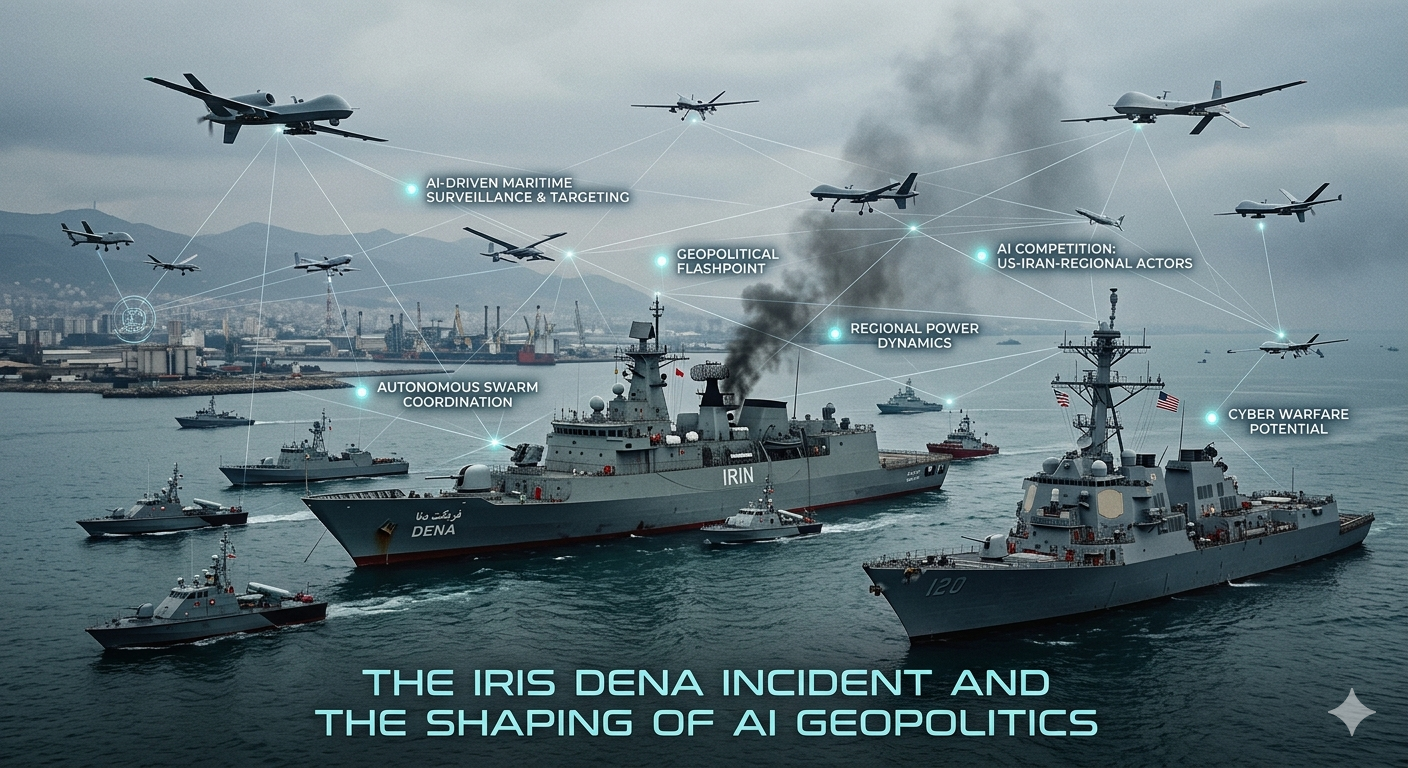
IRIS Dena Incident and The Shaping of AI Geopolitics
Table of Contents
The IRIS Dena sinking inside Sri Lanka’s EEZ highlights the complex interplay of international maritime law, AI-driven strategic analysis, and geopolitical power dynamics. This incident underscores legal ambiguities, humanitarian obligations, and the bias in AI systems trained on Western perspectives, offering crucial insights for UPSC aspirants and policymakers.
Why in the News?
- A U.S. submarine sank the Iranian frigate IRIS Dena inside Sri Lanka’s Exclusive Economic Zone (EEZ).
- Questions arose about the legality of the sinking under international law, particularly under the UN Convention on the Law of the Sea (UNCLOS).
- Artificial Intelligence (AI) systems initially declared the act “not illegal”, highlighting biases in AI systems trained mainly on Western legal perspectives.
- The incident shows how AI is shaping global understanding of law, strategy, and geopolitical interpretation.
What are the Key Highlights?
Legality of the Sinking
- Article 58 of UNCLOS provides freedom of navigation and other lawful uses of the sea in an EEZ.
- Divergent interpretations exist:
- Western/U.S. view: Freedom includes intelligence, submarine operations, military exercises, weapons testing, and combat beyond territorial waters.
- India and Global South view: Military activities must genuinely relate to navigation or overflight. Coastal-state consent is generally required.
Humanitarian Concerns in IRIS Dena Incident
- Article 18 of the Second Geneva Convention obliges parties to rescue shipwrecked persons immediately.
- Reports indicate the U.S. submarine left the scene, leaving rescue operations to Sri Lanka.
- At least 87 sailors died, while 32 survived.
- AI initially ignored humanitarian duties, reflecting biases toward Western operational norms.
AI Bias in Geopolitics
- AI mirrors the training data it receives, which is predominantly Western.
- As a result, AI privileges Western legal interpretations and sidelines Global South perspectives.
- AI is becoming a major source of influence in legal and strategic assessments.
Global AI Landscape
- AI systems are increasingly bipolar, dominated by U.S. and Chinese architectures.
- The U.S. AI stack offers advanced models, chips, and platforms to “trusted partners.”
- India faces a choice between:
- Using foreign AI systems for immediate applications.
- Developing a sovereign Indian AI stack for strategic independence.
Strategic Risks of Foreign AI Dependence
- Reliance on U.S. models risks digital colonialism.
- Foreign AI could control data flows, mediate knowledge production, and shape narratives.
- Western AI systems may carry linguistic, cultural, and strategic biases that do not reflect India’s diverse realities.
What are the Significance?
Legal Significance
- The incident highlights different interpretations of international maritime law.
- Shows the need for clarity in military actions in EEZs and coastal-state consent.
Humanitarian Significance
- Failing to prioritize rescue obligations can cause loss of life and international criticism.
- It raises ethical questions about military operations and AI-informed legal assessments.
Technological Significance
- AI systems influence policy, strategy, and global perception.
- Bias in AI outputs can privilege certain geopolitical narratives over others.
Geopolitical Significance
- The incident exposes the Indian Ocean to extra-regional conflict.
- U.S. priorities may differ from India’s strategic needs.
- Highlights the growing role of AI in global decision-making.
Strategic Autonomy Significance
- India’s long-term sovereignty in AI is crucial.
- Ownership of AI infrastructure, training data, and models is important for national security and policy-making.
Challenges
Divergent Legal Interpretations
- Conflicting views on EEZ activities create tension between coastal and foreign states.
- Lack of consensus can escalate regional conflicts.
Humanitarian Risks
- Military actions in EEZs may ignore rescue obligations.
- Civilian and crew safety may be compromised.
AI Bias
- Western-trained AI systems favor Western legal and strategic perspectives.
- Global South countries like India may find their positions underrepresented.
Strategic Dependence
- Using foreign AI stacks risks digital and strategic dependency.
- India may become a consumer rather than a producer of critical AI technology.
Geopolitical Complexity
- Indian Ocean conflicts reflect overlapping interests of U.S., China, Russia, and regional powers.
- India faces challenges in balancing foreign relations with multiple countries.
Way Forward
Strengthen International Legal Frameworks
- Promote clarity on military operations in EEZs.
- Encourage consensus on humanitarian obligations under international law.
Develop Sovereign AI Infrastructure
- India must invest in domestic AI models, datasets, and secure infrastructure.
- AI systems should reflect India’s linguistic, cultural, and strategic realities.
Balance Strategic AI Use
- Integrate global AI ecosystems without creating structural dependence.
- Use AI for applications in healthcare, agriculture, education, and governance, while maintaining control over core models.
Promote Regional Stability
- Strengthen Indian Ocean security arrangements.
- Coordinate with regional powers to prevent escalation of extra-regional conflicts.
Conclusion
The IRIS Dena incident reveals the interplay of law, technology, and geopolitics in modern conflicts. AI, while powerful, is not neutral and reflects the priorities of dominant powers. India must act strategically, assert legal and technological sovereignty, and ensure its interests and perspectives are represented in the growing algorithmic governance of international affairs.
Relevant Articles:
West Asia Crisis 2026: Iran-Israel-US Conflict and Strategic Implications for India
Project Cheetah in India: Successful Reintroduction and Wildlife Conservation
Affordable Cancer Medicines in India: Customs Duty Exemption Reduces Treatment Costs
Read Also:
India–Canada Economic Partnership 2026
Viksit Bharat Rural Employment Mission: Transforming India’s Rural Jobs Landscape
India’s AI Self-Reliance: Sarvam AI Launches Open-Source Large Language Models
Indian Navy Welcomes Iris Dena, a Moudge Class Frigate …