
CSMP IAS : India's Premier Coaching Institute for IAS / PCS
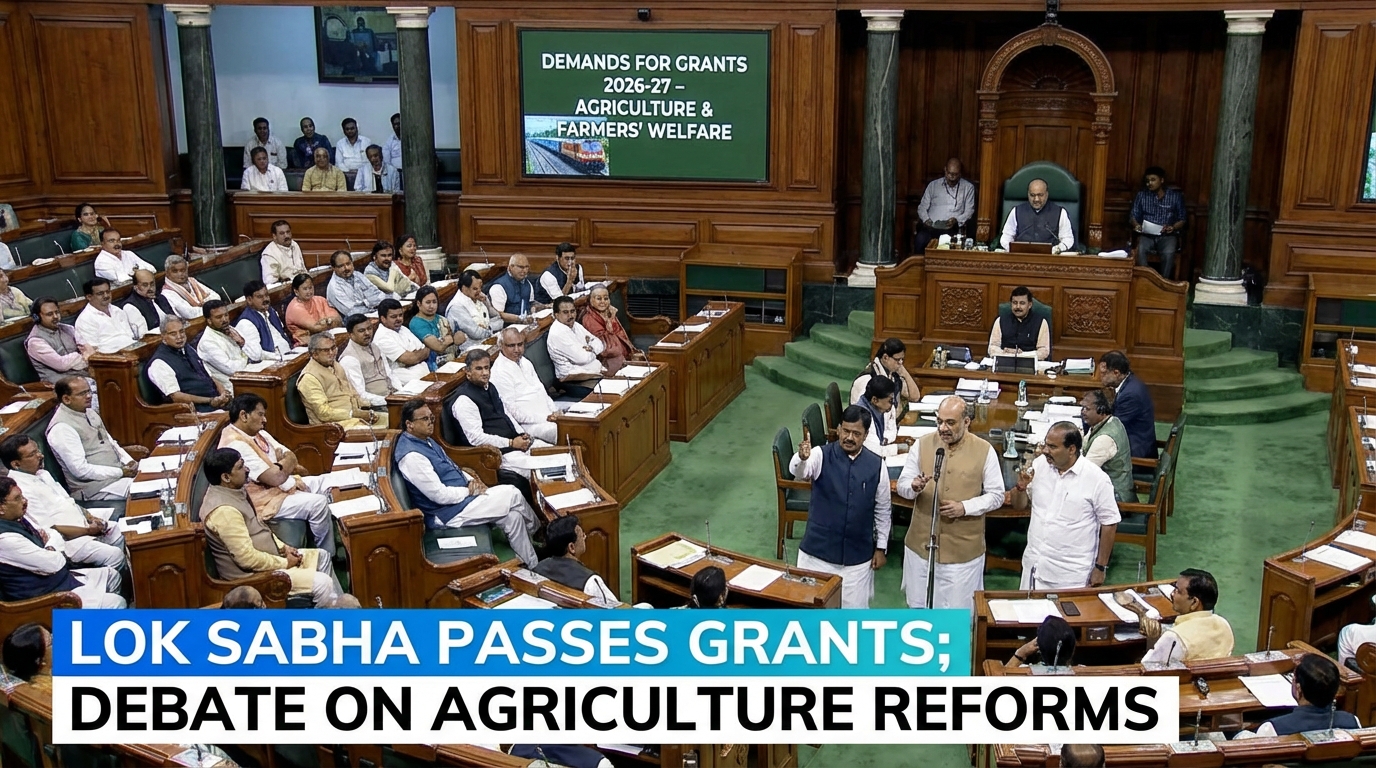
Lok Sabha Approves 2026-27 Agriculture Budget
Lok Sabha Approves 2026-27 Agriculture Budget, allocating funds for various Ministries, including agriculture and railways. The grants for most Ministries were passed using the guillotine procedure, except for detailed discussions on agriculture and railways. The debate focused on farmers’ welfare, irrigation, natural farming, and agricultural reforms.
Table of Contents
Why in the News?
- On March 18, 2026, the Lok Sabha passed the Demands for Grants of various Ministries for the financial year 2026-27.
- Total expenditure approved was over ₹53 lakh crore.
- Most Ministries’ grants were passed using the guillotine, meaning without detailed discussion, except for Agriculture and Railways Ministries, which were discussed in the House.
- The budget session debates focused on government expenditure, farmers’ welfare, and agriculture-related reforms.
What are the Key Highlights?
Expenditure Approval
- The Demands for Grants allow Ministries to spend money allocated in the Union Budget.
- The guillotine procedure is used when Parliament time is limited.
- Two Ministries, Agriculture and Railways, were discussed in detail.
Agriculture Ministry Debate
- Union Agriculture Minister Shivraj Singh Chouhan highlighted government initiatives:
- Focus on irrigation projects under Pradhan Mantri Krishi Sinchai Yojana, accelerating work for 2.7 million hectares of additional farmland.
- Implementation of Pesticide and Seed Bills to ensure quality seeds, fertilizers, and safe pesticides.
- Promotion of natural farming, including:
- Awareness programs for 1 crore farmers.
- Training for 18 lakh farmers.
- Expansion across 75 lakh hectares.
- Reducing chemical fertilizer use to protect soil health for future generations.
Opposition and Farmers’ Concerns
- Around 750 farmers in Punjab died during farm law protests, and their families demanded compensation.
- There were calls for a legal guarantee of MSP (Minimum Support Price) to protect farmers’ incomes.
- A ₹50,000-crore package was proposed for farmers affected by floods and heavy rains.
- A ₹5,000 incentive per farmer was suggested to reduce stubble burning and air pollution.
- Concerns were raised about imports of soybean, dairy products, and fodder, which could harm local farmers.
- Suggestions were made to increase crop insurance coverage under Pradhan Mantri Fasal Bima Yojana (PMFBY) to ₹10 lakh.
- Criticism was raised over the government’s handling of farm distress and lack of accountability in protest-related deaths.
- There were proposals for higher MSP for pulses to benefit regional farmers.
- The government was also credited for maintaining low inflation and improving purchasing power for citizens.
Significance
Economic Significance
- Passing Demands for Grants allows government Ministries to spend allocated funds, supporting national economic growth.
- Ensures continuity of government programs, especially in critical sectors like agriculture and railways.
Farmer Welfare
- Policies such as PM Krishi Sinchai Yojana and Natural Farming Mission support sustainable agriculture.
- Government interventions aim to improve farmers’ income, reduce input costs, and ensure food security.
- MSP proposals aim to protect farmers from market fluctuations.
Agricultural Reforms
- Pesticide and Seed Bills ensure quality and safety in agricultural inputs.
- Natural farming initiatives help reduce chemical dependency, improving long-term soil fertility and environmental health.
Social Significance
- Addressing farm distress and protest deaths is crucial for maintaining social stability in rural areas.
- Incentives for stubble management help reduce air pollution caused by crop residue burning.
Challenges
Farmer Distress
- Floods, heavy rains, and market instability continue to damage crops and livelihoods.
- Lack of legal MSP protection leaves farmers vulnerable to price fluctuations.
Environmental Concerns
- Overuse of chemical fertilizers threatens soil health and future productivity.
- Stubble burning contributes to severe air pollution, especially in northern India.
Policy Implementation
- Despite policies, coverage and awareness for programs like natural farming and insurance schemes remain limited.
- Ensuring timely compensation and incentives for farmers is a continuing challenge.
Way Forward
Strengthen Farmer Support
- Implement legal MSP to secure farmers’ income.
- Provide targeted financial packages for disaster-affected and distressed farmers.
Promote Sustainable Agriculture
- Expand natural farming programs to more regions and farmers.
- Reduce dependency on chemical fertilizers through education and incentives.
Improve Insurance and Risk Management
- Increase coverage under Pradhan Mantri Fasal Bima Yojana and ensure quick claim settlements.
- Develop programs to mitigate losses from floods, droughts, and other natural disasters.
Reduce Environmental Impact
- Promote stubble management techniques to prevent air pollution.
- Encourage use of eco-friendly agricultural practices to maintain soil fertility.
Ensure Policy Awareness
- Conduct training and outreach programs for farmers to increase awareness of government schemes.
- Strengthen monitoring and accountability mechanisms for better program implementation.
Conclusion
The Lok Sabha’s approval of Demands for Grants 2026-27 provides funds for key agriculture and rural development policies. Initiatives like irrigation expansion, natural farming, and MSP protections aim to boost farmer income and ensure food security. Effective monitoring and awareness will ensure these benefits reach the intended recipients.
Read Also: India’s West Asia Policy Reset
Recent Articles:
- India’s West Asia Policy Reset
- Supreme Court Allows Passive Euthanasia in Harish Rana Case
- AHAAR–L Framework: Comprehensive Counter-Terror Strategy for India
- India – France Special Global Strategic Partnership
Union Budget 2026–27 historic and unprecedented”: Shri …
