
CSMP IAS : India's Premier Coaching Institute for IAS / PCS
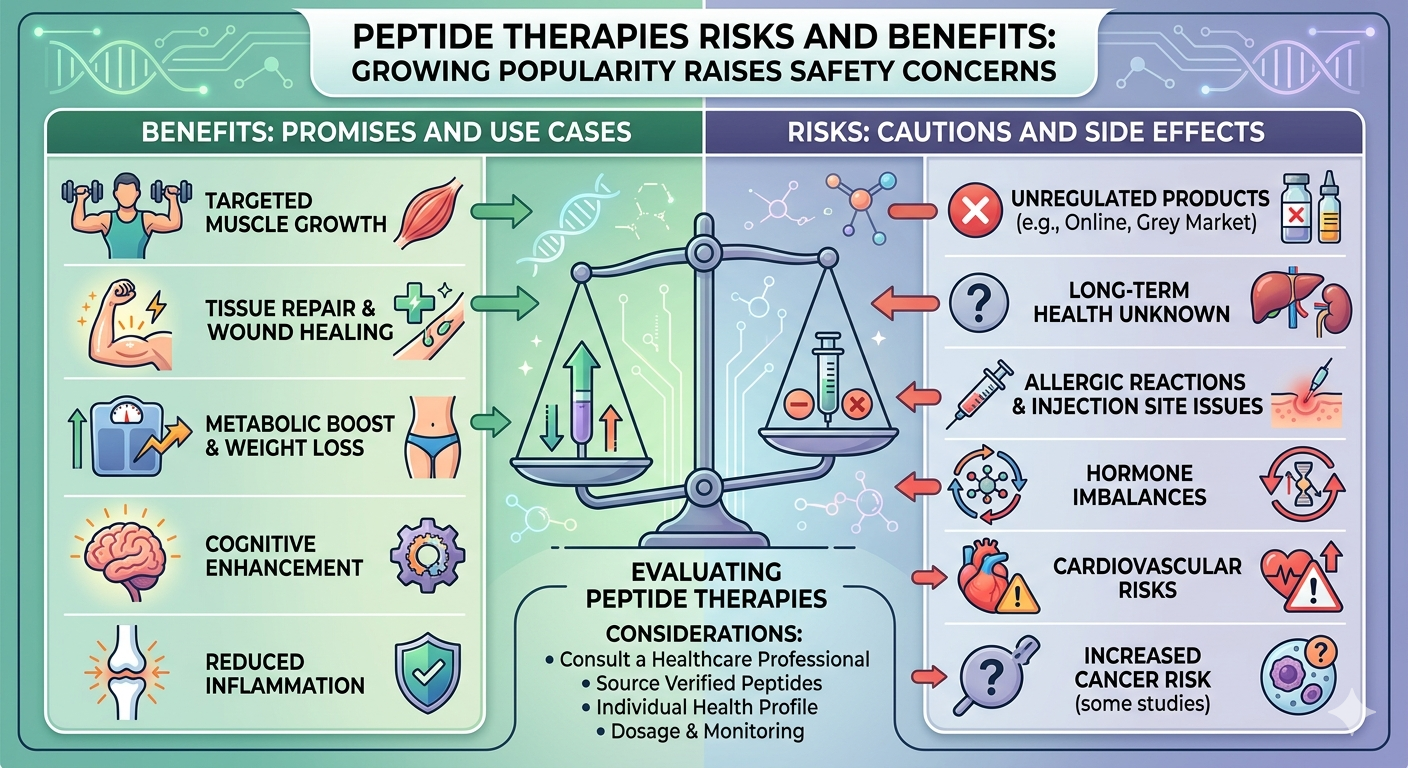
Peptide Therapies Risks and Benefits: Growing Popularity Raises Safety Concerns
Table of Contents
Peptide Therapies Risks and Benefits have become an important topic in modern healthcare as these medicines gain popularity across medical, fitness, and anti-ageing sectors. Peptide therapies offer targeted treatment for diseases like diabetes, cancer, and hormonal disorders, but their rapid expansion outside regulated medical use has raised serious safety concerns.
Why in the News?
- Peptide therapies are becoming increasingly popular across the world in both medical and non-medical fields.
- More than 80 peptide-based drugs have already been approved for use.
- Over 150 peptide drugs are currently under clinical trials.
- These therapies are being widely discussed because they are used not only in hospitals but also in fitness, wellness, and anti-ageing industries.
- Many companies are promoting peptide products online, often without proper scientific validation.
- This has raised concerns about safety, misuse, and the need for proper regulation.
- As a result, peptide therapies are now an important topic in public health, medical research, and policy discussions.
What are the Key Highlights?
- Peptides are small chains of amino acids.
- Amino acids are the basic building blocks of proteins.
- Peptides act as natural messengers in the human body.
- They help regulate hormones, metabolism, immunity, and tissue repair.
- Peptide therapies work by:
- Targeting specific cells or receptors in the body.
- Mimicking natural biological signals.
- Providing precise and controlled effects.
- Many peptide drugs:
- Are given through injections.
- Are not effective when taken orally because they break down in the digestive system.
- Growth of peptide therapies:
- Increasing research in multiple fields.
- Expanding use in chronic diseases.
- Rising popularity in lifestyle and performance enhancement sectors.
- Key areas of application:
- Metabolic diseases
- Cancer treatment
- Hormonal disorders
- Regenerative medicine
What are the Significance?
Role in Metabolic Diseases
- Peptide therapies are widely used in treating metabolic disorders such as diabetes and obesity.
- They help regulate blood sugar levels.
- They improve insulin response in the body.
- GLP-1 based peptides:
- Control appetite and reduce food intake.
- Help in weight management.
- These therapies:
- Improve quality of life for patients.
- Reduce long-term complications of metabolic diseases.
Role in Oncology
- Peptides are playing an important role in cancer treatment.
- They can target tumour cells specifically.
- They can deliver drugs directly to cancer sites.
- Benefits in oncology:
- Reduced damage to healthy tissues.
- Improved effectiveness of treatment.
- Research focus:
- Development of peptide-based drug delivery systems.
- Identification of tumour-specific markers.
Role in Endocrinology
- Peptides are widely used in hormonal therapies.
- They are used in infertility treatments.
- They are used in growth disorders and thyroid diseases.
- Insulin is one of the most common peptide hormones used in medicine.
- It is essential for managing diabetes.
- Benefits:
- Better control of hormonal balance.
- Improved treatment outcomes.
Role in Regenerative Medicine
- Peptides are being studied for their ability to repair damaged tissues.
- They may help in muscle repair.
- They may support healing of tendons and nerves.
- Applications include:
- Wound healing
- Skin regeneration
- Treatment of osteoporosis
- Cardiovascular repair
- These therapies:
- Offer hope for recovery from injuries.
- Support long-term health improvement.
Targeted Therapy Advantage
- Peptides offer highly targeted treatment.
- They act on specific biological pathways.
- They reduce unnecessary effects on other organs.
- Benefits:
- Fewer side effects compared to traditional drugs.
- Higher efficiency in treatment.
- This precision:
- Makes peptide therapies important in modern medicine.
- Supports the concept of personalised healthcare.
Growing Role in Wellness and Fitness
- Peptides are increasingly used outside hospitals.
- Used in anti-ageing treatments.
- Used for muscle growth and fat loss.
- Popular among:
- Athletes
- Fitness enthusiasts
- Biohacking communities
- However:
- Many of these uses are not scientifically proven.
Economic and Research Significance
- Peptide therapies are creating new opportunities in the pharmaceutical industry.
- Increased investment in research and development.
- Growth of biotech companies.
- This sector:
- Contributes to innovation in healthcare.
- Creates employment opportunities.
What are the Challenges?
Misuse in Wellness and Fitness Industry
- Many peptide products are sold online without proper approval.
- Marketed as anti-ageing or performance-enhancing drugs.
- Problems:
- Lack of scientific evidence.
- Misleading advertisements.
- Consumers:
- Often use them without medical supervision.
Availability of Unregulated Products
- Some peptide products are labelled as “research chemicals.”
- Not approved for human use.
- Risks:
- Impurities in products.
- Incorrect dosage levels.
- This creates:
- Serious safety concerns.
Limited Clinical Evidence
- Many peptide therapies are still in early research stages.
- Only a small number have been fully tested.
- Challenges:
- Long and expensive clinical trials.
- Uncertainty about long-term effects.
- This limits:
- Widespread medical use.
Health Risks and Side Effects
- Improper use of peptides can harm the body.
- Hormonal imbalance.
- Metabolic disturbances.
- Risks include:
- Cardiovascular problems.
- Organ damage.
- Self-injection:
- Increases the chances of infection and complications.
Regulatory Challenges
- Many countries lack clear regulations for peptide products.
- Difficulty in monitoring online sales.
- Issues:
- Weak enforcement mechanisms.
- Lack of standard guidelines.
Ethical Concerns
- Use of peptides for enhancement rather than treatment raises ethical issues.
- Fairness in sports.
- Misuse in competitive environments.
- Concerns:
- Blurring line between medicine and enhancement.
Cost and Accessibility
- Peptide therapies can be expensive.
- Not easily accessible to all patients.
- This creates:
- Inequality in healthcare access.
What is the Way Forward?
Promote Safe and Responsible Use
- Patients should consult qualified doctors before using peptide therapies.
- Avoid self-medication.
- Ensure:
- Proper diagnosis and prescription.
Strengthen Regulatory Framework
- Governments should introduce strict regulations.
- Monitor manufacturing and sale of peptides.
- Actions needed:
- Approve only scientifically tested products.
- Control online marketing.
Improve Public Awareness
- Educate people about peptide therapies.
- Explain benefits and risks clearly.
- Awareness campaigns should:
- Differentiate between approved and unapproved products.
Support Scientific Research
- Increase funding for peptide research.
- Encourage innovation in biotechnology.
- Focus on:
- Clinical trials
- Safety evaluation
- Long-term impact studies
Ensure Quality Control
- Establish strict quality standards.
- Test products for purity and safety.
- This will:
- Reduce risks of contamination.
- Improve trust in therapies.
Encourage Ethical Use
- Set clear guidelines for usage.
- Prevent misuse in sports and fitness.
- Promote:
- Use for medical purposes only.
Enhance Accessibility
- Make peptide therapies affordable.
- Include them in healthcare programs.
- Ensure:
- Equal access for all patients.
Conclusion
Peptide therapies represent a powerful shift in modern healthcare by offering more precise and effective treatment options. Their growing presence reflects both scientific progress and changing health needs of society. At the same time, responsible use, strong regulation, and informed decision-making will determine whether these therapies become a safe medical breakthrough or a source of widespread risk.
Relevant Articles:
India Labour Codes Reform: Opportunities and Challenges in India Labour Codes Reform
Western Media Double Standards: Bias in Global Politics
India China Military Gap: Urgent Need for Defence Reforms
Read Also:
Strait of Hormuz Crisis: Global Energy Security and India’s Strategic Response
Persian Gulf Ecosystem Crisis: Marine Biodiversity Under Threat and Conservation Efforts
India New Climate Goals 2035: Ambitious NDC Targets for Non-Fossil Energy Expansion
Beyond Efficacy: Ensuring Safety in Peptide Therapeutics …