CSMP IAS : India's Premier Coaching Institute for IAS / PCS
Persian Gulf Ecosystem Crisis: Marine Biodiversity Under Threat and Conservation Efforts
Table of Contents
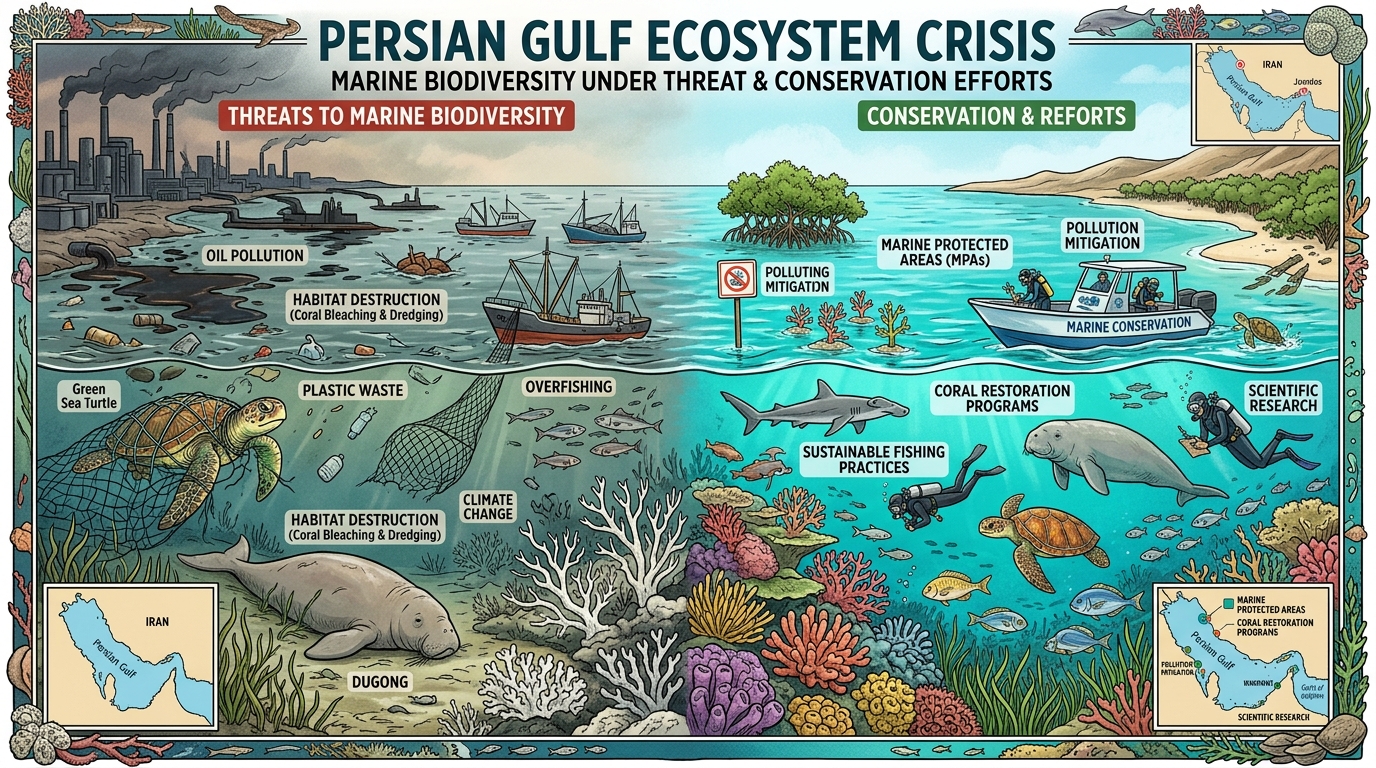
The Persian Gulf ecosystem is facing severe environmental stress due to rapid industrialisation, oil transportation, land reclamation, desalination, and climate change. Once rich in biodiversity, the region now supports fragile ecosystems such as mangroves, seagrass beds, coral reefs, dugongs, and sea turtles that are under increasing pressure. At the same time, Gulf countries like the UAE, Saudi Arabia, and Qatar are initiating conservation measures including mangrove restoration and marine protected areas to protect the Persian Gulf ecosystem from irreversible damage.
Why in the News?
Growing concern over ecological damage in the Persian Gulf
- The Persian Gulf is in the news because it is facing severe environmental stress due to human activities and climate change.
- The region is one of the most important oil and shipping zones in the world, but this has caused major damage to marine ecosystems.
- Scientists and environmental experts are warning that many habitats in the Gulf may reach irreversible damage points if action is not taken soon.
- Countries like the United Arab Emirates, Saudi Arabia, and Qatar are now taking steps such as mangrove restoration and marine protected areas.
Importance of understanding fragile marine ecosystems
- The Gulf is not only an economic zone but also a unique ecological system.
- It supports coral reefs, seagrass beds, mangroves, dugongs, sea turtles, and fisheries.
- These ecosystems are now under pressure from pollution, oil spills, land reclamation, desalination plants, and rising temperatures.
Key Highlights of the Persian Gulf Ecosystem
Geographical and physical features of the Persian Gulf
- The Persian Gulf is a semi-enclosed sea located between Iran and the Arabian Peninsula.
- It is connected to the Arabian Sea through the Strait of Hormuz, which is a narrow water passage.
- The Gulf is very shallow, with an average depth of around 30 meters.
- It was formed around 3,000 to 6,000 years ago when rising sea levels flooded a dry land basin.
- Its shallow nature makes it highly sensitive to pollution and temperature changes.
Extreme environmental conditions
- The Gulf experiences very high temperatures in summer, often exceeding 35°C.
- It has very high salinity, ranging from 44 to 70 parts per thousand.
- Salinity means the amount of salt in water. Normal ocean water has about 35 parts per thousand.
- High evaporation rates increase salt concentration, making survival difficult for many species.
Important ecosystems in the Gulf
Intertidal zones
- The intertidal zone is the area between high tide and low tide.
- It is exposed to air during low tide and covered with water during high tide.
- Organisms here must survive heat, dryness, and salt stress.
- Microorganisms in this zone help recycle organic matter and support the food chain.
Mangroves
- Mangroves are salt-tolerant trees that grow in coastal areas.
- They protect coastlines from erosion and act as natural barriers against storms.
- They serve as nurseries for fish and shrimp.
- They also store carbon, helping reduce climate change effects.
Seagrass meadows
- Seagrasses are underwater flowering plants that grow in shallow waters.
- They are among the most productive ecosystems in the Gulf.
- They provide food for dugongs and sea turtles.
- They act as breeding and feeding grounds for fish and pearl oysters.
Coral reefs
- Coral reefs are structures made by tiny marine animals called corals.
- They support a large number of fish and marine species.
- Gulf coral reefs are unique because they can survive extreme heat and salinity.
- They help scientists study climate change adaptation.
Mudflats and lagoons
- Mudflats are coastal wetlands formed by sediment deposits.
- Lagoons are shallow bodies of water separated from the sea.
- These areas support shrimp, fish, and bird species.
- They are important for coastal food chains.
Important marine species
Dugongs
- Dugongs are marine mammals that feed only on seagrass.
- The Gulf has the second-largest dugong population in the world after Australia.
- Around 5,000 to 6,000 dugongs are estimated to live in the region.
Sea turtles
- Five out of seven global sea turtle species are found in the Gulf.
- The Hawksbill turtle is critically endangered and nests along Gulf coasts.
- Sea turtles depend on beaches and seagrass habitats for survival.
Fish and oysters
- The Gulf was once famous for pearl oysters.
- Pearl fishing supported the economy for centuries before the oil era.
- Fish populations depend heavily on healthy coral reefs and mangroves.
Significance of the Persian Gulf Ecosystem
Ecological significance
High biodiversity in extreme conditions
- The Gulf supports diverse marine life despite harsh conditions.
- Species here have adapted to high heat and salinity.
- This makes the Gulf a natural laboratory for climate change studies.
Carbon storage and climate regulation
- Mangroves and seagrass beds absorb large amounts of carbon dioxide.
- This helps reduce greenhouse gases in the atmosphere.
- These ecosystems act as natural climate regulators.
Nursery grounds for marine life
- Mangroves, seagrass beds, and lagoons act as breeding areas.
- Many fish species depend on these habitats for early life stages.
- This supports long-term fish population stability.
Economic significance
Fisheries and livelihoods
- Fishing has historically been a major livelihood in the Gulf.
- Shrimp, fish, and oysters support local economies.
- Coastal communities depend on marine resources for income.
Oil and shipping economy
- Nearly one-third of global oil production comes from the Gulf region.
- Around one-fifth of global oil passes through this sea.
- More than 25,000 tankers move through the region annually.
Desalination-based water supply
- The Gulf region hosts nearly half of the world’s desalination plants.
- Desalination means converting seawater into drinking water.
- It produces fresh water for millions of people in water-scarce countries.
Strategic and geopolitical significance
Global energy security
- The Strait of Hormuz is a critical chokepoint for oil transport.
- Any disruption here can affect global oil prices.
- This makes the region highly sensitive geopolitically.
Military and security importance
- The Gulf is heavily militarised due to strategic importance.
- Naval forces from multiple countries operate in the region.
- Security tensions affect both economy and environment.
Scientific significance
Natural laboratory for climate studies
- Gulf coral reefs survive extreme conditions.
- Scientists study them to understand coral resilience.
- This helps predict how reefs may respond to global warming.
Biodiversity adaptation studies
- Species in the Gulf show adaptation to heat and salinity.
- This provides insights into evolutionary biology.
- It helps in conservation planning globally.
Challenges Facing the Persian Gulf Ecosystem
Climate change and rising temperatures
- Rising sea temperatures are causing coral bleaching.
- Coral bleaching means corals lose their colour and nutrients and may die.
- High temperatures also reduce oxygen levels in water.
- This affects fish survival and breeding.
High salinity and evaporation stress
- Evaporation increases salt concentration in water.
- Very high salinity makes it difficult for many marine species to survive.
- Combined heat and salinity create extreme stress conditions.
Industrial pollution
Oil spills and tanker traffic
- Oil transportation leads to frequent leaks and spills.
- The 1991 Gulf War oil spill caused massive environmental damage.
- Oil covers water surfaces, blocking oxygen and sunlight.
Chemical and heavy metal pollution
- Industrial discharge introduces toxic substances into the sea.
- These toxins accumulate in fish and marine organisms.
- This affects food safety and biodiversity.
Desalination impacts
- Desalination plants release hot, salty brine back into the sea.
- Brine increases local water temperature and salinity.
- It also contains chemicals and heavy metals.
- This harms marine life in nearby areas.
Habitat destruction
Land reclamation
- Land reclamation means creating new land by filling sea areas.
- Projects like artificial islands have changed natural coastlines.
- This destroys mangroves, seagrass beds, and mudflats.
Dredging activities
- Dredging is the process of removing sediments from the sea floor.
- It increases water turbidity, reducing sunlight penetration.
- It damages coral reefs and seabed habitats.
Overfishing and habitat loss
- Shrimp trawling reduces fish populations.
- Loss of mangroves reduces breeding grounds.
- Decline in oyster beds has affected traditional pearl fisheries.
War and conflict impacts
- Military conflicts have caused oil spills and habitat destruction.
- Pollution from war damages long-term ecosystem health.
- Conservation efforts are often disrupted during conflicts.
Urbanisation and coastal pressure
- More than 85% of the population lives near the coast.
- Rapid urban development increases pollution and land use pressure.
- Natural habitats are replaced by infrastructure and seawalls.
Way Forward for Conservation and Sustainability
Protection and restoration of ecosystems
Mangrove restoration
- Countries should expand mangrove plantation programs.
- Mangroves should be protected from coastal construction.
- Community participation should be encouraged in restoration efforts.
Seagrass conservation
- Seagrass beds must be mapped and legally protected.
- Fishing activities should be regulated in sensitive areas.
- Awareness programs should highlight their ecological importance.
Pollution control measures
Regulation of oil and industrial waste
- Strict monitoring of oil transport and offshore drilling is needed.
- Industries should treat waste before releasing it into the sea.
- Emergency response systems should be strengthened for oil spills.
Desalination reforms
- New technologies should reduce brine discharge impacts.
- Coastal location of plants should be carefully planned.
- Environmental impact assessments should be strictly enforced.
Climate change adaptation
Coral reef protection
- Marine protected areas should be expanded.
- Heat-resistant coral species should be studied and protected.
- Human activities near reefs should be regulated.
Monitoring temperature rise
- Continuous ocean temperature monitoring systems should be installed.
- Early warning systems for coral bleaching should be developed.
- Regional cooperation is needed for climate data sharing.
Sustainable urban and coastal planning
- Coastal development should avoid ecologically sensitive zones.
- Natural shorelines should be preserved where possible.
- Environmental impact assessments must be mandatory for projects.
Regional and global cooperation
- Gulf countries should cooperate on marine conservation policies.
- International organisations can support funding and expertise.
- Joint action is needed for oil spill response and climate resilience.
Strengthening marine protected areas
- Marine protected areas should cover key biodiversity zones.
- Fishing restrictions should be enforced in protected regions.
- Scientific monitoring should guide conservation decisions.
Conclusion
The Persian Gulf is a unique marine system where extreme natural conditions and intense human activities exist together. It is both an energy lifeline for the world and a fragile ecological zone supporting rare and important marine species. Over time, rapid industrialisation, climate change, and coastal development have placed severe stress on its ecosystems. The future of this region depends on balancing economic growth with environmental protection. If conservation efforts are strengthened and ecological priorities are integrated into development planning, the Gulf can still retain its biodiversity and continue to support both human societies and marine life.
Relevant Articles:
India New Climate Goals 2035: Ambitious NDC Targets for Non-Fossil Energy Expansion
Four-Year Undergraduate Programme India: Higher Education Reform and Academic Flexibility Debate
GDP Base Year Revision India 2022–23: New National Accounts Statistics and Economic Reassessment
Read More:
Earthquake Zoning Map India: BIS Withdrawal of Revised Seismic Hazard Framework
Women in Agriculture: Invisible Labour and Rural Gender Gap in Farming Sector
Global AI Rivalry: Security Risks and Strategic Threats in Artificial Intelligence
Coral reefs in India status threats and conservation measures