
CSMP IAS : India's Premier Coaching Institute for IAS / PCS
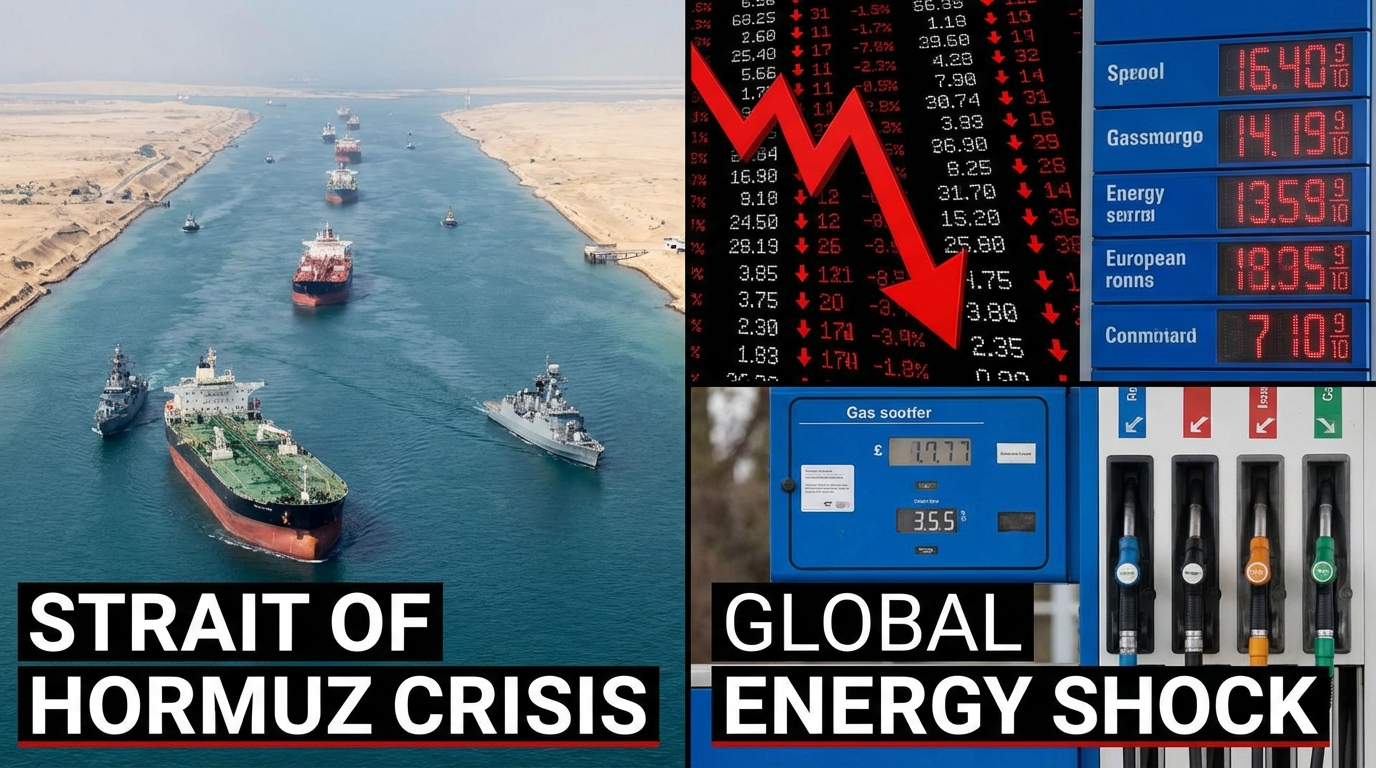
Strait of Hormuz Crisis and Global Energy Shock
Introduction: The Strait of Hormuz crisis has once again shown how important energy routes are for the global economy. When conflict in West Asia led to the blockage of this narrow sea route, oil prices increased sharply and markets became unstable. This situation highlights the deep connection between energy, geopolitics, and economic stability across the world.
Table of Contents
Why in the News?
- The Strait of Hormuz has become the centre of global attention due to rising conflict in West Asia.
- It is a narrow sea route that connects the Persian Gulf to the Arabian Sea.
- At some places, it is only about 33 km wide, which makes it a very sensitive and vulnerable chokepoint.
- On February 28, the United States and Israel launched a military campaign against Iran.
- In response, Iran blocked ships passing through the Strait of Hormuz.
- This action disrupted global oil supply chains.
- As a result, global oil prices increased sharply.
- Prices crossed $110 per barrel.
- Energy markets across the world became unstable and uncertain.
- This situation has once again highlighted the importance of energy security and the geopolitical importance of West Asia.
What are the Key Highlights?
Importance of Oil and Natural Gas in the Global Economy
- Oil and natural gas together make up more than half of the world’s energy supply.
- According to International Energy Agency data for 2024, these fuels dominate global energy use.
- These energy sources are used in many sectors:
- Transport sector
- They power trucks, cars, ships, and aeroplanes.
- Electricity generation
- Many countries still depend on fossil fuels to generate power.
- Household use
- Cooking gas (LPG) is widely used in homes.
- Industrial use
- Oil and gas act as raw materials for petrochemicals and manufacturing.
- Transport sector
Unequal Distribution of Energy Resources
- Energy resources are not evenly distributed across the world.
- West Asia has large oil and gas reserves.
- Other regions have limited reserves.
- Major producers in West Asia include:
- Saudi Arabia
- United Arab Emirates
- Iran
- Major consumers are located in Asia:
- China
- India
- Japan
- These countries do not have enough domestic oil reserves.
- Therefore, they depend on imports from West Asia.
- Much of this oil passes through the Strait of Hormuz.
Role of the United States in Energy Geopolitics
- The United States is both a major producer and a major consumer of energy.
- Its energy consumption per person is very high.
- It is about 10 times higher than India.
- It is about 2.4 times higher than China.
- Its energy consumption per person is very high.
- Historically, the U.S. has tried to secure energy supplies through global influence.
- It has been involved in major conflicts related to oil.
- Key examples include:
- Gulf War
- Iraq War
- Recent actions in Venezuela
- Ongoing conflict involving Iran
- The U.S. has also increased domestic production:
- Shale oil production increased after the mid-2000s.
- It became the world’s largest oil producer.
Strategic Importance of Iran and Venezuela
- Even though their current production is limited:
- Iran and Venezuela together hold about 39% of the world’s proven oil reserves.
- This makes them important for future energy supply.
- Their oil reserves attract global interest and competition.
Russia’s Emerging Role in the Energy Crisis
- After the Russia-Ukraine War:
- Western countries imposed sanctions on Russia.
- This reduced Russia’s oil exports to Europe.
- However, the current crisis has changed the situation:
- Disruptions in West Asia have increased demand for Russian oil.
- Russia has become a key supplier again.
- Russia is now one of the few countries with surplus oil available for export.
India’s Oil Strategy and Russian Imports
- India is:
- The second-largest importer of crude oil.
- The third-largest consumer of oil.
- After 2022, India started buying oil from Russia at discounted prices.
- Share of Russian oil imports increased:
- From 2.5% in 2021
- To 39% in 2023
- Share of Russian oil imports increased:
- India processes crude oil in refineries:
- Converts it into petrol, diesel, LPG, and petrochemicals.
- Exports refined products to other countries.
- This strategy helped India:
- Reduce import costs
- Maintain energy stability
- Earn profits from exports
Europe’s Energy Shift
- Europe traditionally depended on Russian oil and gas.
- This helped them manage cold winters.
- After sanctions on Russia:
- Europe shifted to West Asia for energy imports.
- This increased global competition for oil supplies.
Current Crisis and Market Instability
- Closure of the Strait of Hormuz has created supply shortages.
- Oil prices have risen sharply.
- The U.S. now wants increased use of Russian oil to stabilise markets.
What are the Significance?
Global Energy Security
- The crisis shows how fragile global energy supply chains are.
- A single chokepoint disruption can affect the entire world.
- Countries are now more aware of:
- The need for energy diversification
- The importance of secure supply routes
Strategic Importance of Maritime Routes
- The Strait of Hormuz is one of the most important sea routes.
- Nearly one-fifth of global oil trade passes through it.
- Its blockage shows:
- How geography shapes global politics
- The importance of controlling sea routes
Shift in Global Power Balance
- The crisis has changed global energy dynamics.
- Russia has regained importance.
- West Asia remains central to energy politics.
- It shows that power shifts quickly in international relations.
Economic Impact on Developing Countries
- Countries like India face serious challenges:
- Rising oil prices increase inflation.
- Transport and production costs increase.
- This affects:
- Common people
- Economic growth
India’s Strategic Flexibility
- India’s decision to buy discounted Russian oil shows:
- A practical and flexible foreign policy.
- It helps India:
- Balance relations with both West and Russia
- Secure affordable energy
Interconnected Nature of Global Markets
- The oil market is highly interconnected.
- A disruption in one region affects all countries.
- This highlights:
- The need for global cooperation
- The limits of isolated policies
Importance of Energy Transition
- The crisis highlights the risks of dependence on fossil fuels.
- It strengthens the case for:
- Renewable energy
- Sustainable development
Challenges
Supply Disruptions
- The closure of the Strait of Hormuz has disrupted oil supply.
- This creates shortages in global markets.
Rising Oil Prices
- Oil prices have crossed $110 per barrel.
- This increases inflation worldwide.
Geopolitical Tensions
- Conflicts between major powers are increasing.
- This creates uncertainty and instability.
Overdependence on Fossil Fuels
- The world still depends heavily on oil and gas.
- This makes economies vulnerable.
Limited Alternatives
- Renewable energy is growing but still limited.
- It cannot fully replace fossil fuels immediately.
Impact on Developing Economies
- Countries like India face:
- Higher import bills
- Pressure on currency
- Slower economic growth
Trade and Sanctions Issues
- Sanctions complicate global trade.
- Countries must balance political and economic interests.
Way Forward
Diversification of Energy Sources
- Countries should reduce dependence on a single region.
- They should import energy from multiple sources.
Investment in Renewable Energy
- Governments should promote:
- Solar energy
- Wind energy
- Green hydrogen
Strengthening Strategic Reserves
- Countries should maintain oil reserves.
- This helps during emergencies.
Enhancing Diplomatic Engagement
- Peaceful solutions should be prioritised.
- Dialogue can reduce tensions.
Improving Energy Efficiency
- Efficient use of energy can reduce demand.
- This lowers pressure on supply.
Regional Cooperation
- Countries should work together.
- Shared strategies can improve stability.
Development of Alternative Routes
- New pipelines and transport routes should be developed.
- This reduces dependence on chokepoints like the Strait of Hormuz.
Conclusion
The current crisis shows how closely energy, geography, and politics are connected in today’s world. It reminds us that global systems are fragile and can change very quickly due to conflicts. Countries must act wisely and plan for long-term stability by balancing economic needs, strategic interests, and sustainable development goals.
Relevant Articles:
Alarming Tuberculosis (TB): Women at Risk
Lok Sabha Approves 2026-27 Agriculture Budget
Also Read:
India’s West Asia Policy Reset
AHAAR–L Framework: Comprehensive Counter-Terror Strategy for India
Strait of Hormuz: Which ships are passing through?