
CSMP IAS : India's Premier Coaching Institute for IAS / PCS
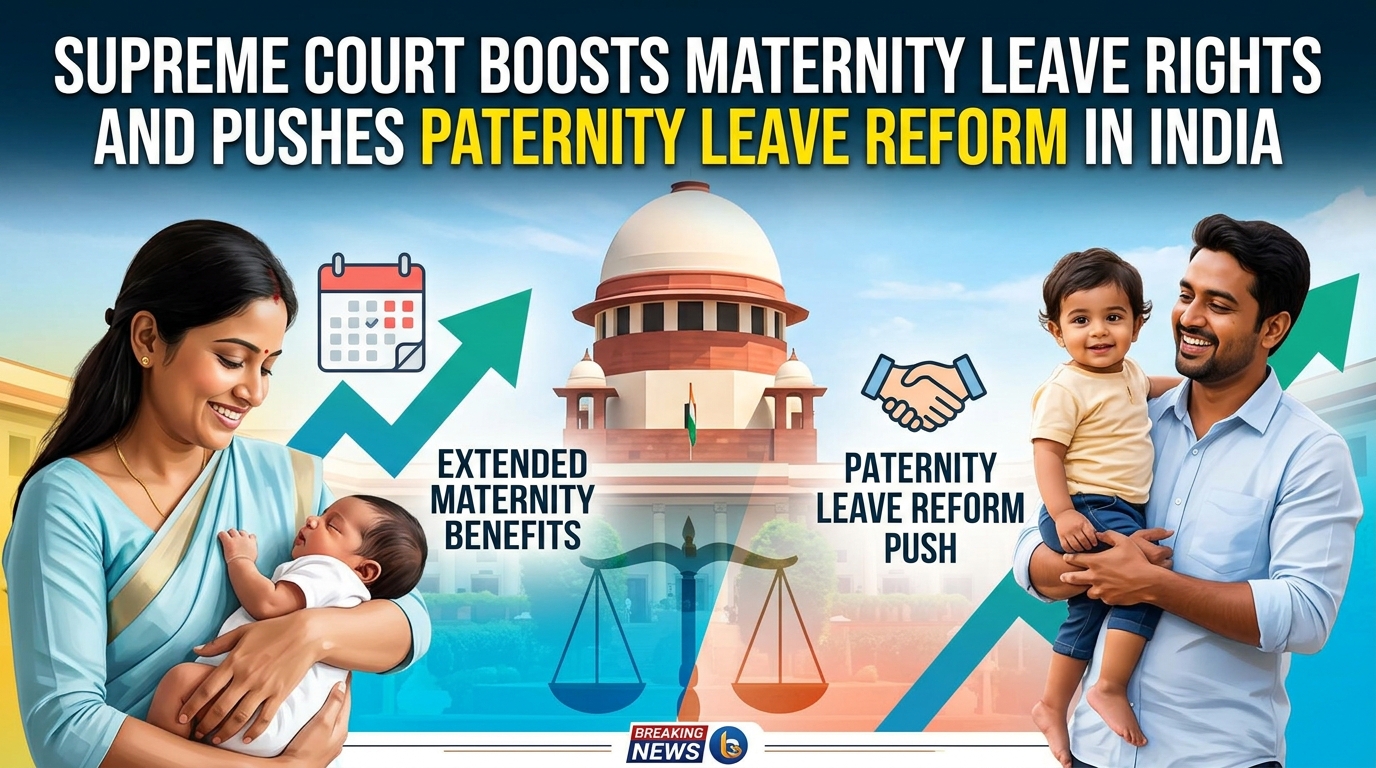
Supreme Court Boosts Maternity Leave Rights and Pushes Paternity Leave Reform in India
Table of Contents
The Supreme Court has strengthened Maternity Leave Rights in India by declaring them a basic human right. This landmark judgment highlights gender equality, child welfare, and social security while also urging the government to introduce paternity leave for shared parenting responsibility.
Why in the News?
- The Supreme Court of India has given an important judgment on maternity and paternity leave.
- The Court said that maternity leave is a basic human right and not just a benefit given by employers.
- The Court also advised the government to create a law for paternity leave as a social security benefit.
- The case was related to the Code of Social Security.
- This Code replaced the earlier Maternity Benefit Act.
- The Court examined whether the provisions in the new law were fair and equal.
What are the Key Highlights?
Recognition of Maternity Leave as a Human Right
- The Court said that maternity leave is a basic human right.
- A human right means something that every person deserves for a dignified life.
- It is not optional or dependent on the employer’s choice.
- Maternity leave protects women in many ways.
- It protects their health during pregnancy and after childbirth.
- It protects their dignity by allowing them to take care of themselves and their child.
- It protects their job, so they are not forced to leave work.
- Example:
- A working woman should not be forced to choose between her job and her newborn child.
Issue with Adoption Provision related to Maternity Leave Rights
- The law allowed maternity leave of 12 weeks only if the adopted child was below 3 months.
- This condition was found to be unfair by the Court.
- The Court said this rule is discriminatory.
- Discrimination means treating people unequally without a valid reason.
- Adoptive mothers were treated differently from biological mothers.
Practical Problem in Adoption of Maternity Leave Rights
- Adoption is a legal process that takes time.
- It involves verification, paperwork, and court procedures.
- Most adoptions take more than 3 months to complete.
- Because of this delay, many adoptive mothers could not use maternity leave.
- Example:
- If a woman adopts a 6-month-old child after legal procedures, she will not get maternity leave under the old rule.
Equality Between Biological and Adoptive Mothers
- The Court said that both types of mothers are equal.
- Biological mother means a woman who gives birth to a child.
- Adoptive mother means a woman who legally adopts a child.
- Parenting responsibilities are the same in both cases.
- Both mothers need time for care, bonding, and emotional support.
- The Court also said that adoption may need even more care.
- Adopted children may take more time to adjust to a new family.
Adoption as Reproductive Autonomy
- The Court explained the idea of reproductive autonomy.
- It means the right of a woman to decide how and when to become a mother.
- Adoption is also a valid way of becoming a mother.
- It should be treated equally with childbirth.
- This idea connects with personal freedom and dignity.
Impact on Child and Society
- Without proper maternity leave, many problems can arise.
- Mothers may return to work too early due to financial pressure.
- Children may not receive proper care and attention.
- Example of social impact:
- A mother may leave her child with an older sibling.
- If the sibling is a girl, she may leave school to take care of the child.
- This increases gender inequality in society.
Need for Paternity Leave
- The Court said childcare is not only the responsibility of mothers.
- Fathers also have an equal role in raising children.
- Paternity leave means leave given to fathers after the birth or adoption of a child.
- It helps fathers spend time with the child and support the mother.
- Example:
- A father can help in feeding, caring, and supporting the mother’s recovery.

What is the Significance?
Protection of Women’s Rights
- This judgment strengthens women’s rights at the workplace.
- It ensures job security during pregnancy and motherhood.
- It protects women from being forced to leave their jobs.
Promotion of Gender Equality
- The judgment promotes equality between men and women.
- It recognises that childcare is a shared responsibility.
- It encourages men to participate in family duties.
Child Welfare and Development
- The judgment supports better care for children.
- Early care improves physical health and emotional bonding.
- Children grow better when both parents are present.
Recognition of Diverse Families
- The judgment accepts different types of families.
- It recognises adoptive families as equal to biological families.
- It supports modern social changes.
Reduction of Social Inequality
- The judgment helps reduce gender inequality.
- It prevents girls from dropping out of school for caregiving.
- It breaks traditional stereotypes about gender roles.
Strengthening Social Security Framework
- Social security means protection provided by the state in times of need.
- This includes benefits like maternity leave, health care, and pensions.
- The judgment expands the meaning of social security.
- It includes family care and emotional well-being.
- It aligns India with global labour standards.
What are the Challenges?
Lack of Clear Law on Paternity Leave
- India does not have a proper law for paternity leave.
- Only some government employees get this benefit.
- Private sector workers are mostly excluded.
Implementation Issues in Private Sector
- Private companies may hesitate to provide paid leave.
- They may worry about increased costs.
- Small businesses may find it difficult to manage employee absence.
Awareness and Social Attitudes
- Many people still believe that childcare is only a mother’s duty.
- This belief limits the role of fathers.
- Men may feel uncomfortable taking leave due to social pressure.
Adoption Process Delays
- Adoption procedures are slow and complex.
- Many legal steps are involved.
- This delay reduces access to maternity benefits for adoptive mothers.
Informal Sector Exclusion
- A large number of women work in the informal sector.
- Informal sector includes jobs without formal contracts, like domestic work or daily wage labour.
- These women do not get maternity benefits.
What is the Way Forward?
Legal Recognition of Paternity Leave
- The government should make a clear law for paternity leave.
- This law should apply to both public and private sectors.
Reform of Social Security Laws
- The Code of Social Security should be improved.
- Discriminatory provisions should be removed.
- Equal benefits should be given to all mothers.
Simplification of Adoption Process
- Adoption procedures should be made faster and easier.
- Digital systems can reduce delays and paperwork.
Support for Employers
- The government should support companies.
- Tax benefits can be given to employers who provide parental leave.
- Flexible work options can be encouraged.
Awareness Campaigns
- Society needs to change its thinking.
- Campaigns should promote shared parenting.
- Media and education can help change attitudes.
Inclusion of Informal Sector
- Maternity benefits should be extended to informal workers.
- Government schemes can provide financial support.
Conclusion
The judgment shows that laws must change with society and support both families and individuals. It highlights the importance of dignity, equality, and shared responsibility in parenting. A balanced approach between work and family life will help build a more fair and caring society.
Relevant Articles:
BRICS STI Cooperation Boost: India Leads BRICS Science Technology Innovation Growth
India West Asia Policy Shift: Strategic Autonomy and Rising Global Role
Jungle Cat Conservation Crisis in India
Read Also:
MGNREGA Wage Crisis and Rural Employment Challenges
Glacier Disaster Risk and Flash Flood Threat in Himalayas
Pulses Policy Reform for Stronger Farmer Income
What did the Supreme Court say about paid maternity leave?