
CSMP IAS : India's Premier Coaching Institute for IAS / PCS
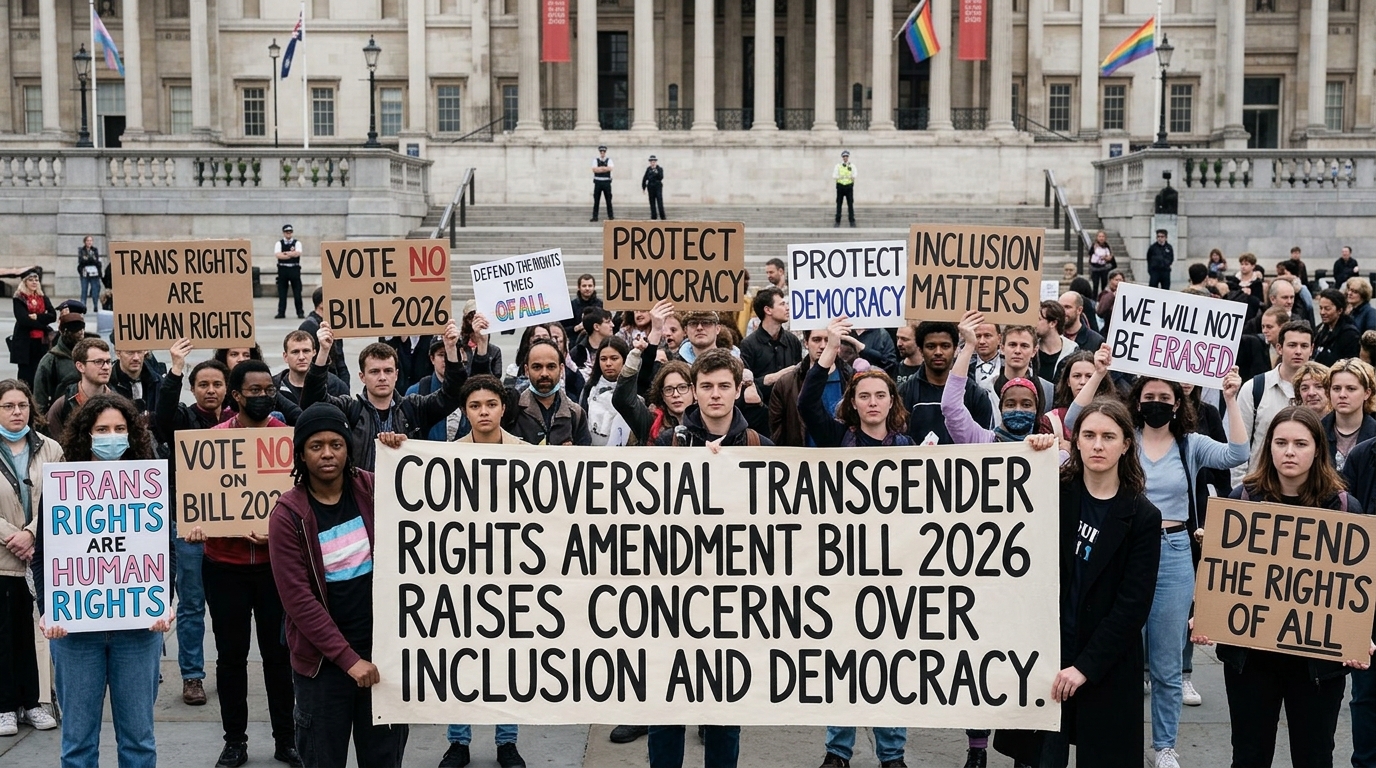
Controversial Transgender Rights Amendment Bill 2026 Raises Concerns Over Inclusion and Democracy
Table of Contents
The Transgender Persons (Protection of Rights) Amendment Bill, 2026 highlights growing concerns about democratic processes and the protection of transgender rights in India. The Bill has triggered protests due to its restrictive approach toward gender identity and its departure from the principles established in NALSA v. Union of India, raising serious questions about inclusiveness, equality, and constitutional values.
Why in the News?
- The issue is in the news because the Transgender Persons (Protection of Rights) Amendment Bill, 2026 was passed quickly in Parliament without proper discussion and consultation.
- The Bill faced strong protests from LGBTQIA+ communities who felt that their concerns were ignored.
- The passing of the Bill raised questions about the quality of democratic decision-making in India.
- The controversy also arises because the Bill appears to change earlier legal protections given by the Supreme Court in the case of NALSA v. Union of India.
- The judgment had recognised the right of transgender persons to self-identify their gender.
What are the Key Highlights?
Lack of Democratic Process
- The Bill was passed in a hurried manner without detailed debate in Parliament.
- Opposition parties walked out during the discussion, which shows lack of consensus.
- There was no proper consultation with stakeholders like transgender communities and civil society groups.
Restriction on Self-Identification
- The Bill moves away from the principle that a person can identify their own gender.
- It introduces conditions like biological markers or belonging to certain communities.
- This creates confusion and uncertainty for many individuals.
Use of Biological Criteria
- The Bill focuses on biological aspects such as chromosomes, hormones, and physical characteristics.
- This approach treats gender as only a biological concept.
- It ignores the psychological and social aspects of identity.
Recognition of Limited Communities
- The Bill recognises only certain traditional communities such as hijra, kinner, aravani, and jogta.
- People who do not belong to these communities may not get protection.
- This creates inequality within the transgender population.
Confusion Between Sex and Gender
- The Bill mixes the concepts of sex and gender.
- Sex refers to biological differences between males and females.
- Gender refers to how a person identifies themselves socially and psychologically.
What are the Significance?
Protection of Human Dignity
- The issue is important because it relates to human dignity and respect for identity.
- Every person has the right to live with dignity regardless of their gender identity.
- For example, denying someone’s identity can lead to discrimination in jobs, education, and healthcare.
Constitutional Values
- The matter is connected to the principle of equality under Article 14 of Indian Constitution.
- The Constitution guarantees equal treatment to all citizens.
- If certain groups are excluded, it violates this principle.
Legal Clarity and Certainty
- Laws should be clear so that people understand their rights.
- Ambiguity in defining transgender identity creates confusion.
- For example, a person may not know whether they qualify for benefits or protection.
Social Inclusion
- The law affects the inclusion of transgender persons in society.
- Inclusive laws help reduce discrimination and improve social acceptance.
- For example, recognition of identity helps in accessing education and employment.
Impact on Welfare Schemes
- Government schemes for transgender persons depend on legal definitions.
- If definitions are narrow, many people may not benefit.
- This reduces the effectiveness of welfare programs.
What are the Challenges?
Lack of Consultation
- The government did not properly consult stakeholders before passing the Bill.
- This led to mistrust and protests from the community.
- Without consultation, laws may not reflect ground realities.
Violation of Self-Identity Principle
- The Bill weakens the principle of self-identification.
- This goes against earlier judicial decisions.
- It creates psychological stress for individuals who are forced to prove their identity.
Overemphasis on Biology
- The focus on biological markers ignores social and psychological aspects.
- Gender identity is not only about physical characteristics.
- This approach can lead to exclusion of many individuals.
Exclusion of Non-Traditional Identities
- The law recognises only certain traditional communities.
- Many people with different identities may be left out.
- This creates inequality within the transgender community itself.
Democratic Deficit
- The way the law was passed shows weakness in democratic processes.
- Lack of debate reduces the quality of legislation.
- It also reduces public trust in governance.
What is the Way Forward?
Inclusive Consultation Process
- The government should involve all stakeholders in law-making.
- This includes transgender persons, activists, and experts.
- Consultation ensures that laws are practical and acceptable.
Restore Self-Identification
- The law should respect the right of individuals to identify their gender.
- This is essential for dignity and freedom.
- It also aligns with judicial principles.
Clear and Broad Definitions
- The law should provide clear and inclusive definitions of gender identity.
- This will reduce confusion and ensure wider protection.
- It will also help in proper implementation of policies.
Balance Between Rights and Regulation
- The government should address concerns of misuse without harming genuine rights.
- Proper verification mechanisms can be developed without violating dignity.
- This creates a balanced approach.
Strengthening Democratic Processes
- Parliament should ensure proper debate and discussion before passing laws.
- This improves the quality of legislation.
- It also strengthens democratic values.
Conclusion
A fair and just society requires laws that respect individual identity while maintaining clarity and inclusiveness. The present situation shows the need for a more thoughtful and participatory approach so that governance truly reflects the needs and rights of all citizens.
Relevant Articles:
Illegal Sand Mining Crisis in Chambal Sanctuary Raises Environmental Concerns
U.S. Forced Labour Probe Raises Concerns for Global Trade and India
India–Canada Relations Strengthen with Strategic Economic and Energy Partnership
Read Also:
Economic Stabilisation Fund Boosts India’s Crisis Preparedness and Fiscal Stability
Peptide Therapies Risks and Benefits: Growing Popularity Raises Safety Concerns
India Labour Codes Reform: Opportunities and Challenges in India Labour Codes Reform
Parliament clears Transgender Bill amid an uproar