CSMP IAS : India's Premier Coaching Institute for IAS / PCS
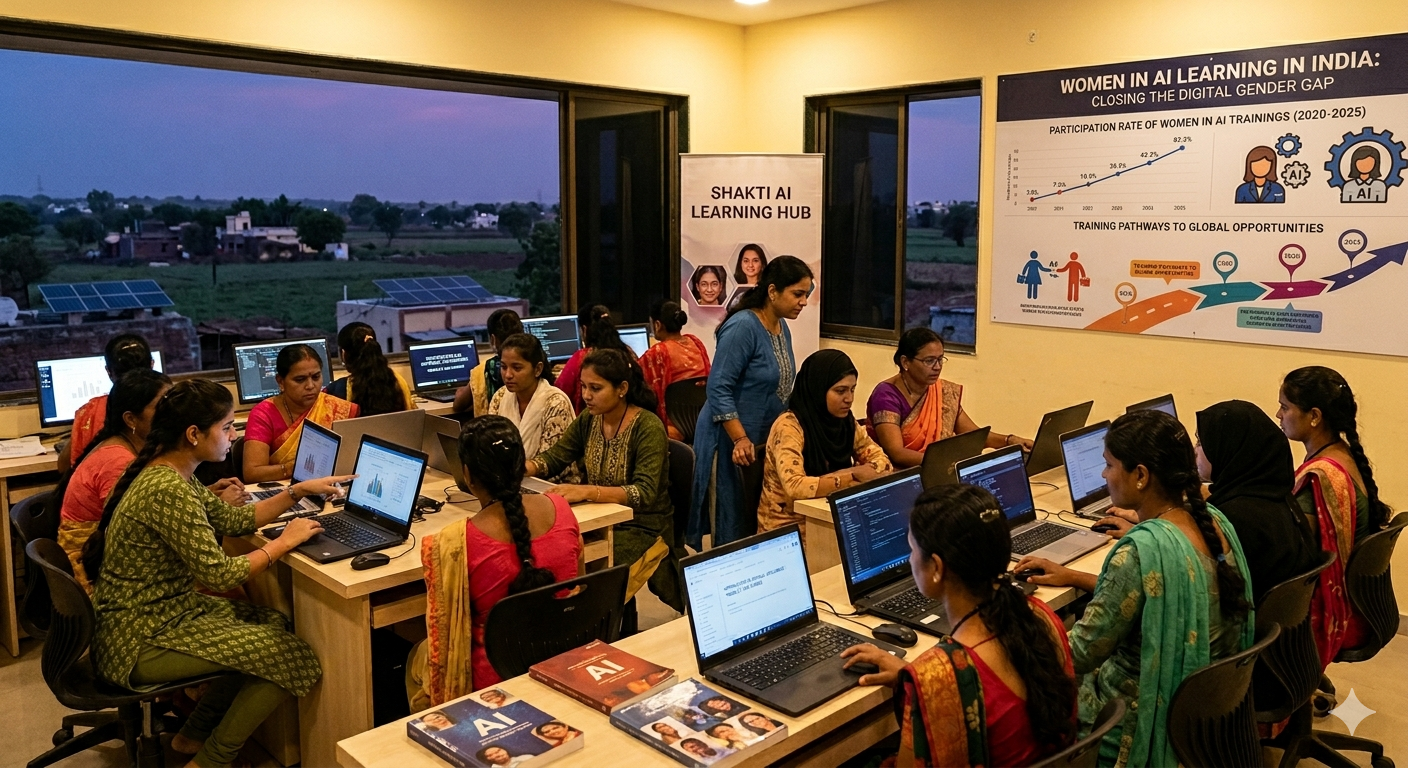
Empowering Women in AI Learning in India: Closing the Digital Gender Gap
Table of Contents
Women’s in AI (Artificial Intelligence) courses in India is growing, with 31.2% of learners now being women, according to a recent Coursera report. Despite being below the global average, Indian women show higher course completion rates, reflecting strong commitment and potential to strengthen India’s AI workforce. This trend highlights opportunities to reduce the digital gender gap and support inclusive growth in technology.
Why in the News?
- A new report by the online learning platform Coursera has highlighted gender participation in Artificial Intelligence (AI) courses in India.
- The report shows that 31.2% of learners taking AI courses in India are women.
- The findings also highlight the gender gap in digital learning and AI skills.
What are the Key Highlights?
Share of Women in AI Courses
- Women made up 31.2% of AI course learners in India in the last year.
- This share is lower than the global average of 36%.
Change from Previous Year
- In 2024, the share of women learners in AI courses was 2.2 percentage points lower than the current level.
- This shows a small improvement in women’s participation.
Course Completion Trends
- Women are more likely to complete AI and Generative AI courses once they enrol.
- This shows strong commitment and persistence among women learners.
Completion Advantage
- In India, women course takers are about 3 percentage points more likely to complete courses than men.
- However, the report did not provide overall completion rate numbers.
Digital Divide
- The report highlights that the digital gender divide also affects access to AI learning opportunities.
What are the Significance?
Growth of Women in Technology Skills
- More women joining AI courses shows increasing interest in technology and digital skills.
- This can help improve women’s participation in the technology sector.
Strengthening the AI Workforce
- AI skills are becoming important for future jobs and innovation.
- Increasing women’s participation can help create a larger and more diverse AI workforce.
Evidence of Academic Commitment
- Women showing higher completion rates indicate strong dedication to learning new skills.
- This can help build confidence and career opportunities for women in STEM fields.
Reducing Gender Gap in Technology
- Encouraging women to learn AI can reduce gender inequality in the digital economy.
Supporting India’s Digital Economy
- More skilled learners in AI can help support India’s growth in digital technologies and innovation.
Challenges
Gender Digital Divide
- Many women still face limited access to digital devices and the internet.
- This reduces their ability to participate in online courses.
Lower Participation Compared to Global Level
- India’s share of women learners (31.2%) is lower than the global average (36%).
Social and Cultural Barriers
- In many areas, women face social restrictions and family responsibilities.
- These factors can limit their time and opportunities for learning.
Lack of Awareness
- Many women may not know about AI courses and digital learning platforms.
Skill Gap in Advanced Technology
- Women are still underrepresented in advanced technology fields such as AI and data science.
Way Forward
Expand Digital Access
- Improve internet connectivity and device availability for women, especially in rural areas.
Promote Women in STEM
- Encourage girls and women to join science, technology, engineering, and mathematics (STEM) education.
Provide Scholarships and Support
- Governments and organisations can offer scholarships, training programmes, and mentorship for women learning AI.
Increase Awareness
- Conduct awareness campaigns about online learning platforms and AI courses.
Create Inclusive Learning Environments
- Educational platforms and institutions should design courses that are accessible and supportive for women learners.
Conclusion
The growth of women in AI learning shows positive change in digital education. Expanding opportunities and removing barriers can help more women gain important technological skills and participate fully in the future economy.
Relevant Articles:
Musi Riverfront Development in Hyderabad: Urban Renewal Amid Controversy
IRIS Dena Incident and The Shaping of AI Geopolitics
West Asia Crisis 2026: Iran-Israel-US Conflict and Strategic Implications for India
Read Also:
Project Cheetah in India: Successful Reintroduction and Wildlife Conservation
Affordable Cancer Medicines in India: Customs Duty Exemption Reduces Treatment Costs
India–Canada Economic Partnership 2026
AI by HER: Global Impact Challenge