CSMP IAS : India's Premier Coaching Institute for IAS / PCS
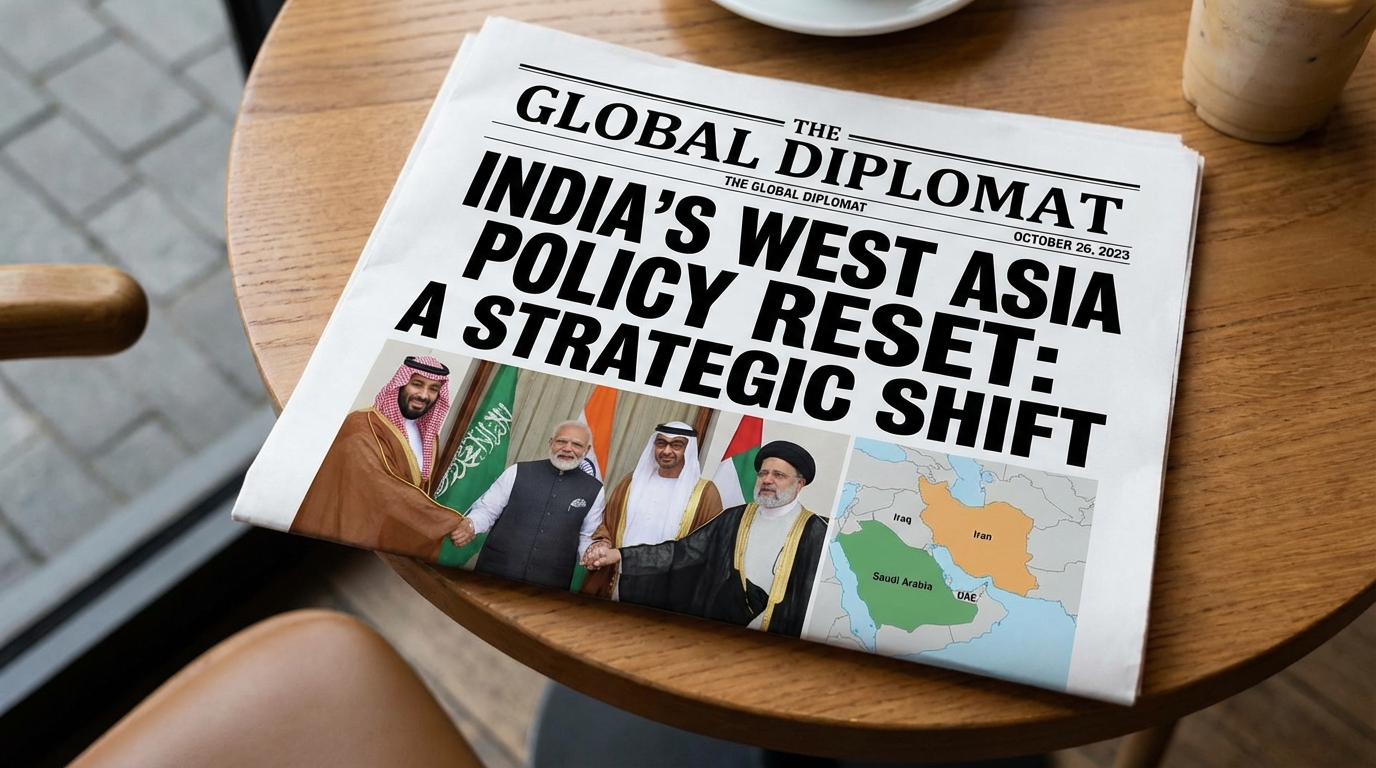
India’s West Asia Policy Reset
Introduction: India’s engagement with West Asia Policy has historically balanced its economic interests, energy needs, and diaspora concerns while maintaining strategic autonomy. Recently, a noticeable shift in India’s diplomatic posture in the region, particularly amid ongoing conflicts, has sparked domestic debate. This development is significant, as West Asia remains vital for India’s trade, energy security, and the welfare of millions of Indian expatriates, making its policy choices in the region both politically and economically consequential.
Table of Contents
Why in the News?
- India’s policy towards West Asia has recently created domestic debate.
- This is because India has shown a clear shift in its diplomatic approach, especially during the ongoing regional conflicts.
- The issue is important as West Asia is crucial for India’s trade, energy security, and diaspora.
What are the Key Highlights?
Rising Engagement with West Asia
- Over the last decade, India has deepened relations with Gulf countries.
- Prime Minister Narendra Modi visited:
- Gulf Cooperation Council (GCC) countries multiple times
- Israel twice
- Palestine and Iran once
- India signed Comprehensive Economic Partnership Agreements (CEPA) with:
- UAE
- Oman
- Trade with GCC is around $160 billion.
- Around 10 million Indians live in the Gulf region.
Strategic Importance of the GCC
- GCC countries see foreign partners mainly for:
- Security of ruling families
- Stability of the state
- Regional peace
- Due to recent conflicts, they are re-evaluating reliance on the United States.
New Diplomatic Reset by India
- India has adopted a more practical and interest-based policy.
- Key features:
- Direct support to GCC countries during crisis
- Active communication with leaders of Israel, GCC, and Iran
- Less focus on traditional “balancing” statements
- India is showing greater confidence and strategic autonomy.
Criticism of the Policy
- Some critics argue:
- Timing of Israel visit was inappropriate
- India is moving away from Palestine and Iran
- India is aligning with Western powers
- Risk of strategic overreach
Global Context
- Other countries’ roles:
- China and Russia have not fully supported Iran
- Pakistan’s stance is inconsistent
- Arab countries remained silent during Gaza conflict
- This shows global hypocrisy and shifting alliances.
Need for Balance
- India should not ignore:
- Palestine issue
- Importance of Iran (oil, trade, geography)
- West Asia is a highly unstable and changing region, requiring flexible policy.
Emerging Opportunities
- Decline of U.S.-led “Oil-for-Security” model
- GCC countries may:
- Look for new security partners
- Reduce dependence on the U.S.
- Economic disruptions in GCC may lead to:
- Shift of investment and talent
- Opportunity for India to become a new economic hub
What is the Significance?
Strategic Autonomy
- India is acting independently without external pressure
- It reflects India’s rise as a confident global power
Energy Security
- West Asia remains India’s main source of oil and gas
- Maintaining relations ensures stable energy supply
Diaspora Protection
- Millions of Indians work in the Gulf
- Strong ties help ensure:
- Safety
- Employment stability
- Remittances
Economic Opportunities
- Trade and investment relations are expanding
- Crisis in GCC may help India:
- Attract capital
- Become an alternative economic hub
Geopolitical Influence
- India is gaining acceptance as a reliable and responsible power
- It can play a bigger role in:
- Regional stability
- Security partnerships
Defence and Security Cooperation
- Increasing cooperation in:
- Intelligence
- Counter-terrorism
- Defence agreements
Challenges
Risk of Strategic Overreach
- India may get too involved in regional conflicts
- This can lead to:
- Military risks
- Diplomatic pressure
Balancing Relations
- Managing ties with:
- Israel
- Iran
- Arab countries
- Conflicts between them make balance difficult
Ignoring Palestine Issue
- Moving away from traditional support may:
- Harm India’s global image
- Affect relations with Muslim countries
Dependence on Unstable Region
- West Asia is highly volatile
- Conflicts can disrupt:
- Trade
- Energy supply
Security Threats
- Increased involvement may expose India to:
- Terrorism
- Regional instability
Limited Delivery by Partners
- Promised investments from GCC have been slow
- Economic expectations are not fully met
Way Forward
Maintain Strategic Balance
- India should:
- Engage all sides (Israel, Iran, Arab states)
- Avoid taking extreme positions
Strengthen Energy Diversification
- Reduce dependence on one region
- Explore alternative energy sources
Support Palestine Diplomatically
- Continue support for:
- Peaceful resolution
- Two-state solution
Deepen Economic Diplomacy
- Use current crisis to:
- Attract investments
- Promote “Make in India”
Careful Security Engagement
- Any security role in the Gulf should be:
- Limited
- Based on clear national interest
Increase Humanitarian Role
- Provide aid and relief during crises
- This improves:
- Global image
- Soft power
Build Flexible Foreign Policy
- Policy should be:
- Dynamic
- Adaptive
- Based on national interest
Conclusion
India is entering a new phase in its West Asia policy where realism is becoming more important than tradition. In a rapidly changing region, success will depend on India’s ability to stay flexible, protect its interests, and act with careful judgement in a complex geopolitical environment.
Also Read: Supreme Court Allows Passive Euthanasia in Harish Rana Case
Recent Article
- केशवानंद भारती मामला (1973)क्या है भारतीय संवैधानिक कानून ?
- Ebola Virus Outbreak 2026: Bundibugyo Strain in News
- India Netherland Elevate Ties to Strategic Partnership
- UGC विनियम 2026: समता का प्रयास या जातिगत भेदभाव?
- इंग्लैंड की 1688 की क्रांति (गौरवपूर्ण क्रांति)
