1. What is ODOP?
One District One Product (ODOP) is India's flagship strategy for balanced regional development, under which at least one distinctive product is identified, branded, and promoted from every district of the country. The idea is to convert local skill, geography, and tradition into an economic asset — turning a district's craft or crop into a nationally and globally recognised brand.
Inspiration: Japan's One Village One Product (OVOP) movement, which encouraged each region to specialise in a unique, globally competitive product.
Origin in India: Launched by the Government of Uttar Pradesh on 24 January 2018, starting with Moradabad's brassware as the pilot idea. It aimed to revive traditional industries and artisan clusters that were losing ground to mass manufacturing.
National scale-up: The success in UP inspired the Ministry of Commerce and Industry, through the Department for Promotion of Industry and Internal Trade (DPIIT), to adopt ODOP as a national initiative, with support from Invest India. It now works alongside the Districts as Export Hubs (DEH) initiative and Geographical Indication (GI) tagging drive.
Ministry of Food Processing Industries (MoFPI) runs a parallel ODOP component under the PM Formalisation of Micro Food Processing Enterprises (PMFME) scheme, focused specifically on perishable agri-produce and food products.
2. Objectives
Foster balanced, inclusive regional economic development across every district.
Preserve and modernise traditional crafts, skills, and agro-products.
Generate local employment and curb distress migration from small towns.
Build scale in procurement of inputs, shared infrastructure, and marketing.
Strengthen exports by linking district clusters to national and global markets.
Provide the ground-level product base for GI tagging and "Vocal for Local."
3. Institutional & Financial Architecture
Component Details Nodal agency (national) DPIIT, Ministry of Commerce and Industry, with Invest India Food-specific arm Ministry of Food Processing Industries (PMFME scheme) Export linkage Districts as Export Hubs (DEH); District Export Action Plans (DEAPs); District/State Export Promotion Committees Market access Dedicated ODOP Storefront on GeM (Government e-Marketplace); state-level e-commerce platforms Retail infrastructure PM Ekta Malls (Unity Malls) — funded via 50-year interest-free loans under the Special Assistance to States for Capital Investment (SASCI) scheme, to showcase ODOP and GI products Credit support PMFME offers 35% credit-linked capital subsidy (up to ₹10 lakh); UP's own ODOP Margin Money Scheme offers loans up to ₹25 lakh with 25% margin-money subsidy Global outreach ODOP Walls set up in cities like Singapore, Milan, and New York through Indian Missions abroad
4. ODOP by the Numbers (latest data)
1,244 products identified across 773 districts nationally under the DPIIT-led initiative (figures are periodically updated as more districts and products are mapped; earlier counts cited around 1,102–1,241 products across roughly 761–777 districts).
Bihar has achieved 100% product coverage across its districts and has been placed in "Category A" of implementation.
Over 500 ODOP product categories (1,300+ products) are listed on the GeM ODOP Storefront.
10+ states have built their own dedicated e-commerce platforms for district products.
In Uttar Pradesh alone, the scheme has supported over 1.46 lakh artisans, created work for 3.16 lakh+ people, and helped lift the state's exports from about ₹86,000 crore (2017-18) toward ₹1.84 lakh crore.
5. Uttar Pradesh — The Origin State (All 75 Districts)
Since ODOP began in UP and it remains the most exam-relevant, complete state list — especially for UPPSC, UPSSSC, and UP-focused sections of UPSC current affairs — the full district-wise product mapping is given below.
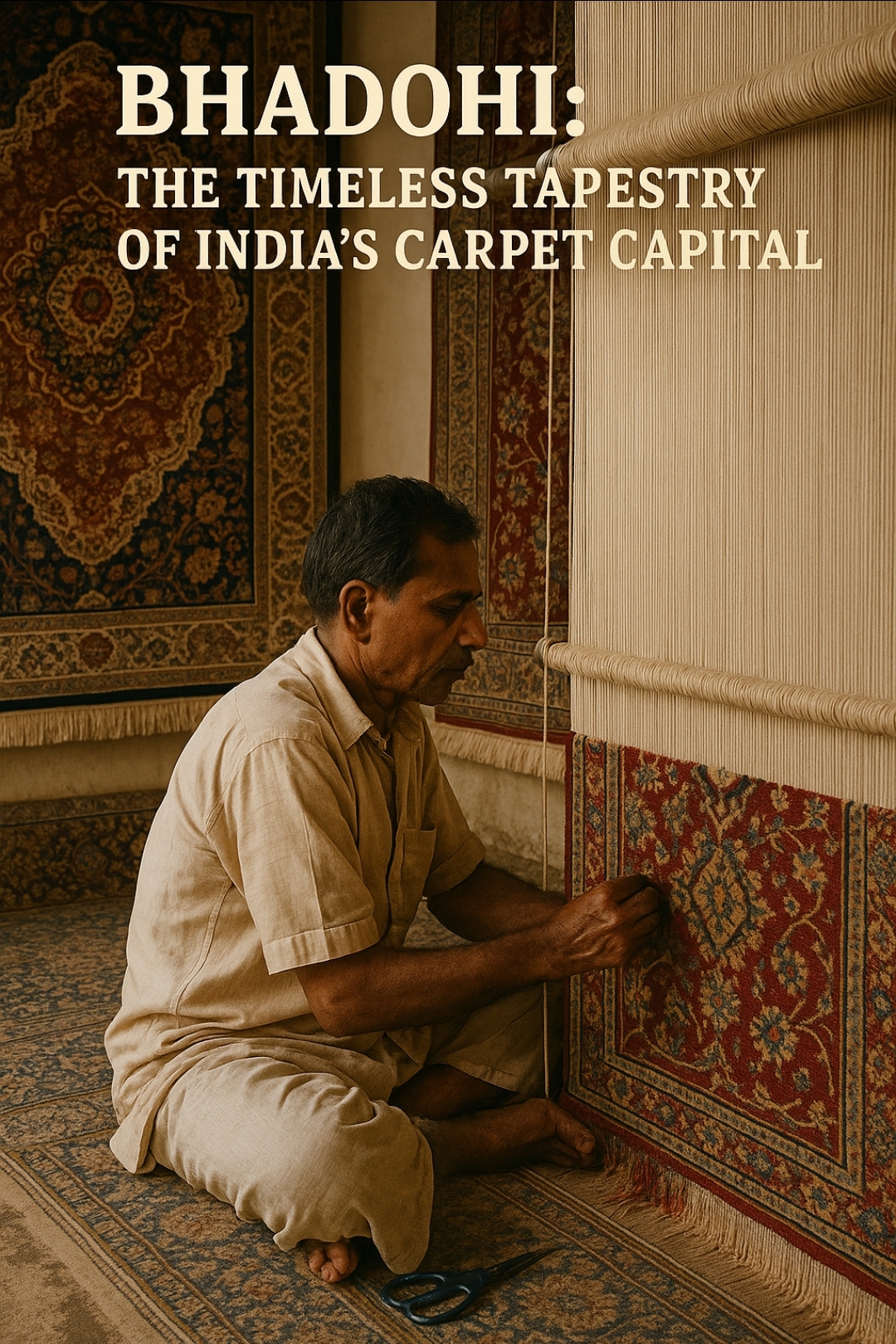
District ODOP Product Agra Leather products Aligarh Locks and hardware Ambedkar Nagar Textile products Amethi Moonj products Amroha Musical instruments Auraiya Food processing (Desi Ghee) Ayodhya Jaggery Azamgarh Black pottery Baghpat Home furnishing Bahraich Wheat-stalk handicrafts Ballia Bindi (Tikuli) Balrampur Food processing (pulses) Banda Shazar stone craft Barabanki Textile products Bareilly Zari-Zardozi Basti Wood craft Bhadohi Carpets (Dari) Bijnor Wood craft Budaun Zari-Zardozi Bulandshahar Ceramic products Chandauli Zari-Zardozi Chitrakoot Wooden toys Deoria Decorative products Etah Ghungroo, bells and brass products Etawah Textile products Farrukhabad Textile printing Fatehpur Bedsheets and iron fabrication works Firozabad Glassware Gautam Buddh Nagar Readymade garments Ghaziabad Engineering goods Ghazipur Jute wall hangings Gonda Food processing (pulses) Gorakhpur Terracotta Hamirpur Shoes Hapur Home furnishing Hardoi Handloom Hathras Hing (asafoetida) Jalaun Handmade paper art Jaunpur Woollen carpets (Dari) Jhansi Soft toys Kannauj Perfume (Attar) Kanpur Dehat Aluminium utensils Kanpur Nagar Leather products Kasganj Zari-Zardozi Kaushambi Food processing (banana) Kushinagar Banana fibre products Lakhimpur Kheri Tribal craft Lalitpur Zari silk sarees Lucknow Chikankari and Zari-Zardozi Maharajganj Furniture Mahoba Gaura stone craft Mainpuri Tarkashi art Mathura Sanitary fittings Mau Powerloom textile Meerut Sports products Mirzapur Carpets Moradabad Metal craft (brassware) Muzaffarnagar Jaggery Pilibhit Flute Pratapgarh Aamla (amla) products Prayagraj Moonj products Raebareli Wood work Rampur Applique and patchwork, Zari patchwork Saharanpur Wood crafting Sambhal Handicraft (horn-bone) Sant Kabir Nagar Brassware craft Shahjahanpur Zari-Zardozi Shamli Iron arts Shravasti Tribal craft Siddharthnagar Kala Namak rice Sitapur Carpets (Dari) Sonbhadra Carpets Sultanpur Moonj products Unnao Zari-Zardozi Varanasi Banarasi silk saree
(A district may be linked to more than one product cluster in official state lists; the table reflects the primary ODOP product.)
6. Illustrative Products from Other States (Exam Highlights)
ODOP is national, so PCS/UPSC questions often test cross-state product recall too. Some frequently cited examples:
State/UT District (example) ODOP/GI-linked Product Jammu & Kashmir Pulwama Saffron Kerala Wayanad Coffee West Bengal Murshidabad / Nadia Silk / Sitabhog-Mihidana Rajasthan Jaipur Blue pottery / Gems & jewellery Tamil Nadu Kanchipuram Silk sarees Madhya Pradesh Indore Namkeen / Textiles Bihar Muzaffarpur Shahi Litchi Odisha Cuttack Silver filigree (Tarakasi) Assam Kamrup Muga silk Karnataka Mysuru Sandalwood products/Silk Gujarat Kutch Handicrafts and embroidery Maharashtra Nagpur Oranges
7. Why ODOP Matters for UPSC/PCS
Prelims angle — Facts commonly tested:
Year and state of launch (UP, 2018); nodal ministry at the Centre (Commerce & Industry/DPIIT); inspiration (Japan's OVOP).
Number of districts/products covered nationally (track the latest figure, as it is updated periodically).
Linkages with GI tagging, GeM ODOP Storefront, PM Ekta Malls, PMFME, and Districts as Export Hubs.
District-product pairs, especially from your home state and current-affairs-linked GI tags.
Mains angle — Common themes:
ODOP as a tool for balanced regional development and reducing rural-urban and inter-district disparities (GS Paper III — Indian Economy, Inclusive Growth).
Role in reviving the informal/MSME/handicraft sector and generating rural non-farm employment.
Its contribution to the "Vocal for Local" and Atmanirbhar Bharat vision.
Convergence of multiple schemes (PMFME, PM Vishwakarma, GI tagging, export promotion) around ODOP as a case study in policy integration.
Ethics/GS IV angle: preservation of intangible cultural heritage and artisan livelihoods.
Possible essay/answer-writing themes:
"From Village to Global Market: Assessing the Impact of ODOP on India's Rural Economy."
"Can Local Branding Solve India's Regional Development Puzzle?"
8. Challenges
Uneven implementation across states — some districts still lack a clearly branded or export-ready product.
Limited access to formal credit and working capital for small artisans despite subsidy schemes.
Weak last-mile market linkages and price realisation, particularly for e-commerce-unfamiliar artisan clusters.
Overlap and coordination gaps between state ODOP lists, GI tagging, and the Districts as Export Hubs list.
Quality standardisation and consistent branding needed to compete internationally.
9. Way Forward
Faster GI tagging of remaining eligible products to strengthen legal protection and premium pricing.
Deeper integration with PM Vishwakarma (artisan skilling) and PM Ekta Malls (retail visibility).
Expansion of dedicated e-commerce and export facilitation, especially via GeM and state platforms.
Continuous updating of the district-product mapping so it reflects ground realities, not just legacy lists.
10. Quick Revision — One-Liner Facts
ODOP launched in Uttar Pradesh: 24 January 2018.
National nodal agency: DPIIT, Ministry of Commerce and Industry (with Invest India).
Food-processing arm: Ministry of Food Processing Industries (under PMFME).
Inspiration: Japan's One Village One Product (OVOP).
Retail showcase infrastructure: PM Ekta Malls (Unity Malls).
E-marketplace: ODOP Storefront on GeM.
UP districts covered: 75/75, each mapped to a signature product.