
CSMP IAS : India's Premier Coaching Institute for IAS / PCS
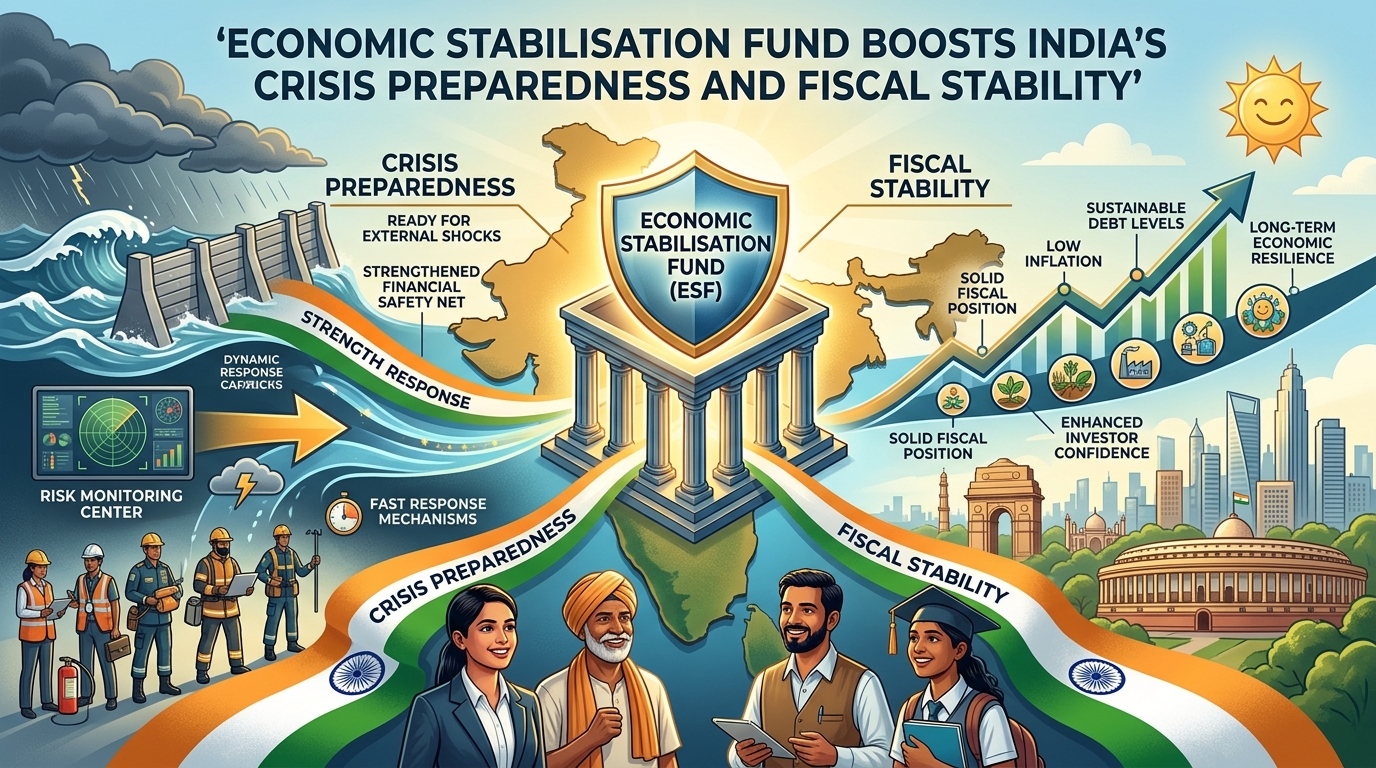
Economic Stabilisation Fund Boosts India’s Crisis Preparedness and Fiscal Stability
Table of Contents
India has taken a proactive step toward economic resilience with the introduction of the Economic Stabilisation Fund. Announced by Finance Minister Nirmala Sitharaman in the Lok Sabha, this fund aims to shield the economy from global shocks such as rising oil prices and geopolitical tensions. The Economic Stabilisation Fund strengthens India’s fiscal framework while ensuring stability, making it a crucial topic for UPSC and state PCS examinations.
Why in the News?
- The Government of India has recently announced the creation of an Economic Stabilisation Fund.
- The total allocation for this fund is ₹57,381 crore.
- The announcement was made by Nirmala Sitharaman in the Lok Sabha.
- This announcement came during the discussion on the Second Supplementary Demand for Grants for the financial year 2025–26.
- The decision has been taken at a time when the global economy is facing serious challenges.
- Oil prices are rising and are close to $100 per barrel.
- Geopolitical tensions in West Asia are increasing.
- Global supply chains are facing disruptions.
- The government aims to create a financial buffer so that it can respond quickly to these external shocks.
- At the same time, the government has assured that it will maintain the fiscal deficit target of 4.4% of GDP for 2025–26.
What are the Key Highlights?
- The government has created the Economic Stabilisation Fund.
- The fund has an allocation of ₹57,381 crore.
- It will be used to respond to global economic shocks.
- The Lok Sabha has approved the Second Supplementary Demand for Grants.
- This approval allows additional government spending.
- The government has proposed a gross additional expenditure.
- The total amount is about ₹2.81 lakh crore.
- There are additional receipts and savings.
- These amount to approximately ₹80,000 crore.
- After adjusting these, the net additional cash outgo becomes ₹2.01 lakh crore.
- The government has confirmed fiscal discipline.
- The fiscal deficit target will remain at 4.4% of GDP.
- The purpose of the Economic Stabilisation Fund is to:
- Provide fiscal space to the government.
- Help manage global uncertainties.
- Address supply chain disruptions.
- Support sectors affected by external shocks.
- The government has expressed confidence in India’s macroeconomic stability.
- Policy measures after the COVID-19 pandemic have strengthened the economy.
- India is better prepared to handle global challenges.
What are the Significance?
Fiscal Stability during Global Crisis
- The Economic Stabilisation Fund helps maintain fiscal stability.
- It allows the government to respond to crises without increasing the fiscal deficit beyond the target.
- This ensures:
- Stability in government finances.
- Better control over public spending.
Protection from Global Economic Headwinds
- The global economy is facing multiple risks.
- Rising oil prices.
- Geopolitical conflicts.
- Trade disruptions.
- The fund provides a safety mechanism.
- It allows quick government action.
- It protects the economy from external shocks.
Strengthening Macroeconomic Management
- The creation of the fund reflects strong economic planning.
- It shows the government’s commitment to fiscal discipline.
- It ensures:
- Better management of economic policies.
- Stability during uncertain times.
Support to Key Economic Sectors
- Some sectors may be more affected by global shocks.
- Industries dependent on imports.
- Energy-intensive sectors.
- The fund allows:
- Targeted financial support.
- Quick intervention to prevent losses.
Boost to Investor Confidence
- Maintaining the fiscal deficit target improves credibility.
- Investors prefer stable and predictable policies.
- The fund sends a positive signal.
- It shows preparedness for crises.
- It strengthens trust in India’s economic management.
Preparedness for Future Uncertainties
- The fund acts as a financial buffer.
- It prepares the country for future crises.
- This improves:
- Economic resilience.
- Ability to handle unexpected shocks.
Flexibility in Government Spending
- The fund provides fiscal headroom.
- The government can spend when required without delay.
- This flexibility:
- Helps in quick policy response.
- Reduces the impact of sudden economic changes.
Continuity in Development Programmes
- During crises, development spending may be affected.
- The fund ensures continuity of key programmes.
- This helps:
- Maintain growth momentum.
- Avoid disruption in welfare schemes.
What are the Challenges?
Rising Global Oil Prices
- Oil prices are increasing globally.
- Prices are close to $100 per barrel.
- This creates problems:
- Higher import bill for India.
- Increase in inflation.
- Pressure on fiscal balance.
Geopolitical Conflicts
- Conflicts in West Asia create uncertainty.
- They affect energy supply routes.
- They disrupt global trade.
- This leads to:
- Economic instability.
- Risk to India’s energy security.
Supply Chain Disruptions
- Global crises can disturb supply chains.
- Shortage of raw materials.
- Delay in production.
- This affects:
- Manufacturing industries.
- Export and import activities.
Fiscal Pressure on Government
- Additional spending increases fiscal pressure.
- Balancing development and discipline becomes difficult.
- The government must:
- Manage resources carefully.
- Avoid excessive borrowing.
Sector-Specific Economic Shocks
- Certain sectors are more vulnerable.
- Energy sector.
- Manufacturing sector.
- These sectors may require:
- Immediate financial support.
- Policy intervention.
Risk of Inefficient Fund Utilisation
- There is a possibility of misuse or inefficient allocation.
- Funds may not reach the most affected sectors.
- This can reduce:
- Effectiveness of the policy.
Dependence on External Factors
- India’s economy is linked to global markets.
- External shocks are beyond control.
- This creates:
- Uncertainty in planning.
- Difficulty in prediction.
What is the Way Forward?
Strengthening Fiscal Discipline
- The government should maintain strict fiscal control.
- Ensure spending is efficient.
- It should:
- Stick to fiscal deficit targets.
- Avoid unnecessary expenditure.
Diversifying Energy Sources
- Reduce dependence on imported oil.
- Promote renewable energy.
- Increase domestic production.
- This will:
- Improve energy security.
- Reduce vulnerability to global price changes.
Building Strong Supply Chains
- Develop resilient supply chains.
- Encourage domestic manufacturing.
- This will:
- Reduce dependence on imports.
- Improve economic stability.
Strategic Use of the Stabilisation Fund
- Use the fund carefully.
- Only for genuine economic shocks.
- Ensure:
- Transparency in allocation.
- Accountability in spending.
Strengthening Economic Monitoring
- Improve systems to track global risks.
- Use data and technology for early warnings.
- This helps:
- Faster policy response.
- Better crisis management.
Promoting Structural Economic Reforms
- Continue long-term economic reforms.
- Improve productivity.
- Encourage investment.
- This will:
- Strengthen the economy.
- Increase resilience.
Enhancing Institutional Capacity
- Strengthen government institutions.
- Improve coordination among departments.
- This ensures:
- Effective implementation of policies.
Encouraging Private Sector Participation
- Involve private sector in economic growth.
- Promote investment and innovation.
- This will:
- Boost economic activity.
- Create employment opportunities.
Conclusion
The creation of the Economic Stabilisation Fund represents a forward-looking approach to managing uncertainty in a rapidly changing global environment. It reflects the importance of readiness, adaptability, and careful planning in economic governance. By combining fiscal prudence with strategic flexibility, India can strengthen its ability to navigate future challenges while sustaining long-term growth and stability.
Relevant Articles:
Peptide Therapies Risks and Benefits: Growing Popularity Raises Safety Concerns
India Labour Codes Reform: Opportunities and Challenges in India Labour Codes Reform
Western Media Double Standards: Bias in Global Politics
Read Also:
India China Military Gap: Urgent Need for Defence Reforms
Strait of Hormuz Crisis: Global Energy Security and India’s Strategic Response
Persian Gulf Ecosystem Crisis: Marine Biodiversity Under Threat and Conservation Efforts
ministry of defence; year end review – 2025