
CSMP IAS : India's Premier Coaching Institute for IAS / PCS
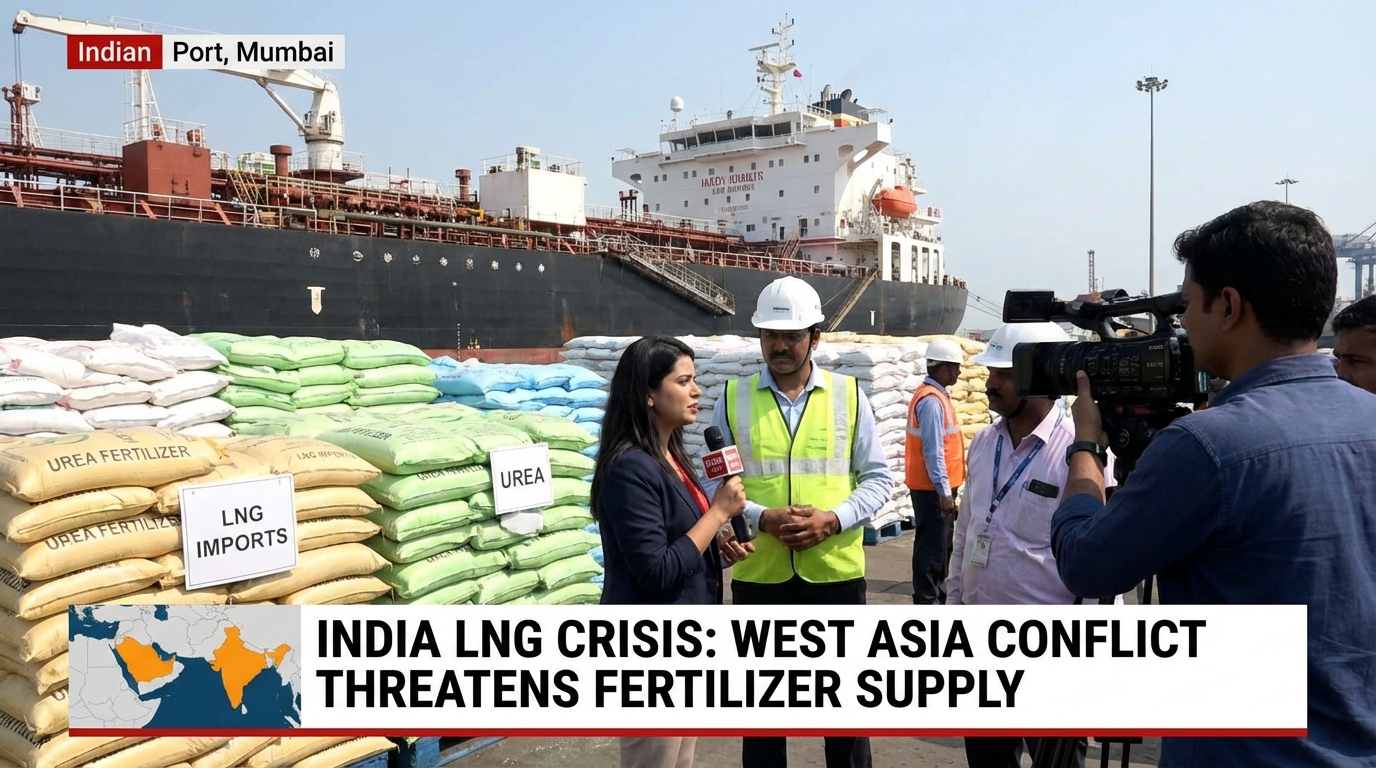
India LNG Crisis: West Asia Conflict Threatens Fertilizer Supply
Introduction: The India LNG Crisis is becoming a major concern as the ongoing West Asia conflict disrupts global energy supply chains. Rising tensions in the region are affecting the flow of Liquefied Natural Gas (LNG), on which India heavily depends. This situation is directly impacting fertilizer production, especially urea, which is essential for Indian agriculture. As energy prices rise and supply routes face risks, the India LNG Crisis highlights the country’s vulnerability to global shocks and the urgent need for energy security and diversification.
Table of Contents
Why in the News?
- The ongoing conflict in West Asia has created serious risks for global energy supply chains.
- Tensions involving the United States, Israel, and Iran have increased uncertainty in the region.
- This region is very important for oil and gas transportation.
- The conflict has disrupted global trade routes.
- It has caused a rise in crude oil prices.
- It has also created shortages of LPG and risks for LNG supply.
- India is highly dependent on imports of natural gas.
- More than 50% of India’s natural gas needs were met through imports in 2025.
- India is the fourth largest importer of natural gas in the world.
- The crisis may affect India’s supply of Liquefied Natural Gas (LNG).
- This can directly impact fertilizer production, especially urea.
- Urea is very important for Indian agriculture, especially for the Kharif season.
- The situation highlights India’s vulnerability to global shocks.
- It shows the risks of depending heavily on one region for energy imports.
What are the Key Highlights?
- High Dependence on LNG Imports
- India imported more than 50% of its natural gas in 2025.
- Total LNG imports were about 261 lakh metric tonnes.
- This makes India one of the largest importers in the world.
- Dependence on West Asian Suppliers
- More than 40% of LNG imports come from Qatar through long-term contracts.
- Other suppliers include the UAE and Oman.
- Overall, more than 60% of India’s LNG imports depend on this region.
- Importance of the Strait of Hormuz
- LNG shipments from Qatar, UAE, and Oman pass through this route.
- The Strait of Hormuz has become a major chokepoint due to the conflict.
- Any disruption here can stop or delay supplies.
- Use of LNG in Fertilizer Production
- Natural gas is mainly used to produce ammonia.
- Ammonia is used to produce urea fertilizer.
- About 30% of India’s LNG supply is used for fertilizer production.
- Growing Demand for Urea during India LNG Crisis
- India’s urea consumption reached 387 lakh metric tonnes in 2025.
- This demand has been growing steadily for many years.
- Gap Between Production and Demand
- Domestic production was about 306 lakh metric tonnes in 2025.
- This is not enough to meet total demand.
- Therefore, India depends on imports of urea.
- Heavy Dependence on Urea Imports from West Asia
- India imported more than 2,300 lakh metric tonnes of urea in 2025.
- About 71% of these imports came from West Asia.
- 45% came from Oman.
- 26% came from Saudi Arabia, Qatar, and the UAE.
- Government Response
- The Government issued the Natural Gas (Supply Regulation) Order, 2026.
- Fertilizer plants have been included in the priority sector.
- These plants will get at least 70% of their average gas supply.
- Buffer Stock Position
- India’s urea reserve reached 61.51 lakh metric tonnes by March 10.
- This is higher than last year’s stock by about 10 lakh metric tonnes.
- This is important before the Kharif sowing season.
What are the Significance?
Impact on India’s Energy Security
- The crisis shows India’s high dependence on imported energy.
- A large share of natural gas comes from foreign sources.
- This makes India vulnerable to global conflicts.
- Energy security becomes a major concern.
- Disruptions can affect multiple sectors.
- Stable energy supply is important for economic growth.
Risk to Fertilizer Production
- LNG is the main input for urea production.
- Any shortage of LNG will directly reduce fertilizer output.
- Fertilizer production is energy-intensive.
- Without sufficient gas, plants cannot operate at full capacity.
- This can create a shortage of urea in the country.
Threat to Agricultural Productivity
- Urea is the most widely used fertilizer in India.
- It is essential for crop growth.
- A shortage of urea can affect farming.
- Farmers may not get enough fertilizer.
- Crop yields may decline.
- This can affect food production and food security.
Inflationary Pressures
- Rising crude oil and gas prices increase production costs.
- Fertilizer prices may rise.
- Higher input costs for farmers can increase food prices.
- This can lead to inflation in the economy.
Supply Chain Vulnerability
- The Strait of Hormuz is a critical route.
- Any blockage can stop energy supply.
- Over-dependence on one route increases risk.
- It exposes India to geopolitical tensions.
Impact on Other Sectors
- Natural gas is used in many sectors.
- Industry uses it as fuel.
- Power plants use it to generate electricity.
- Households use PNG for cooking.
- Vehicles use CNG as fuel.
- Disruptions can affect all these sectors.
Importance of Government Intervention
- The government’s priority allocation shows proactive policy action.
- It ensures fertilizer plants continue to operate.
- Buffer stock management helps reduce short-term risk.
- It provides stability during crises.
Strategic Importance of Diversification
- The crisis highlights the need to diversify energy sources.
- Dependence on one region is risky.
- It shows the importance of long-term planning.
Challenges
High Import Dependence
- India depends heavily on imported LNG and urea.
- Domestic production is not sufficient.
- This creates vulnerability to global shocks.
Geopolitical Risks
- West Asia is a politically unstable region.
- Conflicts can disrupt supply chains.
- India has limited control over these external factors.
Chokepoint Risk of Strait of Hormuz
- A large share of energy imports passes through this route.
- It is a narrow and sensitive region.
- Any blockage can stop supply completely.
Limited Domestic Gas Production
- India’s natural gas production is not enough.
- Exploration and production are still limited.
- This increases reliance on imports.
Rising Global Prices
- Conflicts increase oil and gas prices.
- This increases import costs.
- It affects the country’s trade balance.
Pressure on Fertilizer Subsidy
- Higher fertilizer costs increase the subsidy burden on the government.
- The government may need to spend more.
- This affects fiscal stability.
Infrastructure Constraints
- Storage and distribution systems need improvement.
- LNG terminals and pipelines are limited.
- This affects supply efficiency.
Environmental Concerns
- Increased use of fossil fuels raises emissions.
- It conflicts with climate goals.
- Balancing energy needs and the environment is difficult.
Way Forward
Diversification of Energy Sources
- India should import LNG from multiple regions.
- This reduces dependence on West Asia.
- It should explore new suppliers like Africa and the USA.
Increase Domestic Production
- India should invest in natural gas exploration.
- New gas fields should be developed.
- This will reduce import dependence.
Strategic Reserves
- India should build larger reserves of LNG and fertilizers.
- This will help during supply disruptions.
- Buffer stock should be regularly updated.
Strengthening Infrastructure
- LNG terminals and pipelines should be expanded.
- This will improve supply distribution.
- Storage capacity should also be increased.
Promote Alternative Fertilizers
- Use of organic and bio-fertilizers should be encouraged.
- This reduces dependence on urea.
- Farmers should be educated about balanced fertilizer use.
Energy Transition
- India should promote renewable energy sources.
- Solar and wind energy can reduce fossil fuel use.
- Green hydrogen can be used in the future.
Strengthening Diplomatic Relations
- India should maintain strong ties with multiple countries.
- This ensures a stable energy supply.
- Strategic partnerships should be developed.
Efficient Use of Resources
- Fertilizer use should be optimized.
- Overuse should be reduced.
- Technology can help improve efficiency.
Conclusion
The present crisis highlights the deep connection between global geopolitics and domestic economic stability. It shows that energy, agriculture, and trade are closely linked, and disruptions in one area can quickly affect others. Building resilience requires long-term planning, smart policies, and a balanced approach that reduces risks while supporting growth.
Relevant Articles:
Ayurveda Global Expansion: Budget 2026 & India–EU FTA a Big Opportunities
Mahad Satyagraha and the Fight for Equality
Strait of Hormuz Crisis and Global Energy Shock
Also Read:
Alarming Tuberculosis (TB): Women at Risk
Lok Sabha Approves 2026-27 Agriculture Budget
Energy Supplies Remain Secure India imports about 60 …