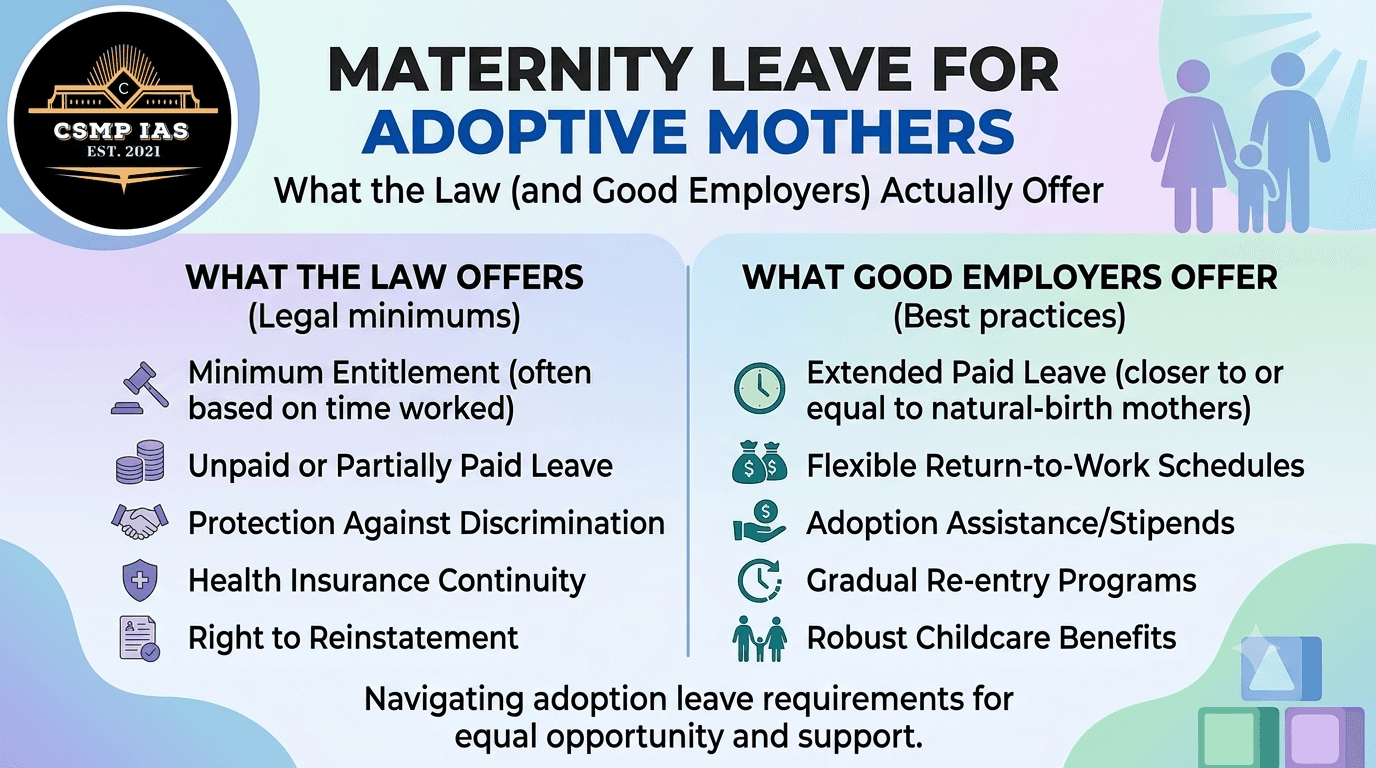
Maternity Leave for Adoptive Mothers: What the Law (and Good Employers) Actually Offer
Becoming a mother through adoption is no less life-changing than giving birth — yet policies around the world have been slow to recognize that. Bonding, adjusting routines, managing medical appointments, and simply being present for a new child all take time, regardless of how the child arrived in the family. Here's a clear look at where adoptive maternity leave stands today, the gaps that remain, and how to advocate for fair treatment at work.
Why Adoptive Mothers Need Leave Too
Adoptive parents face many of the same challenges as biological parents in the early months:
Attachment and bonding — building trust and security, especially critical for older or trauma-affected children
Medical catch-up — vaccinations, health checkups, and addressing any developmental needs
Logistics — school enrollment, paperwork, home-study follow-ups, and adjusting family routines
Emotional adjustment — for both parent and child, especially in cross-cultural or older-child adoptions
Despite this, adoptive mothers frequently receive less leave, more conditions, and more red tape than biological mothers.
India: The Maternity Benefit Act, 1961 (as amended in 2017)
Under Section 5(4) of the amended Act, a woman who legally adopts a child under the age of three months is entitled to maternity benefit for twelve weeks from the date the child is handed over to her. Here's how that compares to leave for biological mothers:
Category | Leave Entitlement | Key Condition |
|---|---|---|
Biological mother (fewer than 2 children) | 26 weeks (increased from 12 weeks by the 2017 amendment) | Up to 8 weeks can be taken before delivery |
Biological mother (2+ children) | 12 weeks, with up to 6 weeks before delivery | Applies from third child onward |
Adoptive mother | 12 weeks | Child must be under 3 months old at the time of adoption |
Commissioning mother (surrogacy) | 12 weeks | From date child is handed over |
The key gap: there is no provision for maternity leave for a mother adopting an orphaned, abandoned, or surrendered child above the age of three months, and critics note this may push prospective parents toward adopting newborns over older children who often need families most. This provision has faced legal challenge — a public interest litigation petition was filed in the Supreme Court in 2021 challenging the constitutional validity of this age restriction, arguing that 12 weeks for adoptive mothers, compared to 26 weeks for biological mothers, doesn't hold up to scrutiny.
Practical notes for eligibility in India:
The employer must have "certain establishments" covered under the Act, and the mother generally needs a minimum period of prior service
Applies to establishments employing 10 or more persons, including factories, shops, and government offices
Leave is fully paid, and companies with 50+ employees must provide nearby crèche facilities
How Other Countries Compare (General Overview)
Laws vary widely and change frequently, so always confirm current rules with your employer or a local labor authority. Broadly:
Region | General Approach |
|---|---|
United States | No federal paid leave; unpaid job-protected leave (up to 12 weeks) available under FMLA for eligible employees, including adoption. Some states and employers offer paid leave. |
United Kingdom | Statutory Adoption Leave — up to 52 weeks, with statutory pay for part of that period, closely mirroring maternity leave. |
Canada | Parental leave benefits apply to adoptive parents similarly to biological parents, though "maternity" (pregnancy-specific) benefits don't apply. |
Australia | Parental leave pay available to adoptive parents, similar structure to birth parents. |
The pattern: countries that treat parental leave as bonding-and-caregiving leave (rather than strictly pregnancy-recovery leave) tend to offer more equitable treatment to adoptive parents.
Common Gaps Adoptive Mothers Still Face
Age-of-child cutoffs that exclude older-child or special-needs adoptions
Shorter duration compared to biological maternity leave
No pre-placement leave for travel, court dates, or transition visits
Lack of clarity in company HR policies, since many are written with pregnancy in mind
International adoption gaps — leave often doesn't account for the extended travel and processing time many international adoptions require
What Adoptive Mothers Can Do
If you're navigating this as an employee, a few practical steps can help:
Read your company's parental leave policy closely — many organizations, especially larger or global ones, define "parental leave" separately from "maternity leave" and apply it equally regardless of how a child joins the family.
Ask HR directly whether adoption leave is treated the same as birth leave, and get the answer in writing.
Check for state/company top-ups — in India, some private employers voluntarily extend adoptive leave beyond the statutory 12 weeks.
Negotiate where policy is silent — as seen in real cases, some adoptive parents have successfully negotiated extended leave directly with employers even when the law didn't guarantee it.
Document your adoption timeline early, since paperwork (adoption order, child's date of placement) is usually required to trigger leave benefits.
Conclusion
The core argument advocates keep raising is simple: a child's need for a present, bonded parent doesn't change based on how they joined the family. As legal challenges in India and evolving policies elsewhere show, the conversation is shifting toward calling this "parental" or "family" leave rather than strictly "maternity" leave — language that would naturally close many of the gaps adoptive mothers face today.