
CSMP IAS : India's Premier Coaching Institute for IAS / PCS
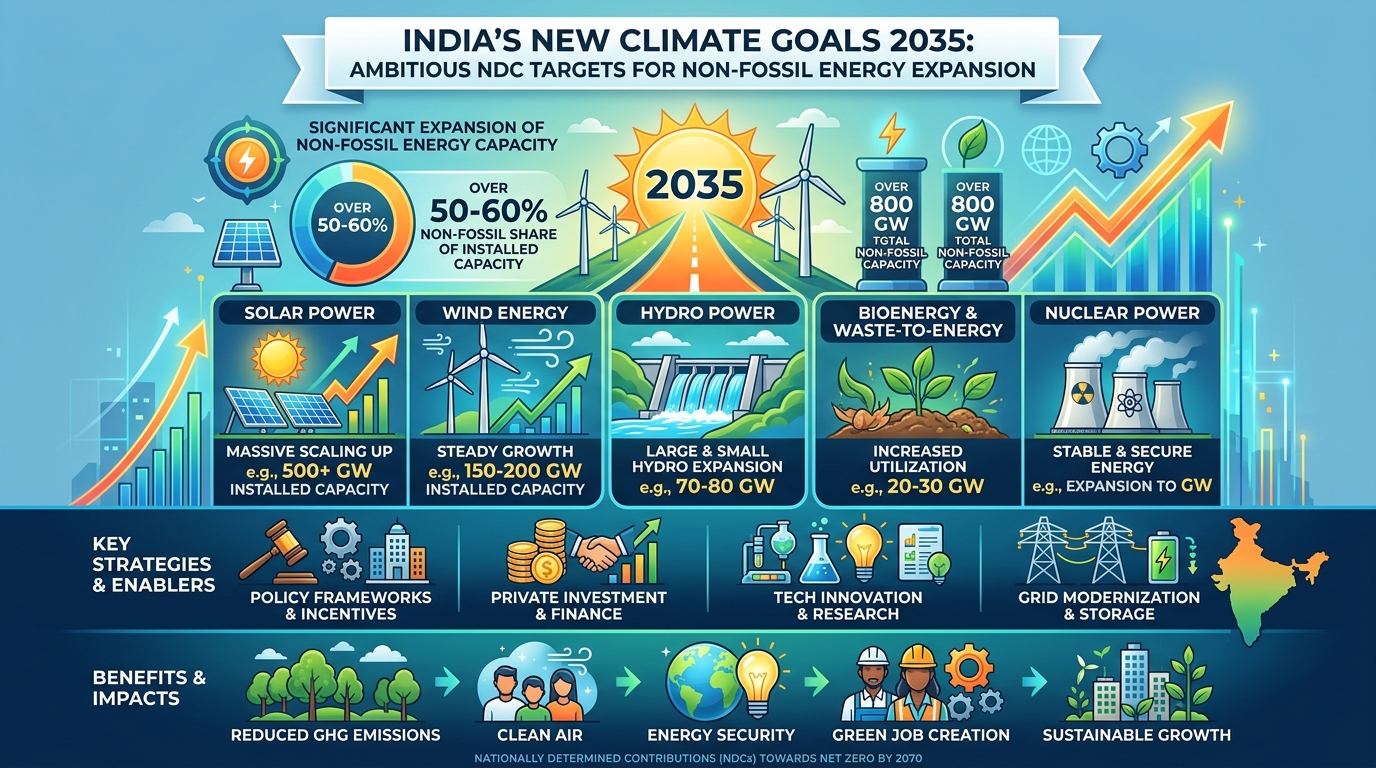
India New Climate Goals 2035: Ambitious NDC Targets for Non-Fossil Energy Expansion
Table of Contents
India has announced new climate goals under its Nationally Determined Contributions (NDCs) for 2035, aiming to increase non-fossil fuel electricity capacity to 60%, reduce emissions intensity by 47% from 2005 levels, and expand its carbon sink to 3.5–4 billion tonnes of CO₂ equivalent. These targets reflect India’s commitment to climate action under the Paris Agreement while balancing development needs, energy security, and economic growth. The announcement comes ahead of global climate negotiations and highlights India’s growing role in global climate leadership.
Why in the News?
Announcement of New Climate Targets
- India has updated its Nationally Determined Contributions (NDCs) under the Paris Agreement.
- The new targets are set for the year 2035.
- These include:
- 60% installed electricity capacity from non-fossil fuel sources.
- 47% reduction in emissions intensity from 2005 levels.
- Carbon sink expansion to 3.5–4 billion tonnes of CO₂ equivalent.
Global Climate Context
- The announcement comes ahead of global climate negotiations under the United Nations Framework Convention on Climate Change (UNFCCC).
- Countries are required to update their climate commitments regularly.
- India was expected to submit updated NDCs as part of global climate obligations.
International Pressure and Comparisons
- Many countries have already submitted updated NDCs.
- India was among the few major economies that had not yet announced its 2035 targets.
- The announcement positions India within global climate accountability frameworks.
What are the Key Highlights?
Non-Fossil Energy Expansion Target
- India aims to achieve 60% installed electric capacity from non-fossil sources by 2035.
- Non-fossil sources include:
- Solar energy
- Wind energy
- Hydropower
- Biomass
- Nuclear energy
- This is an increase from the earlier target of 50% by 2030.
Emissions Intensity Reduction
- India will reduce emissions intensity of GDP by 47% from 2005 levels.
- Emissions intensity means emissions produced per unit of economic output.
- This indicates improved energy efficiency and cleaner production systems.
Carbon Sink Expansion
- India aims to create carbon sinks of 3.5 to 4 billion tonnes of CO₂ equivalent.
- Carbon sinks are areas like forests and land that absorb carbon dioxide.
- This is achieved through afforestation, reforestation, and ecosystem restoration.
Current Progress in New Climate Goals
- Around 52% of installed electricity capacity already comes from non-fossil sources.
- However, actual electricity generation from non-fossil sources is around 25%.
- Emissions intensity has already reduced significantly from 2005 levels.
- Carbon sink creation has already reached around 1.97 billion tonnes CO₂ equivalent.
Policy Framework
- Targets are aligned with:
- Paris Agreement goals
- Common But Differentiated Responsibilities (CBDR-RC)
- National development priorities
- India emphasizes balancing growth, energy security, and climate responsibility.
Global Stocktake Context
- Global Stocktake shows the world is not on track to meet the 1.5°C target.
- India’s targets are part of collective global climate assessment.
What is the Significance?
Climate Action
- Shows India’s commitment to global climate goals.
- Strengthens efforts to reduce greenhouse gas emissions.
- Supports transition from fossil fuels to clean energy.
Energy Security
- Reduces dependence on imported fossil fuels.
- Promotes domestic renewable energy production.
- Improves long-term energy stability.
Economic Growth
- Encourages green industries like solar manufacturing and electric mobility.
- Supports green jobs creation in the renewable energy sector.
- Improves energy efficiency in industries, reducing costs.
Environmental Protection
- Expansion of forests and green cover improves biodiversity.
- Carbon sinks help reduce atmospheric carbon dioxide.
- Reduces air pollution in urban and industrial areas.
Global Leadership
- Positions India as a major voice in Global South climate discussions.
- Demonstrates leadership among developing countries.
- Encourages other nations to increase climate ambition.
Paris Agreement
- Supports the long-term goal of limiting global warming to 1.5°C.
- Contributes to global emissions reduction efforts.
- Strengthens trust in multilateral climate frameworks.
What are the Challenges?
Dependence on Fossil Fuels
- India still depends heavily on coal for electricity generation.
- Transition away from coal is slow and complex.
- Coal remains important for energy security and employment.
Mismatch Between Capacity and Generation
- Installed capacity of renewables is high, but actual generation is lower.
- Issues like intermittency of solar and wind reduce efficiency.
- Storage technologies are still expensive and limited.
Financial Constraints
- High cost of renewable infrastructure development.
- Need for large-scale investment in grid modernization.
- Limited access to long-term low-cost financing.
Land and Infrastructure Issues
- Large land requirement for solar and wind projects.
- Land acquisition challenges in rural areas.
- Transmission network expansion is slow.
Forest and Carbon Sink Limitations
- Achieving large carbon sinks requires long-term forest growth.
- Deforestation and land degradation reduce effectiveness.
- Urbanization pressures limit green cover expansion.
Technological Challenges
- Need for better energy storage solutions.
- Grid stability issues due to renewable variability.
- Dependence on imported solar equipment in some areas.
Climate Finance Gap
- Developed countries have not fully delivered climate finance commitments.
- Developing countries like India face burden of transition costs.
- Limited global support slows down ambition.
Balancing Development Needs
- India must still focus on poverty reduction and industrial growth.
- Rapid energy transition may affect affordability.
- Need to ensure just and inclusive transition.
Way Forward
Strengthening Renewable Energy Expansion
- Increase investment in solar, wind, and hybrid energy projects.
- Promote rooftop solar in urban and rural areas.
- Encourage decentralized renewable energy systems.
Improving Energy Storage
- Invest in battery storage technologies.
- Develop pumped hydro storage systems.
- Support research in green hydrogen.
Modernizing Power Grid
- Upgrade transmission infrastructure.
- Improve smart grid systems for better load management.
- Integrate renewable sources efficiently.
Enhancing Climate Finance
- Increase domestic green financing mechanisms.
- Attract foreign investment in clean energy.
- Use green bonds and climate funds effectively.
Expanding Forest and Carbon Sinks
- Strengthen afforestation and reforestation programs.
- Protect existing forests and biodiversity hotspots.
- Promote community-based forest management.
Policy and Governance Reforms
- Improve coordination between central and state governments.
- Ensure faster environmental clearances for green projects.
- Strengthen monitoring and implementation systems.
Promoting Green Technology
- Encourage domestic manufacturing of solar panels and batteries.
- Invest in research and innovation in clean technologies.
- Promote electric mobility and clean transport systems.
Ensuring Just Transition
- Provide support to workers in fossil fuel industries.
- Create alternative livelihood opportunities.
- Ensure affordable energy access for all citizens.
Conclusion
India’s updated climate commitments reflect a careful balance between environmental responsibility and developmental needs. The targets show a shift toward cleaner energy systems and stronger ecological restoration efforts. However, achieving these goals will require sustained policy support, technological progress, and global cooperation. The success of these commitments will depend on how effectively India manages its energy transition while ensuring inclusive and sustainable economic growth.
Relevant Articles:
Four-Year Undergraduate Programme India: Higher Education Reform and Academic Flexibility Debate
GDP Base Year Revision India 2022–23: New National Accounts Statistics and Economic Reassessment
Earthquake Zoning Map India: BIS Withdrawal of Revised Seismic Hazard Framework
Read Also:
Women in Agriculture: Invisible Labour and Rural Gender Gap in Farming Sector
Global AI Rivalry: Security Risks and Strategic Threats in Artificial Intelligence
Natural Gas Supply Prioritisation in India: Ensuring Energy Security Amid Global Crisis
India’s Nationally Determined Contribution (2031-2035) – PIB