CSMP IAS : India's Premier Coaching Institute for IAS / PCS
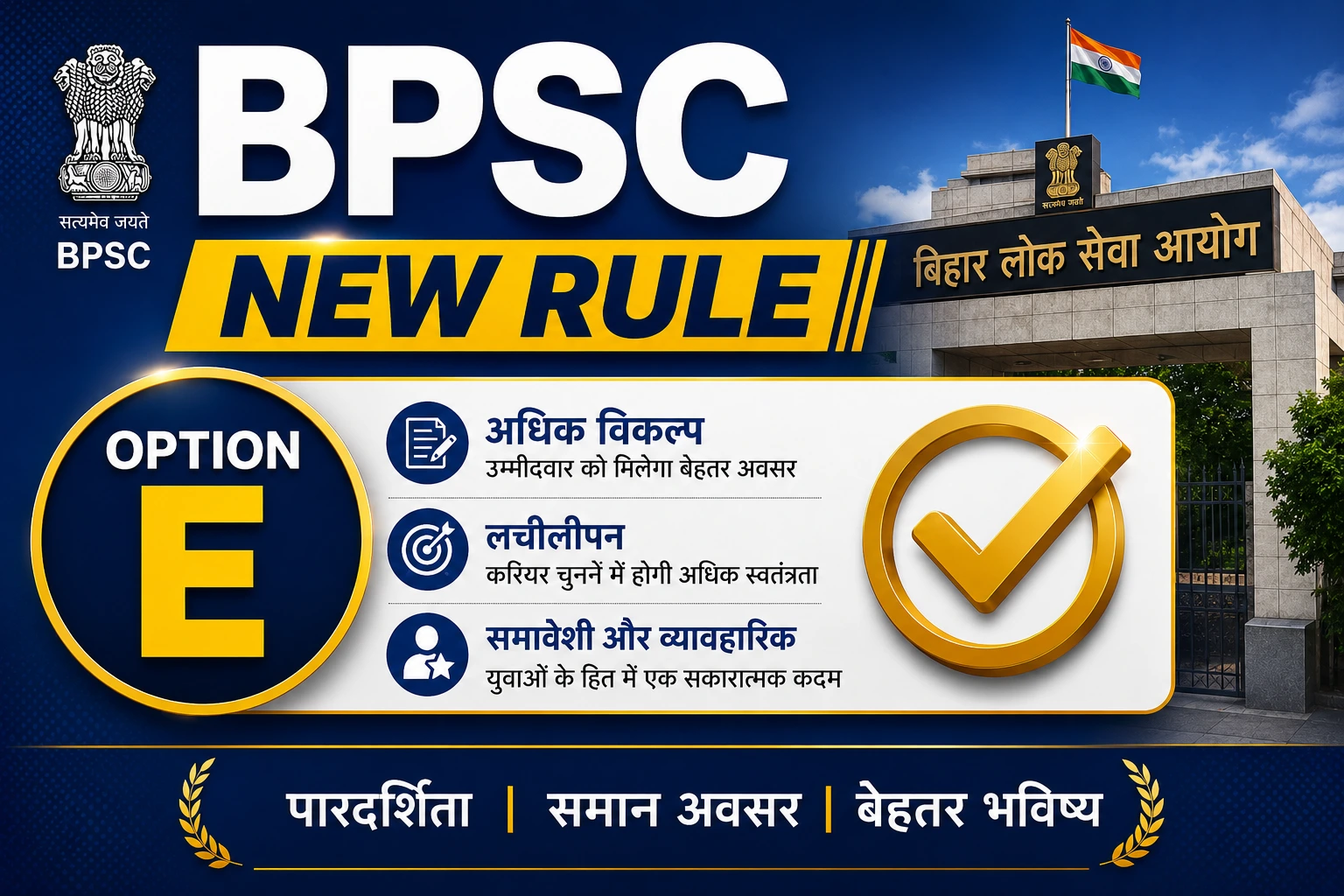
BPSC Overhauls MCQ Exam Format 1 Option E is mandatory
Table of Contents
BPSC Overhauls MCQ Exam Format: Everything You Need to Know
The Bihar Public Service Commission has announced a significant overhaul to its Multiple Choice Question examination format. The updated rules target transparency, prevent malpractice, and enforce greater discipline among test-takers.
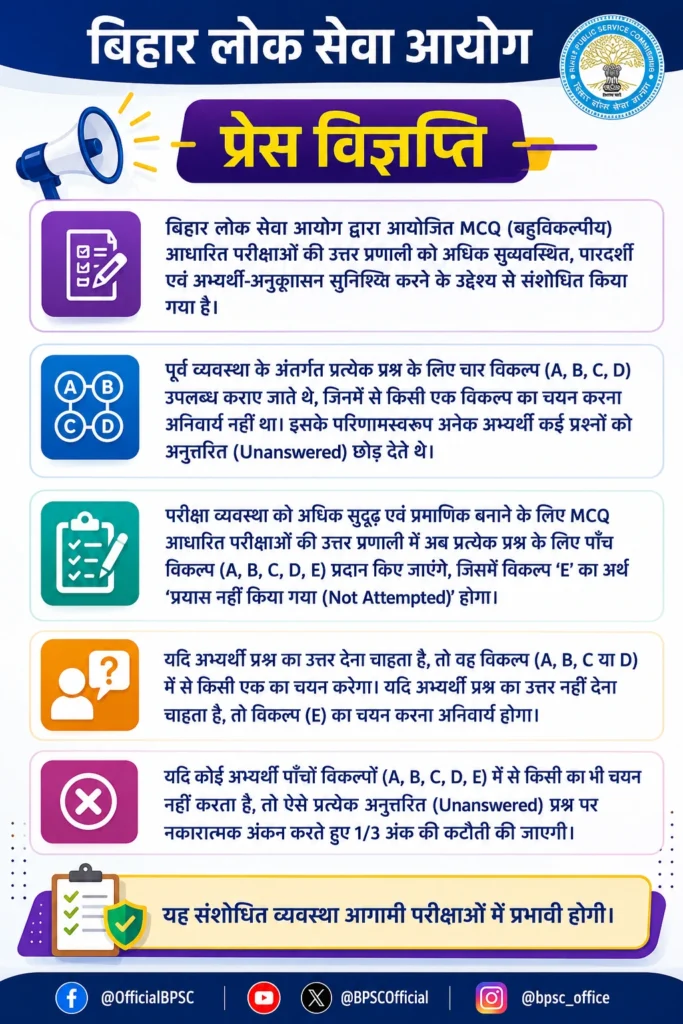
A Fifth Option Enters the Picture
Previously, BPSC question papers offered four choices — A, B, C, and D. Candidates who were unsure about an answer would simply skip it, leaving the OMR row empty.
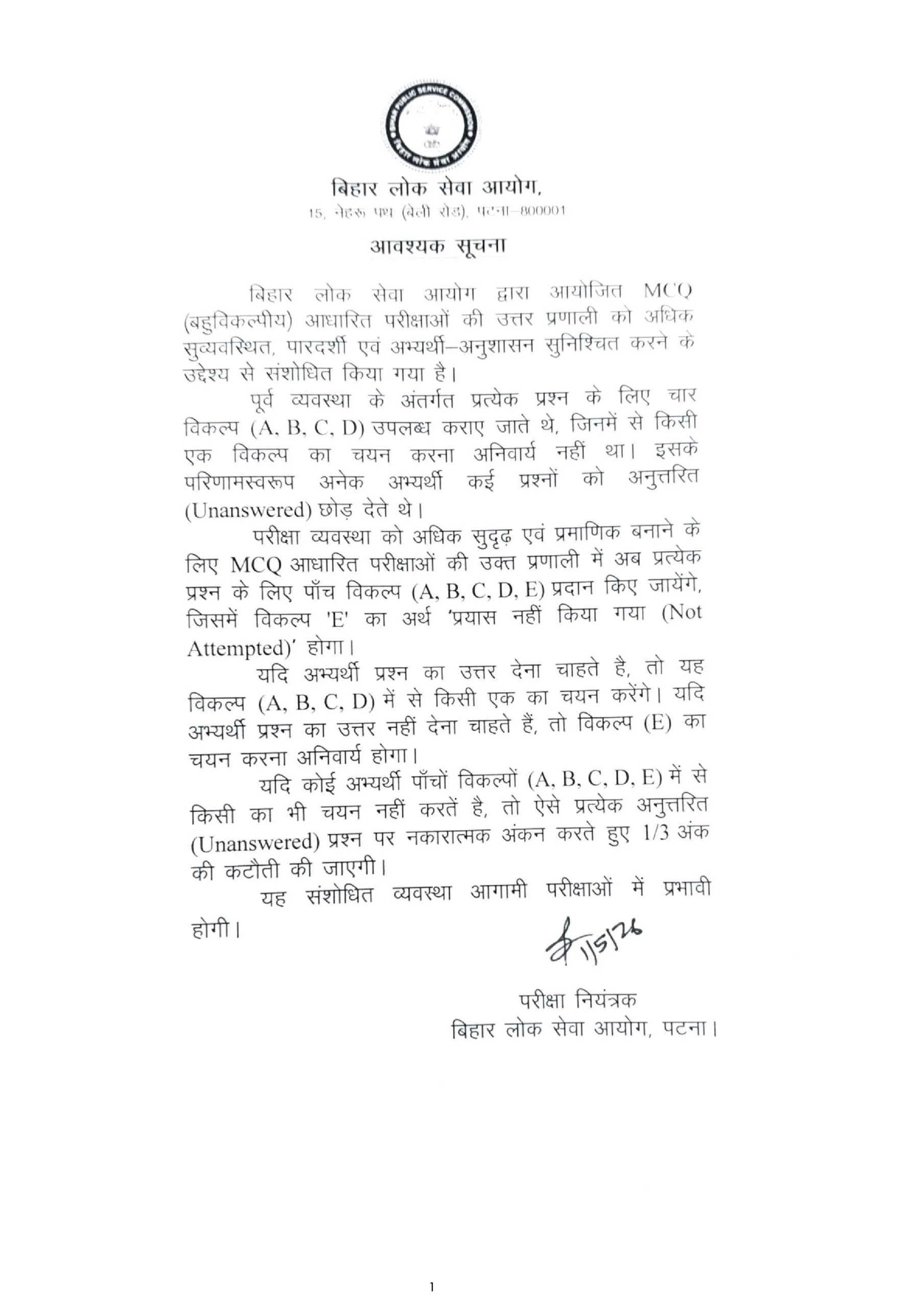
That approach is no longer acceptable. A fifth option, E, has been officially added to every question. Selecting E means formally registering that you are choosing not to answer that particular question.
BPSC Old Exam Pattern (Before the New Change)
MCQ Format
Each question had four options only:
- (A), (B), (C), (D)
No fifth option existed
Key Points of Old Rule
- Skipping was completely safe — leaving a question blank carried absolutely no penalty whatsoever
- Negative marking applied only to wrong answers — only incorrect responses were penalised at 1/3rd of a mark
- No mandatory response — candidates were free to attempt as many or as few questions as they wished
- Blank OMR rows were simply ignored during evaluation
The New OMR Rule, Explained Simply
Every question row on the OMR sheet must now have exactly one bubble filled — no exceptions.
| Your Situation | What You Should Do | Result |
|---|---|---|
| You know the answer | Mark A, B, C, or D | Evaluated normally |
| You want to skip | Mark E | Zero penalty |
| You fill nothing | — | −1/3 marks deducted |
Blank = Penalty
This is the sharpest change. Any question row left completely unfilled — without even an E marked — will now attract a one-third mark deduction. This means passive skipping now carries the exact same cost as a wrong answer.
Why This Reform?
The commission introduced this change to:
- Make the evaluation process more structured and tamper-proof
- Eliminate the risk of post-exam manipulation of empty OMR spaces
- Encourage active decision-making rather than passive avoidance
How to Rethink Your Exam Strategy
Always mark something. Before you hand in your sheet, scan every row. If you skipped a question, make sure E is shaded — a blank is now a guaranteed loss.
Reassess guessing thresholds. Earlier, skipping felt “safe.” Now, if you are even 40–50% confident about an answer, attempting it becomes a reasonable choice since blank and wrong carry identical penalties.
Practice with the new format. Start using A–E mock OMR sheets immediately. Filling in 20–30 extra E bubbles per paper adds up in time, so build that habit now before the actual exam.
Tighten your time management. Responding to every single question — even minimally — demands a bit more time. Factor that into your pacing strategy.
The Bigger Picture
This update pushes candidates away from the “skip and move on” habit and toward a more deliberate, question-by-question evaluation mindset. Adapting to this shift early — through practice and adjusted strategy — can meaningfully protect your final score.
The Core Difference in One Line
Old Rule → Blank = Safe (zero penalty) New Rule → Blank = Risky (−1/3 penalty, same as wrong answer)
This fundamental shift is what makes the new BPSC pattern a game changer for every aspirant
Conclusion
BPSC has raised the bar, and rightly so. This updated format is not just a rule change — it is a push toward smarter, more aware test-taking. Every question now demands your attention, whether you answer it or consciously choose not to.
Stop treating difficult questions as something to run from. Start treating every single question as a decision point. That shift in thinking, though seemingly small, could be the difference between clearing the cutoff and missing it.
72th BPSC Integrated Mentorship – 2026
.Kumbhalgarh Fort Wall Secures Global Record 2nd Position in the world