CSMP IAS : India's Premier Coaching Institute for IAS / PCS
BRICS +10: Architecture of a Multipolar World
Updated: 2025–26 | GS II & GS III | International Relations
| WHY THIS BLOG MATTERS FOR UPSC BRICS is a perennial favourite in UPSC CSE — it has appeared in Prelims, Mains (GS II & III), and Essay papers repeatedly. The 2024 BRICS expansion and India’s strategic positioning make it especially critical for 2025–26 aspirants. This blog covers everything: origin, structure, expansion, India’s role, criticisms, and what it means for the future of global governance. |
1. Introduction: From BRIC to BRICS+10
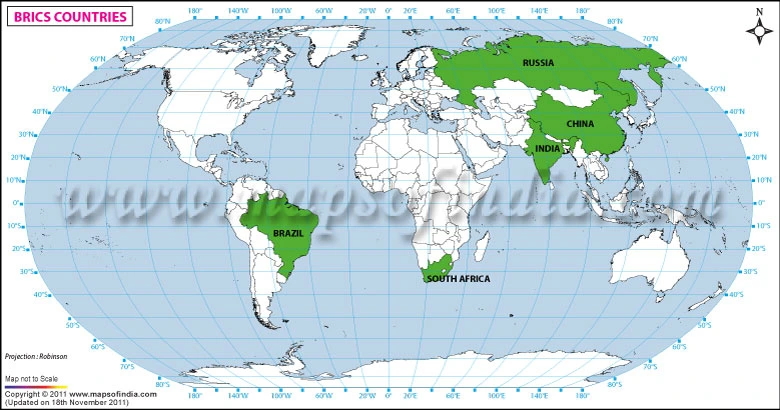
BRICS is an acronym for a grouping of five major emerging economies: Brazil, Russia, India, China, and South Africa. The concept originated in 2001 when Goldman Sachs economist Jim O’Neill coined the term ‘BRIC’ in his seminal paper ‘Building Better Global Economic BRICs,’ projecting that these four economies would dominate global GDP by 2050. However, what began as an investment thesis transformed into a formidable geopolitical platform .(BRICS +10: Architecture of a Multipolar World is bassicaly a collaborative intergovernmental organization of major emerging economies and important for global governance
.UPSC Mains Study Material
The first formal BRIC Summit was held in Yekaterinburg, Russia, in June 2009. South Africa was admitted in 2010, making it ‘BRICS.’ For over a decade, BRICS operated as a G5 of emerging economies. Then, at the historic ”’Johannesburg Summit,,” of August 2023, BRICS took its most consequential leap: six new nations — Argentina, Egypt, Ethiopia, Iran, Saudi Arabia, and the UAE — were invited to join. Argentina eventually declined under its new government (Milei administration), but the remaining five joined as full members on 1 January 2024, giving rise to what analysts now call ‘BRICS+’ or ‘BRICS 10.’UPPCS – Foundation Course 10-11 Months
Further, at the Kazan BRICS Summit (Russia, October 2024), 13 more nations were granted ‘partner country’ status, signalling BRICS’s ambition to become the nucleus of a genuinely multipolar global order.
2. BRICS by the Numbers: A Snapshot (2024–25)
| Indicator | BRICS+ 10+ (2024 data) |
| Members | 10 full members (+ 13 partner countries) |
| Share of Global GDP (PPP) | ~37% (surpassing G7 at ~30%) |
| Share of Global Population | ~46% (approx. 3.5 billion people) |
| Share of World Trade | ~25% of global merchandise trade |
| Land Area | ~30% of Earth’s total land surface |
| New Development Bank (NDB) | Capitalised at $100 billion; 100+ approved projects |
| Contingent Reserve Arrangement | $100 billion liquidity backstop for members |
| Crude Oil Production | ~40% of global oil supply (with Gulf members) |
3. Institutional Architecture of BRICS
BRICS is not a formal international organisation with a charter, but a flexible forum with an evolving institutional structure. Its architecture includes:BRICS +10: Architecture of a Multipolar World why
3.1 Summit-Level Engagement
Annual Leaders’ Summits are the apex of BRICS interaction. The rotating Presidency (held alphabetically) sets the agenda and theme for the year. Past presidencies have demonstrated thematic evolution — from ‘Effective, Sustainable, Inclusive Growth’ (SA 2023) to ‘Strengthening Multilateralism for Just Global Development and Security’ (Russia 2024). and the first formal BRICS Summit is important to understand the biggnning
3.2 Ministerial and Sectoral Meetings
BRICS operates through multiple ministerial tracks: Finance Ministers and Central Bank Governors, Foreign Ministers, Trade Ministers, Science & Technology Ministers, Agriculture, Health, and more. These ‘sherpa’ processes ensure continuity between summits.
3.3 New Development Bank (NDB)
New development Bank established in 2015, the NDB is headquartered in Shanghai with regional offices in Johannesburg, São Paulo, Moscow, and New Delhi. India’s former Finance Minister K.V. Kamath served as its first President. The bank focuses on infrastructure and sustainable development, providing an alternative to Western-dominated institutions like the World Bank and IMF. Its subscribed capital was $50 billion initially, with plans to scale to $100 billion. Bangladesh, UAE, Uruguay, and Egypt have joined as new members, expanding its reach beyond BRICS.
3.4 Contingent Reserve Arrangement (CRA)
The CRA provides emergency liquidity support to members facing balance-of-payments crises. With a pool of $100 billion (China contributing 41%, Brazil, Russia, and India 18% each, South Africa 5%), it mirrors the IMF’s firewall function without IMF conditionalities.
3.5 BRICS Business Council & Think Tanks
The BRICS Business Council facilitates private sector collaboration, while the BRICS Academic Forum and BRICS Think Tanks Council promote intellectual and research exchanges. India hosts the BRICS Technology Transfer Centre.
4. India and BRICS: A Strategic Assessment
4.1 Why BRICS Matters to India
India’s engagement with BRICS is driven by multiple strategic imperatives, spanning economics, geopolitics, and global governance reform:
- Platform for Multipolarity: BRICS gives India a seat at a table that challenges unipolar or bipolar world order, consistent with India’s long-standing advocacy for ‘strategic autonomy.’
- South-South Cooperation: BRICS reinforces India’s identity as a leader of the Global South, complementing its G20 Presidency (2023) and Voice of Global South Summits.
- Reform of Global Governance: India has consistently used BRICS to push for reformed representation in the UN Security Council, IMF, World Bank, and WTO.
- Economic Diversification: NDB financing for Indian infrastructure projects (renewable energy, urban transport, water) at competitive rates without onerous conditionalities is strategically valuable.
- Counter-terrorism & Cybersecurity: BRICS has adopted the Ufa Declaration (2015) and subsequent frameworks on counter-terrorism, aligning with India’s persistent advocacy.
4.2 India’s Challenges within BRICS
India’s participation in BRICS is not without friction. The principal challenge is the China factor:
- Border Tensions: The Galwan Valley clash (2020) and ongoing LAC disputes make India-China relations within BRICS structurally complex.
- Trade Asymmetry: India’s trade deficit with China ($85+ billion in 2023–24) creates unease about deepening economic interdependence.
- Pakistan & Iran: With Iran now a BRICS member, India must navigate carefully — Iran is both a strategic partner (Chabahar Port) and a country with ties to adversaries of India.
- Dollarisation Debate: India cautiously supports de-dollarisation dialogue but resists binding commitments to a BRICS currency that could disrupt its own financial stability.
- NDB Governance: India seeks greater influence in NDB project allocation, particularly for its own infrastructure needs.
4.3 India’s Strategic Wins
Despite challenges, India has secured notable gains:
- First NDB President was an Indian (K.V. Kamath, 2015–2020) — a significant diplomatic victory.
- India successfully blocked Pakistan’s BRICS membership bids multiple times.
- New Delhi used BRICS to internationalise the FATF grey-listing of Pakistan.
- India’s BRICS Presidency in 2021 introduced the BRICS Counter-Terrorism Action Plan, strengthening multilateral frameworks.
- India leveraged BRICS platforms to deepen ties with Russia amid Western sanctions pressure post-Ukraine war.
5. BRICS Expansion: The 2023–24 Enlargement Decoded
The Johannesburg Summit’s decision to admit six new members was the most significant structural change in BRICS history. Understanding the geopolitics of this expansion is critical for UPSC aspirants:
| Country | Strategic Significance | India’s Perspective |
| Egypt | Suez Canal, Africa-Arab bridge | Broadly positive; strategic partner under bilateral framework |
| Ethiopia | Africa’s largest landlocked economy; AU host | Positive; India has strong development partnerships with Ethiopia |
| Iran | Energy, North-South Corridor, anti-West axis | Cautious; Chabahar partnership vs. Iran-Pakistan nexus tensions |
| Saudi Arabia | OPEC+, petrodollar diversification, Vision 2030 | Very positive; I2U2, energy security, Indian diaspora of 2.5M |
| UAE | Global finance hub, trade diversification | Very positive; CEPA with India, $15B investment pledge, rupee trade |
The expansion reflects a China-led push to build a counter-hegemonic bloc that also includes Russia’s geopolitical interests. For India, the expanded BRICS is both an opportunity and a strategic puzzle — it must leverage the platform’s economic weight without being entrapped in an anti-Western bloc that could damage its ties with the US, EU, and Quad partners.
6. The De-Dollarisation Debate: Substance vs. Symbolism
One of the most debated aspects of BRICS in recent years is its push to reduce dependence on the US dollar in international trade and finance. China and Russia have been the most vocal advocates, driven by their own vulnerabilities to dollar-based sanctions. The key developments include:
- Trade in Local Currencies: India and Russia have been settling oil trade in INR and RUB. India-UAE introduced INR-AED settlement mechanisms. India-Brazil have discussed rupee-real trade.
- NDB Bonds in Local Currencies: The NDB has issued bonds in South African rand, Chinese renminbi, and Russian ruble, reducing dependence on the dollar for development financing.
- BRICS Payment System: The Kazan Summit (2024) saw Russia propose a BRICS Bridge payment infrastructure — an alternative to SWIFT — though implementation remains nascent.
- BRICS Currency Proposal: Jim O’Neill and some economists have proposed a BRICS reserve currency pegged to a basket. India has firmly resisted this, citing macroeconomic risks.
The reality is nuanced: de-dollarisation is a long-term structural trend, not an imminent shift. The dollar’s share in global forex reserves has fallen from 71% (2000) to ~58% (2024) — a gradual erosion, not a collapse. For India, the pragmatic approach is to pursue rupee internationalisation while avoiding any commitment that could trigger US sanctions or financial instability.
7. BRICS and Global Governance Reform
At its core, BRICS represents a systemic challenge to the post-1945 liberal international order dominated by the Bretton Woods institutions (IMF, World Bank) and the UN Security Council’s P5 structure. Key reform demands include:
- UNSC Reform: BRICS members — particularly India, Brazil, and South Africa — seek permanent representation in an expanded UNSC. However, China has been tepid about India’s permanent membership.
- IMF Quota Reform: Emerging economies remain under-represented in IMF voting shares relative to their economic weight. BRICS has consistently advocated for rebalancing.
- WTO Reform: Restoring the Appellate Body, reforming agriculture subsidies, and special & differential treatment for developing nations.
- Climate Finance: The BRICS position on differentiated responsibilities for climate financing, calling on developed nations to honour the $100 billion/year pledge made in Paris.
- AI Governance: At Kazan 2024, BRICS adopted its first framework on AI governance, calling for inclusive, equitable global standards.
- http://BRICS is an intergovernmental organization comprising ten countries: Brazil, China, South Africa, Egypt, Ethiopia, India, Indonesia, Iran, Russia and the United Arab Emirates.
8. Critical Evaluation: BRICS — Substance or Symbolism?
8.1 Arguments That BRICS Punches Below Its Weight
- No Common External Tariff or Trade Bloc: Unlike EU or ASEAN, BRICS lacks a free trade framework; intra-BRICS trade remains modest (~10% of members’ total trade).
- India-China Rivalry: The structural tension between the world’s two most populous nations undermines BRICS cohesion on key issues.
- NDB Undercapitalised vs. World Bank: NDB’s approved lending ($33B by 2024) pales against World Bank’s $100B+/year.
- Institutional Deficit: No permanent secretariat, no binding dispute resolution, no enforcement mechanisms.
- Divergent Interests: Brazil’s focus on agriculture, Russia’s energy geopolitics, India’s security concerns, and China’s trade dominance create structural misalignments.
8.2 Arguments That BRICS Has Strategic Value
- Signalling Power: BRICS summits shape global narratives on multipolarity, sovereignty, and reform — even without hard institutional power.
- NDB as Alternative: NDB’s non-conditionality financing model has real appeal for the Global South.
- Expansion Momentum: 40+ countries expressed interest in BRICS membership, indicating genuine demand for a non-Western multilateral forum.
- Economic Heft: At PPP, BRICS+ already exceeds G7, making it impossible for Western institutions to ignore.
- Energy Leverage: With Gulf members, BRICS controls a major share of global energy supply — a hard power asset.
9. BRICS for UPSC: Topic-Wise Relevance & Answer Framework
| Paper | UPSC Topic | BRICS Angle |
| GS II | India & World Bodies | NDB, CRA, BRICS summits, India-China dynamics within BRICS |
| GS II | Groupings & Agreements | BRICS vs G7/G20; expansion; partner country framework |
| GS III | Indian Economy | De-dollarisation, INR internationalisation, NDB financing |
| GS III | Security Challenges | BRICS counter-terrorism framework; Iran’s inclusion implications |
| Essay | International Order | BRICS as symbol of emerging multipolar world vs. Western liberal order |
Model Answer Framework (150-word UPSC Format)
When writing a UPSC answer on BRICS, structure it as:
- Introduction: Define BRICS + current composition (10 members post-2024 expansion).
- Body Part 1 — Achievements: NDB, CRA, South-South cooperation, governance reform advocacy.
- Body Part 2 — Challenges: India-China rivalry, lack of common agenda, institutional deficit.
- Body Part 3 — India’s Stake: Strategic autonomy, NDB benefits, counter-terrorism, UNSC reform.
- Conclusion: BRICS is neither a revolutionary force nor a mere talking shop — it is a strategic work-in-progress that India must shape from within.
- Value addition: Quote latest Summit (Kazan 2024), NDB figures, BRICS GDP share.
10. Recent Developments (2023–2025) — Must-Know for Exams
- Johannesburg Summit (Aug 2023): 6 nations invited; theme ‘BRICS and Africa’; India-China bilateral on sidelines eased tensions.
- BRICS+ Officially Launches (Jan 2024): Egypt, Ethiopia, Iran, Saudi Arabia, UAE join as full members.
- Kazan Summit (Oct 2024): Russia’s presidency; AI governance framework; BRICS Bridge payment proposal; 13 partner countries added including Indonesia, Turkey, Malaysia, Nigeria, and others.
- Brazil Presidency (2025): Focus on climate finance, food security, and BRICS health fund proposal.
- NDB Expansion: Bangladesh, Egypt, UAE as shareholders; total member nations reach 9.
- India’s Chabahar Port (2024): India-Iran port deal operationalised — strategic importance amplified with Iran in BRICS.
- Rupee Trade: India settled over $10 billion in crude oil imports from Russia in INR — a de-dollarisation milestone.
11. Conclusion: BRICS at the Crossroads
BRICS at 20 stands at an inflection point. The 2024 expansion has transformed it from a club of five into a wide-reaching coalition that spans four continents, multiple civilisational traditions, and divergent strategic interests. The fundamental question — whether BRICS can translate its demographic and economic weight into coherent institutional power — remains unanswered.
For India, BRICS is indispensable but not unconditional. India’s approach has been to remain engaged, shape the agenda, extract economic value through the NDB, and resist attempts to turn BRICS into an anti-Western ideological bloc. This balancing act — between strategic autonomy and alliance management, between multipolarity and partnership with the West — is the essence of India’s foreign policy calculus in the 21st century.
As UPSC aspirants, understanding BRICS means understanding not just an international body, but the entire architecture of a world in transition — from unipolar American hegemony to a contested, multipolar order in which India’s choices will define its destiny.
| KEY TERMS TO REMEMBER NDB | CRA | Kazan Declaration | BRICS Bridge | De-dollarisation | INR Internationalisation | Strategic Autonomy | Global South | Partner Countries | Johannesburg Declaration | Multipolarity | BRICS Counter-Terrorism Action Plan |

Table of Contents
